The Profit Path Unveiled
Affiliate marketing isn’t some passive income fantasy; it’s a brutal, high-stakes game of strategic influence and relentless execution. It’s about leveraging trust to drive sales for others, earning a commission, and building an empire. Forget the gurus promising overnight riches; this is a business, and like any business, it demands grit, smarts, and a killer instinct. The payoff? Uncapped earning potential and true freedom, but only for those who dare to play by the real rules.
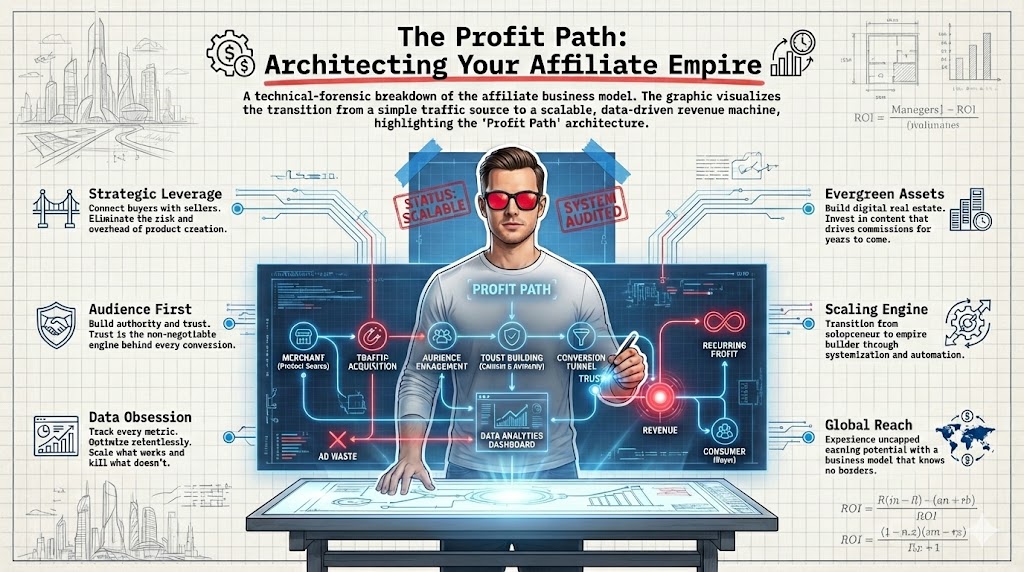
- Strategic Leverage: Affiliate marketing is about connecting buyers with sellers, not creating products.
- Commission-Driven: Your income is directly tied to your ability to drive measurable sales or leads.
- Audience First: Build trust and authority; without it, you’re just another spammer.
- Data Obsession: Track everything. Optimize relentlessly. Scale what works, kill what doesn’t.
Alright, listen up. You’re here because you’ve heard the buzz about affiliate marketing. Maybe you’ve even dipped a toe in, only to get burned by the endless parade of ‘easy money’ schemes. Let me set the record straight: affiliate marketing, when done right, is one of the most powerful, scalable, and profitable business models on the planet. But ‘right’ is the operative word. This isn’t for the faint of heart, nor for those seeking a quick buck without putting in the work. This is for strategists, for builders, for those ready to dominate a niche and command serious revenue.
The Unvarnished Truth About Affiliate Marketing
Beyond the Hype: What It Really Is
Affiliate marketing, at its core, is a performance-based marketing strategy where a business rewards one or more affiliates for each visitor or customer brought by the affiliate’s own marketing efforts. Sounds simple, right? It is, conceptually. But the execution is where most fall flat. It’s not just about slapping a link on a blog post; it’s about becoming a trusted conduit between a problem and its solution, a desire and its fulfillment. You’re a sales agent, a marketer, and a content creator, all rolled into one, and your paycheck depends entirely on your ability to convert.
Why It’s a Game-Changer (If You’re Smart)
The real power of affiliate marketing lies in its low barrier to entry and immense scalability. You don’t need to develop a product, manage inventory, or handle customer service. Your entire focus is on marketing and sales. This frees you up to concentrate on what truly drives revenue: audience acquisition and conversion optimization. For the astute operator, this means rapid deployment, agile pivots, and the potential to scale revenue streams exponentially without the typical headaches of traditional business models. But it gets better: the leverage is insane. You’re building an asset that can generate income 24/7, even while you sleep, provided you’ve laid the groundwork correctly.
Deconstructing the Affiliate Ecosystem: Who’s Who?
The Merchant (Product Creator)
This is the company or individual who creates the product or service being sold. They’re looking for an army of marketers to expand their reach without incurring upfront advertising costs. They set the commission rates, handle the product delivery, and manage customer support. Your success is their success, which means they often provide marketing materials and support, but don’t mistake that for a free ride. Their primary goal is profit, and so should yours.
The Affiliate (You, The Publisher)
You are the linchpin. You’re the one promoting the product, driving traffic, and influencing purchasing decisions. Your role is to bridge the gap between the merchant’s offering and the consumer’s need. This requires a deep understanding of your audience, persuasive communication, and a strategic approach to content distribution. You’re not just a referrer; you’re a trusted advisor, and your reputation is your most valuable asset. Burn it, and your business is dead.
The Consumer (The Buyer)
The consumer is the ultimate decision-maker. They are the ones with the problem, the desire, or the need that the merchant’s product aims to solve. Your job is to present the product as the ideal solution, building trust and demonstrating value. The best affiliates prioritize the consumer’s needs above all else, offering genuine recommendations and transparent disclosures. Fail to do this, and you’ll be seen as a snake oil salesman, quickly losing any credibility you might have built.
The Affiliate Network (The Middleman)
Affiliate networks like ShareASale, CJ Affiliate, or Rakuten Advertising act as intermediaries between merchants and affiliates. They provide the tracking technology, payment processing, and a vast marketplace of products to promote. While some merchants run direct programs, networks offer convenience and a centralized dashboard for managing multiple partnerships. They simplify the administrative burden, allowing you to focus on what you do best: marketing. However, they also take a cut, so always weigh the pros and cons of direct vs. network programs.
The Core Mechanics: How Affiliate Marketing Actually Works
The Unique Tracking Link: Your Digital Fingerprint
Every affiliate is assigned a unique tracking link. This isn’t just a URL; it’s your digital fingerprint, embedded with parameters that identify you as the referrer. When a potential customer clicks this link, a cookie is typically dropped on their browser. This cookie tracks their activity, ensuring that if they make a purchase within a specified timeframe (the cookie duration), you get credit for the sale. This is non-negotiable. No tracking link, no commission. Period.
Cookies and Attribution: The Invisible Handshake
The cookie is the unsung hero of affiliate marketing. It’s a small piece of data stored on the user’s browser that records your affiliate ID and the time of the click. When the user completes a purchase, the merchant’s system checks for this cookie. If found and still valid, the sale is attributed to you. Understanding cookie duration is crucial; some last 24 hours, others 30, 60, or even 90 days. Longer durations mean more opportunities for you to earn, even if the customer doesn’t buy immediately. Always check the cookie policy of any program you join.
Commission Payouts: Getting Paid What You’re Worth
Once a sale is tracked and verified, the merchant pays you a commission. This can be a percentage of the sale price, a flat fee per lead, or even a recurring percentage for subscription products. Payouts are typically handled by the affiliate network or directly by the merchant, usually on a monthly or bi-weekly basis, often with a minimum threshold. Don’t expect instant gratification; there’s usually a waiting period to account for returns or cancellations. Always read the terms and conditions regarding payment schedules and thresholds to avoid nasty surprises.
Why Affiliate Marketing is the ONLY Game Worth Playing (If You Play It Right)
Low Startup Costs: Ditch the Overhead
Unlike traditional businesses that demand massive capital for inventory, storefronts, or staff, affiliate marketing can be launched with minimal investment. Your primary costs will be for a website (domain, hosting), marketing tools, and potentially paid advertising. This low barrier to entry means you can test, iterate, and scale without risking your life savings. It’s the ultimate lean startup model, allowing you to focus resources on what truly matters: generating traffic and conversions.
Scalability & Flexibility: Your Business, Your Rules
The beauty of affiliate marketing is its inherent scalability. Once you’ve built a successful campaign or content asset, you can replicate the process, expand into new niches, or promote additional products without a proportional increase in effort. Furthermore, you dictate your hours, your location, and your strategy. This isn’t a job; it’s a lifestyle business that offers unparalleled freedom, provided you’re disciplined enough to seize it.
Veteran Secret: The Evergreen Asset Play
Stop chasing fleeting trends. Focus on building evergreen content assets (in-depth reviews, ultimate guides, comparison articles) that rank organically in search engines and continue to drive traffic and commissions for years. This is how you build true passive income, not through some magic button, but through strategic, long-term content investment. It’s about building digital real estate, not renting it.
The Dark Side: Common Pitfalls and How to Dodge Them
The ‘Set It and Forget It’ Delusion
Many newcomers fall for the myth that affiliate marketing is a ‘set it and forget it’ endeavor. This is pure fantasy. While automation plays a role, successful affiliate marketing requires constant monitoring, optimization, and adaptation. Algorithms change, competitors emerge, and consumer preferences shift. If you’re not actively engaged, your revenue streams will dry up faster than a desert oasis. Treat it like a garden; it needs constant tending to flourish.
Chasing Every Shiny Object
The affiliate landscape is rife with new products, new programs, and new ‘hacks’ promising instant riches. The trap is chasing every single one. This leads to diluted efforts, scattered focus, and ultimately, no significant results. Stick to your niche, master a few high-converting products, and only expand when you’ve thoroughly optimized your current operations. Discipline in product selection is paramount.
Ignoring Disclosure Requirements
This isn’t just a best practice; it’s a legal obligation in many jurisdictions. Failing to clearly disclose your affiliate relationship can lead to fines, reputation damage, and expulsion from affiliate programs. Transparency builds trust with your audience, which is far more valuable than trying to hide your intentions. Always be upfront: tell your readers you might earn a commission if they buy through your link. It’s simple, ethical, and smart business.
Choosing Your Niche: The Make-or-Break Decision
Passion vs. Profit: Finding the Sweet Spot
Don’t just pick a niche you’re passionate about if there’s no money in it. Conversely, don’t chase a high-profit niche if you have zero interest or expertise, as you’ll quickly burn out. The sweet spot is where your genuine interest intersects with demonstrable market demand and profitable affiliate programs. Research is key here. Look for problems people are actively trying to solve and products that offer genuine solutions.
Niche Validation: Proving Demand Before You Build
Before you commit, validate your niche. Use tools like Google Keyword Planner, Ahrefs, or SEMrush to identify search volume for relevant keywords. Check Amazon bestsellers, look at popular blogs and forums in the space, and analyze competitor activity. If there’s no one else doing it, it might be because there’s no money to be made. If there are established players, that’s a good sign of a viable market, but it also means you need a unique angle to compete.
Product Selection: Beyond the Hype, Towards Profit
High-Converting Offers: The Metrics That Matter
Don’t just pick products with high commission rates. A 50% commission on a product that never sells is worthless. Focus on products with a proven track record of conversion. Look for metrics like EPC (Earnings Per Click) within affiliate networks, strong sales pages, and positive customer reviews. The merchant’s sales funnel must be optimized for conversions; if it’s not, your efforts will be wasted.
Relevance and Value: Aligning with Your Audience
The products you promote must be highly relevant to your audience’s needs and genuinely offer value. Promoting random products just for a commission will erode trust faster than anything else. Become an expert in your niche, understand your audience’s pain points, and only recommend solutions you genuinely believe in. Authenticity is your most potent conversion tool.
Pro’s Playbook: The ‘Own It, Use It, Review It’ Rule
Whenever possible, personally use or thoroughly test the products you promote. Your firsthand experience and genuine insights are far more persuasive than generic marketing copy. This builds immense credibility and allows you to create truly unique, valuable content that converts at a higher rate. Don’t just parrot; demonstrate.
Understanding Commission Structures: Where Your Money Comes From
Percentage-Based Commissions: The Most Common Model
This is the bread and butter of affiliate marketing. You earn a percentage of the sale price. Rates vary wildly, from a meager 1-5% for physical products (due to lower margins) to a generous 30-70% for digital products (software, courses, e-books) where margins are much higher. Always calculate your potential earnings based on average order value and conversion rates, not just the percentage itself. A lower percentage on a high-ticket item can often outperform a high percentage on a cheap product.
Flat-Fee Per Lead/Sale: Simplicity and Predictability
Some programs offer a flat fee for each qualified lead (CPL – Cost Per Lead) or sale (CPS – Cost Per Sale). This is common in industries like finance, insurance, or services where the customer lifetime value is high. While it lacks the scalability of percentage-based commissions on high-volume sales, it offers predictability and can be very profitable for niche-specific lead generation. Ensure you understand what constitutes a ‘qualified’ lead to avoid wasted effort.
Recurring Commissions: The Holy Grail of Passive Income
This is where the real long-term wealth is built. Recurring commissions are offered by subscription-based products or services (SaaS, memberships). You earn a percentage of the customer’s payment for as long as they remain a subscriber. This builds a stable, predictable income stream that compounds over time. Prioritize finding high-quality recurring commission programs; they are the foundation of a truly sustainable affiliate business.
Affiliate Networks vs. Direct Programs: Navigating the Landscape
The Convenience of Networks: A Marketplace of Offers
Affiliate networks like ClickBank, Impact, Awin, or PartnerStack offer a vast directory of products from various merchants, centralized tracking, and consolidated payouts. This simplifies management, especially when promoting multiple products across different niches. They also provide tools and support, making them ideal for beginners. However, they take a cut, and sometimes the commission rates might be slightly lower than direct programs.
The Power of Direct Programs: Deeper Relationships, Better Terms
Many larger companies and established brands run their own in-house affiliate programs. Going direct often means higher commission rates, longer cookie durations, and the potential for a more direct relationship with the merchant’s marketing team. This can lead to exclusive offers, early access to new products, and personalized support. The downside is managing multiple dashboards and payout schedules, but the increased profitability often makes it worthwhile for serious affiliates.
| Aspect | Affiliate Networks | Direct Programs |
|---|---|---|
| Offer Variety | Vast selection across niches | Specific to one merchant/brand |
| Commission Rates | Often slightly lower (network cut) | Potentially higher, more negotiable |
| Management | Centralized dashboard, consolidated payouts | Multiple dashboards, separate payouts |
| Support | Network support + merchant support | Direct access to merchant team |
| Ease of Entry | Generally easier for new affiliates | May require more established presence |
Building Your Authority Platform: The Foundation of Trust
The Niche Website: Your Digital Headquarters
Your website is your primary asset. It’s where you establish your authority, publish your content, and direct your traffic. This isn’t just a brochure; it’s a content hub designed to educate, inform, and persuade. Invest in a clean, fast, and mobile-responsive design. Your site needs to be a seamless experience for visitors, guiding them towards the solutions you recommend. Anything less is amateur hour.
Content Strategy: Educate, Engage, Convert
Your content strategy must be laser-focused on solving your audience’s problems. This means creating high-quality, in-depth articles, reviews, comparisons, and guides that genuinely help. Don’t just regurgitate product specs; explain benefits, address objections, and provide real-world insights. The goal is to become the go-to resource in your niche, building trust and positioning yourself as an expert. Every piece of content should have a clear purpose: to move the reader closer to a buying decision.
Content is King: Crafting High-Converting Reviews and Guides
The Anatomy of a Killer Product Review
A killer product review isn’t just a summary; it’s a deep dive into the product’s features, benefits, pros, cons, and ideal use cases. Start with a compelling hook, detail your personal experience (if applicable), compare it to alternatives, and conclude with a clear call to action. Use high-quality images, videos, and user testimonials to bolster your claims. Your goal is to provide so much value that the reader feels confident in their purchase decision before they even click your link.
Ultimate Guides & Comparison Articles: Dominating Long-Tail Keywords
Ultimate guides and comparison articles are powerful tools for capturing long-tail search traffic and establishing authority. An ‘Ultimate Guide to [Niche Topic]’ positions you as the definitive resource, while ‘X vs. Y vs. Z: Which [Product Type] is Best?’ directly addresses buyer intent. These content formats allow you to naturally weave in multiple affiliate links, providing comprehensive solutions and maximizing your earning potential. They are evergreen assets that continue to generate traffic for years.
SEO for Affiliates: Dominating Search Rankings
Keyword Research: Unearthing Buyer Intent
Effective SEO starts with meticulous keyword research. Don’t just target high-volume keywords; focus on buyer intent keywords. These are phrases people use when they’re ready to buy, such as ‘best [product] for [problem]’, ‘[product name] review’, or ‘[product] vs [competitor]’. Tools like Ahrefs, SEMrush, or even Google’s own search suggestions can reveal these golden opportunities. Prioritize keywords with a good balance of search volume and manageable competition.
On-Page SEO: Optimizing for Visibility
Once you have your keywords, optimize your content for them. This means strategically placing your primary keyword in your title tag, meta description, H1, and throughout your content. But don’t keyword stuff; write naturally for humans first, search engines second. Ensure your content is well-structured with clear headings, internal links, and external links to authoritative sources. Optimize images, improve page speed, and ensure mobile responsiveness. These are non-negotiables for ranking today.
Off-Page SEO: Building Authority Through Backlinks
Backlinks are still a critical ranking factor. Quality backlinks from authoritative websites signal to search engines that your content is trustworthy and valuable. Focus on ethical link-building strategies: guest posting on relevant blogs, creating shareable content that naturally attracts links, and reaching out to industry influencers. Avoid black-hat tactics at all costs; they’re a fast track to getting penalized and losing everything you’ve built.
Paid Traffic Strategies: Accelerating Your Affiliate Gains
Google Ads: Capturing High-Intent Buyers
Google Ads allows you to target users actively searching for products or solutions related to your niche. This is often the fastest way to get traffic in front of high-intent buyers. Focus on highly specific, long-tail keywords where competition is lower and conversion rates are higher. Craft compelling ad copy that highlights benefits and includes a clear call to action. Be prepared to test relentlessly and optimize your campaigns to ensure a positive ROI. This isn’t a set-it-and-forget-it channel; it demands constant attention.
Social Media Ads: Precision Targeting and Scale
Platforms like Facebook, Instagram, and TikTok offer incredibly granular targeting options, allowing you to reach specific demographics, interests, and behaviors. This is powerful for building awareness and driving traffic to your content or directly to affiliate offers (where allowed). Focus on engaging visuals and persuasive copy. Remember, social media users aren’t always in a buying mindset, so your ads need to interrupt and entice. Retargeting campaigns are particularly effective here, bringing back users who previously engaged with your content but didn’t convert.
Email Marketing: Your Personal Profit Machine
Building Your List: The Ultimate Asset
Your email list is arguably your most valuable asset in affiliate marketing. Unlike social media algorithms or search engine rankings, you own your email list. It’s a direct line of communication to your audience, immune to platform changes. Offer valuable lead magnets (e-books, checklists, mini-courses) in exchange for email addresses. Focus on quality over quantity; a smaller, engaged list is far more profitable than a large, unresponsive one.
Nurturing & Monetizing: The Art of the Follow-Up
Once you have a subscriber, the real work begins. Don’t just blast them with affiliate offers. Nurture your list with valuable content, exclusive insights, and genuine advice. Build a relationship. When you do promote an affiliate product, position it as a solution to a problem you’ve already discussed. Use automated email sequences (autoresponders) to deliver consistent value and strategically introduce offers. This builds trust and maximizes conversions over the long term.
Social Media Domination: Beyond Likes, Towards Sales
Platform Selection: Where Your Audience Lives
Don’t try to be everywhere. Identify the social media platforms where your target audience spends most of their time and focus your efforts there. If you’re in B2B, LinkedIn is critical. If it’s visual products, Instagram or Pinterest. If it’s short-form video, TikTok. Each platform has its own nuances and content formats that resonate best. Master one or two before attempting to conquer more.
Engagement & Value: The Social Currency
Social media is about building community and fostering engagement, not just broadcasting sales messages. Share valuable content, answer questions, participate in discussions, and genuinely interact with your followers. Your goal is to become a trusted voice in your niche. Only then will your affiliate recommendations carry weight. Remember, people buy from those they know, like, and trust. Social media is your playground for building that rapport.
The Power of Analytics: Tracking, Optimizing, Scaling
Key Metrics to Monitor: What Truly Drives Profit
Obsess over your data. Key metrics include click-through rates (CTR), conversion rates, earnings per click (EPC), average order value (AOV), and customer lifetime value (CLTV). Understand your traffic sources, which content performs best, and which offers convert most effectively. Google Analytics, your affiliate network dashboards, and merchant reports are your daily bread. If you’re not tracking, you’re guessing, and guessing leads to losing money.
A/B Testing & Optimization: The Relentless Pursuit of Better
Never settle. Continuously A/B test everything: headlines, calls to action, images, landing page layouts, and even the products you promote. Small improvements across multiple elements can lead to significant gains in overall profitability. Use tools like Google Optimize (or alternatives) for on-page testing. This iterative process of testing, analyzing, and optimizing is the hallmark of a truly successful affiliate. It’s a marathon, not a sprint.
Legal & Ethical Considerations: Don’t Get Burned
FTC Disclosure Requirements: Play by the Rules
In the United States, the Federal Trade Commission (FTC) mandates clear and conspicuous disclosure of affiliate relationships. This means stating clearly that you may earn a commission if someone buys through your link. Don’t bury it in your terms and conditions; put it at the top of your content, near your links, or in a prominent footer. Ignorance is not an excuse, and penalties can be severe. Other countries have similar regulations, so know your local laws.
Privacy Policies & GDPR Compliance: Protecting Your Audience
If you collect any user data (e.g., email addresses for your list), you need a clear privacy policy. If you target users in the European Union, you must be GDPR compliant, which involves explicit consent for data collection and clear communication about how data is used. This isn’t just about avoiding legal trouble; it’s about building trust with your audience. Transparency around data handling is crucial in today’s digital age.
Advanced Tactics: Beyond the Basics for Serious Players
Bonus Stacking: Sweetening the Deal
To stand out in a crowded market, offer exclusive bonuses to those who purchase through your affiliate link. This could be a custom e-book, a mini-course, a consultation, or access to a private community. These bonuses add immense value and provide a compelling reason for customers to choose your link over a competitor’s. It’s a powerful conversion lever that differentiates you from the masses.
Bridge Pages & Pre-Selling: Warming Up Your Audience
Instead of sending traffic directly to a merchant’s sales page, consider using a ‘bridge page’ or ‘pre-sell page’. This is a short, highly focused landing page on your site designed to further educate the visitor, overcome objections, and build desire before they hit the merchant’s site. This warms up the lead, increasing the likelihood of conversion and improving your EPC. It’s an extra step, but often a highly profitable one.
Insider’s Edge: The Power of Scarcity & Urgency
Leverage genuine scarcity and urgency in your promotions. This isn’t about fake countdown timers; it’s about promoting limited-time offers, seasonal sales, or bonuses that genuinely expire. When combined with a strong value proposition, this can create a powerful psychological trigger that drives immediate action. Use it sparingly and ethically, but use it.
Scaling Your Operations: From Solopreneur to Empire Builder
Team Building: Delegating for Growth
You can’t do everything yourself forever. As your business grows, identify tasks that can be delegated: content writing, SEO optimization, social media management, or even ad campaign management. Hire freelancers or virtual assistants to free up your time for high-level strategy and expansion. Your time is your most valuable asset; spend it on tasks that generate the highest ROI.
Systemization & Automation: Efficiency is Profit
Document your processes. Create standard operating procedures (SOPs) for every repeatable task, from keyword research to content publishing to email outreach. Implement automation tools for email marketing, social media scheduling, and data analysis. The more you systemize and automate, the more efficient your operations become, allowing you to scale without proportional increases in effort or cost. This is how you build a machine, not just a business.
Diversifying Your Income Streams: The Smart Affiliate’s Playbook
Multiple Niches: Don’t Put All Your Eggs in One Basket
Once you’ve dominated one niche, replicate your success in others. Diversifying across multiple niches protects you from algorithm changes, market shifts, or program closures in any single area. This doesn’t mean spreading yourself thin; it means building a robust portfolio of income-generating assets, each optimized for its specific market.
Beyond Affiliate: Exploring Other Monetization
While affiliate marketing is powerful, don’t limit yourself. Consider adding other monetization methods to your platform: selling your own digital products (e-books, courses), offering consulting services, or running display ads. These can complement your affiliate income, further diversify your revenue, and strengthen your brand’s authority. The goal is to build a multi-faceted digital business, not just an affiliate site.
The Future of Affiliate Marketing: Trends You Can’t Ignore
AI & Automation: Your New Secret Weapon
Artificial intelligence is already transforming affiliate marketing. From AI-powered content generation tools to predictive analytics for audience targeting, leveraging AI can give you a significant unfair advantage. Embrace these technologies to streamline your workflows, optimize your campaigns, and gain deeper insights into consumer behavior. Those who ignore AI will be left behind, simple as that.
Video Content & Live Streaming: The Engagement Imperative
Text-based content is still vital, but video is king for engagement. Platforms like YouTube, TikTok, and Instagram Reels offer massive opportunities for affiliates. Create video reviews, tutorials, and comparison content. Live streaming allows for real-time interaction, Q&A sessions, and direct product demonstrations, building unparalleled trust and driving immediate sales. If you’re not on video, you’re missing out on a huge chunk of the market.
Common Affiliate Marketing Models: A Strategic Overview
Review Sites: The Authority Play
Dedicated review sites focus on in-depth analysis and comparison of products within a specific niche. They thrive on SEO, attracting users actively searching for buying advice. Success here hinges on thorough research, genuine insights, and strong calls to action. This model requires significant content creation but builds immense trust and long-term organic traffic.
Coupon/Deal Sites: The Discount Driver
These sites attract users looking for the best deals and discounts. While they can generate high volume, commission rates are often lower, and customer loyalty can be fleeting as users chase the next best deal. This model relies heavily on partnerships with merchants for exclusive codes and aggressive promotion to capture price-sensitive buyers.
Content Sites/Blogs: The Educational Hub
Blogs and content sites provide valuable information, tutorials, and guides, naturally integrating affiliate links within relevant articles. This model builds a loyal audience over time, allowing for diverse monetization strategies beyond just affiliate links. Success depends on consistent, high-quality content and strong SEO.
Mastering Conversion Rate Optimization (CRO) for Affiliates
Understanding Your Funnel: Identify the Leaks
Your affiliate funnel isn’t just a straight line; it’s a series of steps from initial awareness to final purchase. Map out every stage: traffic source, landing page, content consumption, click to merchant, and conversion on merchant site. Use analytics to identify where users are dropping off. Is your landing page not engaging? Is your call to action unclear? Is the merchant’s page failing to convert? Pinpoint the leaks to fix them.
Psychology of Persuasion: Triggering Action
Leverage psychological principles to boost conversions. Use social proof (testimonials, reviews), scarcity (limited offers), urgency (time-sensitive deals), and authority (your expert opinion). Frame benefits over features, address pain points directly, and create a clear, frictionless path to purchase. People buy on emotion and justify with logic; appeal to both.
Building a Brand as an Affiliate: Why It Matters More Than Ever
Beyond the Link: Your Unique Identity
In a sea of generic affiliate sites, a strong brand is your differentiator. It’s your unique voice, your values, and the promise you make to your audience. This isn’t just about a logo; it’s about consistent messaging, a recognizable tone, and a reputation for delivering genuine value. A brand builds loyalty, commands higher conversions, and creates an asset that transcends any single affiliate program.
Trust & Authority: The Ultimate Conversion Engine
A strong brand is synonymous with trust and authority. When your audience trusts you, they’re far more likely to click your links and make purchases based on your recommendations. This trust is earned through consistent delivery of high-quality, unbiased content and genuine engagement. It’s the ultimate conversion engine, making all your marketing efforts exponentially more effective.
Overcoming Analysis Paralysis: Just Start Already!
The Perfection Trap: Launch Imperfectly
Many aspiring affiliates get stuck in ‘analysis paralysis,’ endlessly researching, planning, and tweaking without ever launching. The truth is, your first website, your first campaign, your first piece of content will not be perfect. It will be messy. But it will be launched. The real learning happens through doing, through testing, and through failing fast. Get something out there, gather data, and iterate. Perfection is the enemy of progress.
Action Over Inaction: The Only Path to Results
The only way to achieve results in affiliate marketing is through consistent, decisive action. Stop consuming endless courses and start implementing. Pick a niche, choose a product, build a simple website, and create your first piece of content. The momentum you build from small wins will fuel your progress. Don’t wait for the perfect moment; create it.
The Mindset of a Successful Affiliate: Grit and Relentlessness
Resilience in the Face of Failure: Embrace the Grind
Failure is not an option; it’s a guarantee. Campaigns will flop, algorithms will change, and competitors will emerge. The difference between those who succeed and those who quit is resilience. Embrace the grind, learn from your mistakes, and keep pushing forward. Every setback is a lesson, not a defeat. This business demands mental toughness.
Long-Term Vision: Building an Empire, Not a Side Hustle
Approach affiliate marketing as building a legitimate, long-term business, not just a side hustle. This means strategic planning, consistent effort, and a willingness to invest time and resources. Think about building assets, diversifying income, and creating a sustainable enterprise. Those who treat it like a hobby will get hobby-level results. Those who treat it like an empire will build one.
Leveraging AI in Affiliate Marketing: Your New Secret Weapon
Content Creation & Optimization with AI: Supercharging Your Output
AI tools can dramatically accelerate your content creation process. From generating outlines and drafting initial content to optimizing headlines and refining copy for SEO, AI can act as your personal content assistant. This frees you up to focus on strategic oversight, fact-checking, and adding your unique voice and insights. Use AI to supercharge your output, not replace your brain.
Data Analysis & Predictive Insights: Smarter Decisions, Faster
AI-powered analytics can process vast amounts of data to identify trends, predict consumer behavior, and uncover hidden opportunities that human analysis might miss. Leverage these tools to optimize your targeting, personalize your recommendations, and refine your overall strategy. Making smarter, data-driven decisions faster is a massive competitive advantage in today’s market.
The Ultimate Affiliate Marketing Blueprint: Your Path to Profit
Step-by-Step Execution: From Idea to Income
This isn’t just theory; it’s a battle plan. Start by meticulously researching and validating your niche. Then, select high-converting products that genuinely solve problems for your target audience. Build your authority platform – a fast, mobile-responsive website. Develop a robust content strategy focused on value and buyer intent. Implement SEO and consider paid traffic to accelerate growth. Build your email list. Track everything. Optimize relentlessly. Rinse and repeat.
Continuous Learning & Adaptation: Stay Ahead of the Curve
The digital landscape is constantly evolving. What works today might not work tomorrow. Commit to continuous learning, stay abreast of industry trends, and be willing to adapt your strategies. Attend webinars, read industry blogs, and network with other successful affiliates. The moment you stop learning, you start dying in this business. Stay sharp, stay hungry, and stay ahead.
Your Affiliate Profit Implementation Steps
- Niche Validation: Identify a profitable niche where your interests and market demand intersect.
- Product Selection: Choose high-converting, valuable products with solid commission structures.
- Platform Setup: Build a professional, fast, and mobile-friendly website as your content hub.
- Content Strategy: Create in-depth, problem-solving content (reviews, guides, comparisons) with buyer intent.
- Traffic Generation: Implement SEO and consider targeted paid ads to drive qualified visitors.
- Email List Building: Start capturing emails to build a direct communication channel with your audience.
- Performance Tracking: Monitor key metrics relentlessly and use data to inform all decisions.
- Optimization Cycle: Continuously A/B test and refine your content, offers, and traffic sources.
- Legal Compliance: Ensure all disclosures and privacy policies meet regulatory standards.
- Scale & Diversify: Replicate success, explore new niches, and add complementary income streams.
Is affiliate marketing still profitable in 2024?
Absolutely, but it’s more competitive than ever. The ‘easy money’ days are long gone. Success now demands a strategic approach, deep niche expertise, high-quality content, and relentless optimization. Those who treat it as a serious business will find it immensely profitable; those looking for a shortcut will fail.
How much money can a beginner expect to make?
Forget expectations; focus on execution. A beginner’s earnings vary wildly based on effort, niche, and strategy. Some might make a few hundred dollars in their first year, while highly dedicated and strategic individuals can hit four or even five figures. The key is consistent effort and a willingness to learn and adapt, not magical thinking.
Do I need a website to do affiliate marketing?
While technically you can do affiliate marketing without a website (e.g., through social media or email lists), having your own authority website is non-negotiable for long-term, sustainable success. It’s your owned asset, your content hub, and the foundation for building trust and organic traffic. Relying solely on third-party platforms is a recipe for disaster.
What’s the biggest mistake new affiliates make?
The single biggest mistake is a lack of focus and consistency. New affiliates often jump from one shiny object to another, chasing every new ‘hack’ without mastering any single strategy. They fail to build an audience, create valuable content, or optimize their efforts. Pick a niche, commit to it, and execute relentlessly.
How long does it take to see results in affiliate marketing?
This isn’t a get-rich-quick scheme. Expect to put in significant effort for 6-12 months before seeing substantial, consistent income. Organic traffic takes time to build, and paid traffic requires careful optimization. Those who persist through the initial learning curve and build genuine value are the ones who ultimately succeed.
Should I promote high-ticket or low-ticket products?
Both have their place. Low-ticket items can generate volume and are easier to sell, but require many conversions for significant income. High-ticket items offer larger commissions per sale but typically have longer sales cycles and require more persuasive content. A balanced strategy often involves promoting a mix, using low-ticket items as entry points to build trust, and then introducing higher-ticket solutions.