
The Hard Truth About: Where to Share Amazon Affiliate Links?
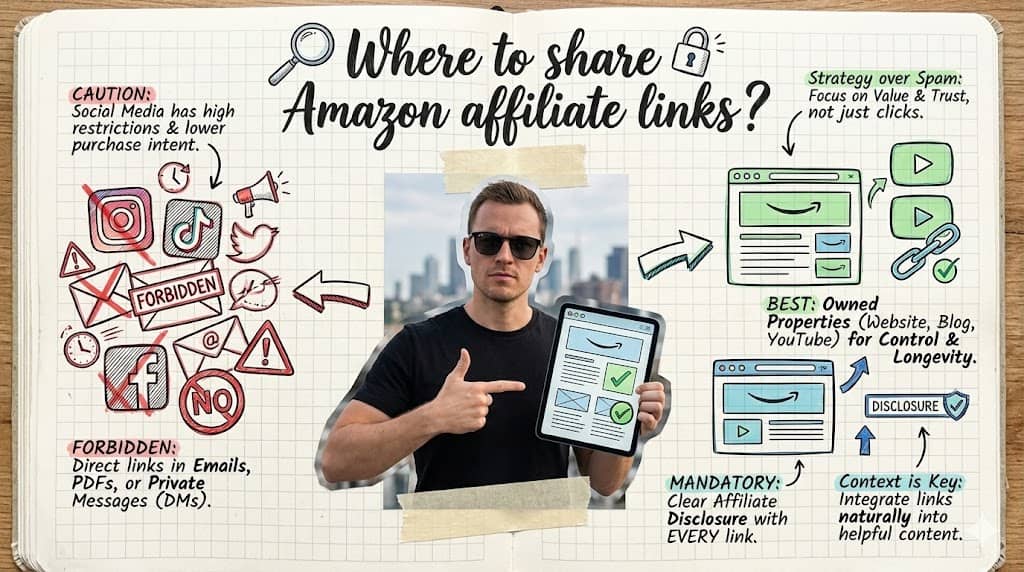
Forget the hype. Sharing Amazon affiliate links effectively isn’t about spamming every corner of the internet. It’s about strategic placement within content that genuinely adds value and builds trust. The most effective channels are those you control and can optimize for long-term engagement and conversion, such as dedicated websites, blogs, and YouTube channels. Social media platforms, while tempting, often come with significant limitations and risks, demanding a nuanced approach to avoid being flagged as spam or violating terms of service.
- Owned properties (websites, blogs, email lists) offer the most control and long-term potential for affiliate link placement.
- Social media requires careful adherence to platform-specific rules and often yields lower conversion rates without a strong, engaged audience.
- Direct linking in emails or private messages is generally prohibited by Amazon’s Associates Program.
- Content quality and relevance are paramount; links must naturally fit within helpful, informative, or entertaining material.
The internet is awash with gurus promising easy riches from Amazon affiliate links. They tell you to plaster them everywhere, hoping something sticks. This isn’t just bad advice; it’s a fast track to getting your Associates account banned and your efforts wasted. The reality of where to share Amazon affiliate links effectively is far more nuanced, demanding strategic thinking, adherence to strict terms of service, and a relentless focus on providing value.
You need to stop thinking about ‘sharing’ and start thinking about ‘integrating’ these links into a valuable content ecosystem. This isn’t a spray-and-pray operation; it’s a targeted strike. The platforms that yield actual results are those where you can build authority, engage an audience, and provide context for the products you’re recommending.
The Uncomfortable Truth: Not All Platforms Are Created Equal
Many aspiring affiliates fall into the trap of believing that more eyeballs equal more commissions. This couldn’t be further from the truth. The effectiveness of an Amazon affiliate link is directly tied to the context in which it appears and the level of trust you’ve established with your audience. Some platforms are inherently better suited for this than others, primarily due to their structure, audience intent, and, crucially, Amazon’s own rules.
Owned Properties: Your Digital Fortress
Your own website or blog stands as the undisputed champion for Amazon affiliate link placement. Why? Because you control it. You dictate the content, the user experience, and the long-term strategy. This is where you can build evergreen content that continues to drive traffic and sales for years.
- Blogs and Niche Websites: This is the bread and butter. Think product reviews, comparison guides, ‘best of’ lists, tutorials, and informational articles. When a user searches for “best noise-canceling headphones” and lands on your meticulously researched review, they are already in a buying mindset. Your affiliate link becomes a helpful resource, not an interruption. As detailed in the Amazon Affiliate Program Guide, content that provides genuine value is key.
- YouTube Channels: Video content is incredibly powerful for product demonstrations, unboxings, and visual reviews. Links can be placed in the video description, offering a seamless path for viewers to purchase the product they just saw in action. This builds a strong connection, as viewers can see and hear your genuine reactions and insights.
- Email Lists: While direct linking in emails is generally prohibited by Amazon’s Associates Program, you can use your email list to drive traffic to your website or blog posts that contain affiliate links. This is a critical distinction. Your email becomes a powerful tool for audience engagement and content promotion, not a direct sales channel for Amazon products.
Social Media: A Minefield of Restrictions and Low Intent
Social media platforms are a double-edged sword for Amazon affiliates. They offer massive reach but come with stringent rules, fleeting attention spans, and often a lower purchase intent compared to someone actively searching for a product review. The Social Media Affiliate Marketing Strategies article highlights these challenges.
- Facebook (Pages & Groups): You can share links on your own Facebook Page. In groups, it’s a tightrope walk. Many groups explicitly forbid affiliate links, and even if they don’t, blatant self-promotion will get you banned by moderators or ignored by members. Focus on providing value and only share links when genuinely helpful and permitted.
- Instagram: With its visual focus, Instagram is great for showcasing products. However, direct clickable links are limited to your bio or through Instagram Shopping features (which have their own requirements). Swiping up on Stories for links is restricted to accounts with a certain follower count. This makes direct conversion challenging.
- Pinterest: This platform is surprisingly effective for affiliate marketing, as users often use it for product discovery and planning purchases. High-quality pins with clear product images and descriptions can drive traffic to your affiliate links. However, ensure your pins provide value and aren’t just link dumps.
- TikTok: Similar to Instagram, direct linking is limited. The focus is on short, engaging video content. You’d typically direct users to a link in your bio. The ephemeral nature of content means consistent effort is required to maintain visibility.
- Twitter (X): Links can be shared, but the fast-paced nature of the feed means your tweets have a very short shelf life. Unless you have a massive, engaged following, it’s difficult to drive significant traffic directly from a single tweet.
“The Associates Program Participation Requirements state that you must clearly identify yourself as an Amazon Associate and disclose that you may earn commissions from qualifying purchases.”
This isn’t optional. Every single time you share an affiliate link, you must disclose your relationship. Failure to do so is a direct violation of Amazon’s terms and FTC guidelines, leading to account termination. Don’t be lazy; be transparent.
👍 The Real Advantages
- Control: Full ownership over content and user experience on your own website.
- Longevity: Evergreen content on blogs and YouTube can generate passive income for years.
- Trust Building: Deeper content allows for more comprehensive reviews and stronger audience relationships.
- Higher Intent: Audiences actively searching for product information are closer to making a purchase.
👎 The Brutal Downsides
- Platform Restrictions: Social media rules can change overnight, impacting your ability to link.
- Ephemeral Content: Social media posts have a short lifespan, requiring constant creation.
- Lower Conversion: Audiences on social media are often not in a buying mindset.
- Direct Linking Prohibitions: Amazon explicitly forbids direct linking in certain contexts, like emails.
The Forbidden Zones: Where Not to Share Affiliate Links
This is where many beginners get it wrong, often leading to account suspension. Amazon’s Associates Program Operating Agreement is not light reading, but ignoring it is financial suicide. There are explicit prohibitions you must understand and respect.
Direct Email and Private Messaging
You cannot directly embed Amazon affiliate links in emails, e-books, or private messages (e.g., SMS, WhatsApp, direct messages on social media). This is a non-negotiable rule. The rationale is to prevent spam and ensure transparency. If you want to use email, you must link to a page on your website that contains the affiliate link, not the link itself.
Offline Promotions
Any form of offline promotion is generally prohibited. This includes printed materials, physical products, or any verbal recommendations without a clear digital context. Your affiliate links are for online use within approved digital content.
Pop-ups and Interstitials
Using pop-up ads or interstitial pages that force users to see an Amazon product before accessing your content is a violation. The user experience must be seamless and voluntary. Aggressive advertising tactics are a red flag for Amazon.
Shortened Links Without Disclosure
While link shorteners are common, if the shortened link obscures the fact that it’s an Amazon affiliate link and you fail to disclose your associate status, you’re in violation. Transparency is key. Always assume your audience needs to know they are clicking an affiliate link.
The Art of Integration: Making Links Invisible, Yet Effective
The goal isn’t to make your content a billboard for Amazon. It’s to make your recommendations so natural and helpful that the affiliate link becomes an expected, valuable part of the user experience. This requires a deep understanding of your audience’s needs and search intent.
Contextual Linking on Blogs
When writing a review, comparison, or guide, weave the product mentions and links naturally into the text. Don’t just list products; explain why you’re recommending them, their pros and cons, and who they’re best for. Use clear calls to action like “Check Price on Amazon” or “Learn More Here.” The Effective Affiliate Link Placement guide emphasizes this approach.
Visual Cues on YouTube
In YouTube videos, verbally mention the product and direct viewers to the description for links. You can also use on-screen text overlays to highlight products. The visual nature of video allows you to build significant trust, which translates directly into higher click-through rates on your links.
Resource Pages and Curated Lists
Create dedicated resource pages on your website where you list all your recommended tools, books, or products. This provides a central hub for your audience to find everything you endorse, making it easy for them to click through when they’re ready to buy.
The Myth of Passive Income: It Requires Active Management
Many believe affiliate marketing is a set-it-and-forget-it endeavor. This is a dangerous myth. While some content can become ‘evergreen,’ the landscape of products, prices, and Amazon’s terms of service is constantly shifting. Your links need active management.
Link Rot and Product Availability
Products go out of stock, listings change, and sometimes entire products are discontinued. If your links point to dead pages, you’re losing potential commissions. Regularly audit your content to ensure all links are active and pointing to the correct products. This is especially true for seasonal content or rapidly evolving niches.
Commission Rate Changes
Amazon frequently adjusts its commission rates for different product categories. What was once a lucrative niche might become less so overnight. Staying informed about these changes allows you to pivot your content strategy and focus on higher-paying categories, as discussed in the Amazon Affiliate Commission Rates analysis.
Beyond the Link: Building an Affiliate Business
Sharing Amazon affiliate links is a tactic, not a strategy. A sustainable affiliate business is built on a foundation of audience trust, valuable content, and a clear understanding of your niche. The location of your links is secondary to the quality of the content surrounding them.
Audience First, Always
Who are you trying to reach? What problems do they have? How can you help them solve those problems with products from Amazon? Answer these questions, and your link placement will become intuitive. If you’re just pushing products, you’re a salesperson; if you’re solving problems, you’re a trusted resource.
Diversify Your Income Streams
Relying solely on Amazon affiliate commissions is risky. Diversify with other affiliate programs, display advertising, direct sponsorships, or even your own products. This insulates you from Amazon’s inevitable policy changes and commission rate adjustments.
📋 Your Execution Plan
- ✓Prioritize owned platforms: Build a blog or YouTube channel as your primary hub for affiliate content.
- ✓Master contextual linking: Integrate links naturally within valuable, problem-solving content.
- ✓Strictly adhere to Amazon’s Associates Program Operating Agreement, especially regarding disclosures and prohibited placements.
- ✓Regularly audit your links for broken URLs or outdated product information.
- ✓Focus on building an engaged audience, as trust is the ultimate conversion driver.
No-Nonsense FAQs
Can I share Amazon affiliate links directly in emails?
No, Amazon’s Associates Program explicitly prohibits placing affiliate links directly in emails, e-books, or private messages. You must link to a page on your website or blog that contains the affiliate link.
Is it okay to use Amazon affiliate links on social media?
It depends on the platform and its specific rules. While some platforms like Pinterest can be effective, others like Facebook groups often restrict or prohibit direct affiliate links. Always check the platform’s terms of service and ensure you disclose your affiliate relationship.
What’s the best platform for sharing Amazon affiliate links for long-term income?
Your own website or blog is generally the most effective and sustainable platform. You have full control over content, can build authority, and create evergreen resources that continue to generate commissions over time, unlike ephemeral social media posts.
Do I need to disclose that I’m an Amazon Associate?
Absolutely. It is a mandatory requirement by Amazon’s Associates Program and FTC guidelines. You must clearly and conspicuously disclose your affiliate relationship every time you share an Amazon affiliate link.