Navigating AI Affiliate Marketing for Beginners
It depends significantly on your approach and commitment. AI affiliate marketing offers powerful tools for efficiency but requires strategic human oversight to succeed.
- Enhanced Efficiency: AI automates content creation, SEO, and analysis, saving significant time.
- Quality Control Challenge: Over-reliance on AI without human review can lead to generic or inaccurate content.
- Strategic Application: Best for marketers looking to scale operations and gain data-driven insights, not for those seeking a ‘set-it-and-forget-it’ solution.
What is AI Affiliate Marketing?
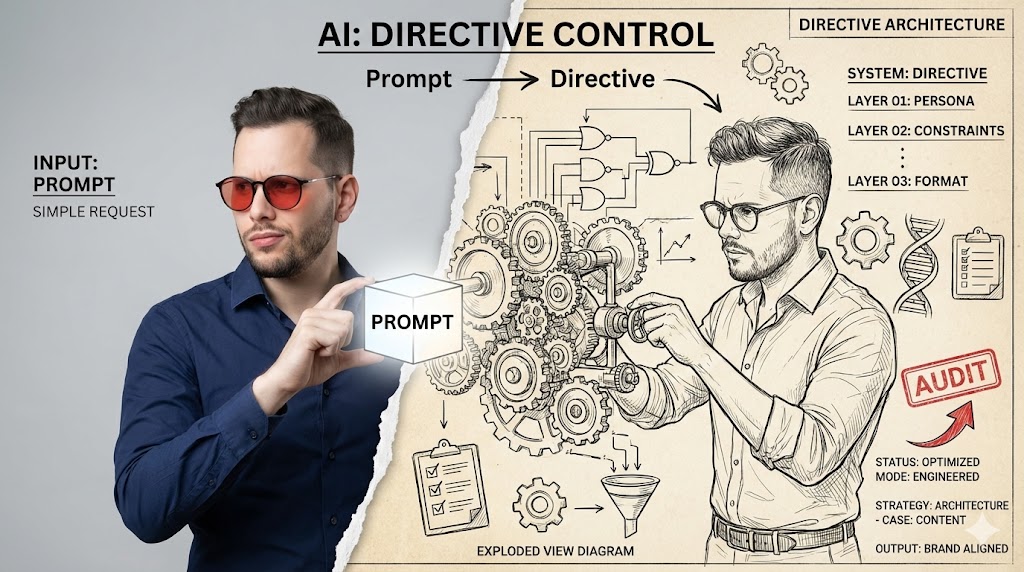
AI affiliate marketing involves leveraging artificial intelligence tools and technologies to streamline, optimize, and scale various aspects of an affiliate marketing business. This integration can range from automated content generation and SEO optimization to predictive analytics and personalized audience targeting. The goal is to enhance efficiency and effectiveness, allowing marketers to manage larger campaigns with fewer manual inputs.
Instead of manually performing repetitive tasks, AI systems can analyze vast datasets, identify trends, and even generate creative assets. This shift allows affiliate marketers to focus more on strategy, partnership building, and high-level decision-making, rather than getting bogged down in day-to-day operational details. It represents a significant evolution from traditional affiliate marketing methods, promising greater reach and better conversion rates.
AI affiliate marketing: The strategic application of artificial intelligence technologies to automate, optimize, and scale tasks within an affiliate marketing framework, including content creation, SEO, audience analysis, and performance tracking.
- Content Automation: Generating articles, product reviews, and social media posts.
- SEO Optimization: Identifying keywords, analyzing competitor strategies, and suggesting on-page improvements.
- Audience Targeting: Segmenting audiences and personalizing marketing messages for higher engagement.
- Performance Analytics: Interpreting data to identify trends and areas for campaign improvement.
- Ad Copy Generation: Creating compelling ad headlines and descriptions for various platforms.
Insider tip: Start Small and Iterate
Begin by integrating AI into one specific area of your affiliate marketing, such as keyword research or content outlines. Master that application before expanding to more complex automation. This iterative approach minimizes risk and builds confidence.
Why Consider AI for Affiliate Marketing?
The primary appeal of integrating AI into affiliate marketing lies in its ability to significantly boost efficiency and scalability. AI tools can perform tasks much faster and often more accurately than humans, freeing up valuable time for strategic planning. This means you can manage more affiliate campaigns, target a wider range of niches, and produce a higher volume of content without proportionally increasing your workload or team size.
Beyond sheer speed, AI offers unparalleled capabilities in data analysis. It can process and interpret complex datasets to uncover hidden patterns, predict market trends, and identify optimal conversion paths. This data-driven approach allows marketers to make more informed decisions, leading to better campaign performance and a higher return on investment. The competitive edge gained through such insights is becoming increasingly crucial in a crowded digital landscape.
Advantages of AI in Affiliate Marketing
- Increased Productivity: Automate repetitive tasks like content drafting and keyword research, allowing focus on strategy.
- Data-Driven Decisions: AI analyzes vast datasets to provide actionable insights for campaign optimization and audience targeting.
- Enhanced Personalization: Deliver highly relevant content and offers to specific audience segments, improving conversion rates.
Limitations of AI in Affiliate Marketing
- Content Quality Control: AI-generated content often requires significant human editing for accuracy, tone, and originality.
- Setup Complexity: Integrating and effectively using AI tools can have a steep learning curve for beginners.
- Ethical Concerns: Potential for bias in AI algorithms and the need for transparency when using AI-generated content.
- Time Savings: Automate content creation, social media scheduling, and email responses.
- Cost Reduction: Minimize the need for extensive manual labor or large content teams.
- Improved Targeting: Utilize AI to identify and reach the most receptive audiences.
- Scalability: Expand operations and manage multiple campaigns simultaneously with greater ease.
- Competitive Advantage: Gain insights into market trends and competitor strategies faster than manual methods.
Data Insight: AI-Driven Efficiency Gains
Studies indicate that businesses leveraging AI for marketing tasks can see a 20-30% increase in operational efficiency, primarily through automation of repetitive processes and faster data analysis, based on typical industry observations.
Essential AI Tools for Affiliate Marketers
The landscape of AI tools for affiliate marketing is rapidly expanding, offering solutions for nearly every aspect of the business. These tools can be broadly categorized by their primary function, such as content generation, SEO analysis, or data analytics. For beginners, it is crucial to select tools that are user-friendly and directly address a specific pain point in their workflow, rather than trying to implement complex, all-in-one solutions immediately.
When evaluating AI tools, consider factors like ease of integration with your existing platforms, the quality of their output, and their pricing structure. Many tools offer free trials, which are excellent opportunities to test their capabilities before committing. Focusing on tools that provide clear, actionable insights or significantly reduce manual effort in a key area will yield the best results for those just starting out.
Key AI Tool Categories for Affiliates
Context for Selection: These categories represent the most impactful areas where AI can assist affiliate marketers, from content creation to audience understanding.
- Content Generation AI – For drafting articles, product descriptions, and social media posts quickly. Concrete benefit: Reduces writing time by up to 70%.
- SEO & Keyword Research AI – For identifying high-potential keywords, analyzing SERPs, and optimizing content for search engines. Concrete benefit: Uncovers untapped keyword opportunities.
- Data Analytics & Reporting AI – For processing campaign data, identifying trends, and predicting future performance. Concrete benefit: Provides actionable insights for campaign adjustments.
Decision Help: Choose tools that solve your most pressing current challenge. If content creation is a bottleneck, prioritize a content AI. If you struggle with visibility, focus on SEO AI. Avoid tools that require extensive technical knowledge if you are a beginner, as the learning curve can hinder progress rather than accelerate it.
- Content Writing Assistants: Tools like Jasper or Copy.ai for generating blog posts, ad copy, and social media content.
- SEO Research Platforms: AI-powered features in SEMrush or Ahrefs for keyword discovery and competitive analysis.
- Image & Video Generators: AI platforms that create visuals or short video clips for marketing materials.
- Chatbots & Customer Service AI: For automating responses to common customer queries on landing pages.
- Email Marketing AI: Tools that optimize send times, personalize subject lines, and segment email lists.
Myth
AI will completely replace human creativity and strategic thinking in affiliate marketing.
Reality
AI is a powerful assistant that automates mundane tasks and provides data-driven insights, but human creativity, strategic oversight, and ethical judgment remain indispensable for developing unique angles, building genuine connections, and ensuring content quality.
Step-by-Step: Setting Up Your AI-Powered Affiliate Funnel
Building an AI-powered affiliate funnel involves a systematic approach, integrating AI tools at each stage to maximize efficiency and effectiveness. The first step is to clearly define your niche and target audience, as this will inform all subsequent AI applications. Once your foundation is set, you can begin selecting affiliate products that align with your audience’s needs and preferences, ensuring a strong product-market fit.
Next, focus on content creation and optimization, where AI can play a transformative role. Use AI to generate initial content drafts, optimize them for SEO, and even create engaging visuals. Subsequently, leverage AI for promotion and distribution, automating social media posts or personalizing email campaigns. Finally, AI-driven analytics will be crucial for monitoring performance and continuously refining your funnel for better results.
- Niche & Audience Definition: Use AI for market research to identify profitable niches and understand audience demographics.
- Product Selection: Employ AI to analyze product trends and identify high-converting affiliate offers.
- Content Generation: Utilize AI writing tools to draft articles, reviews, and landing page copy.
- SEO & Promotion: Apply AI for keyword research, on-page optimization, and automated social media scheduling.
- Performance Tracking: Implement AI analytics to monitor conversions, traffic, and user behavior.
- Optimization & Iteration: Use AI insights to identify areas for improvement and A/B test different elements of your funnel.
Warning: The Automation Trap
Critical mistake to avoid: Relying solely on AI to generate and publish content without human review. This can lead to inaccurate information, generic writing, and a lack of authentic voice, ultimately damaging your credibility and search rankings.
Crafting High-Converting Content with AI
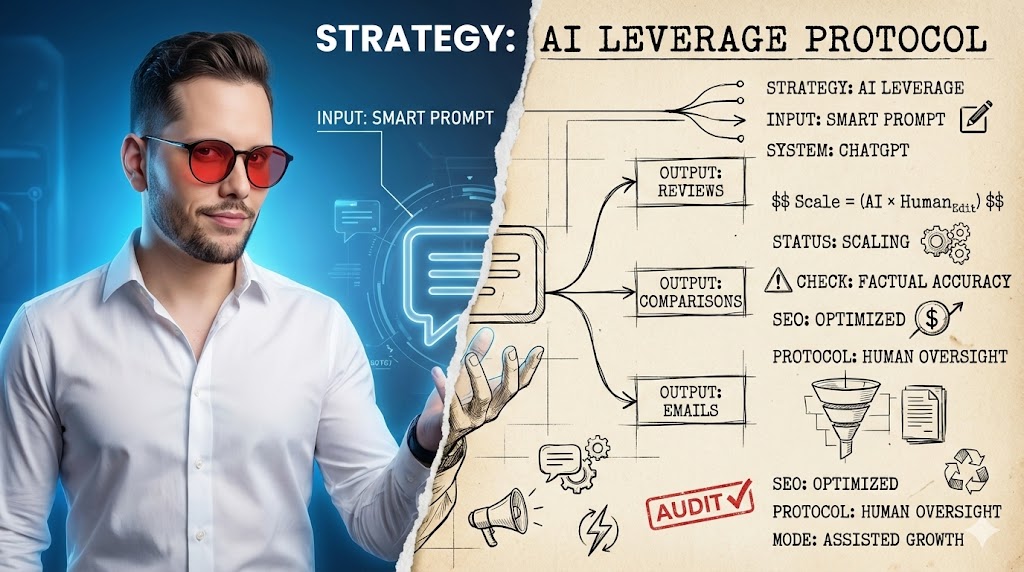
Content is the cornerstone of affiliate marketing, and AI can significantly enhance its creation and optimization. AI writing assistants can generate initial drafts of blog posts, product reviews, and social media updates in a fraction of the time it would take a human. This allows marketers to produce a higher volume of content, covering more keywords and reaching a broader audience. However, it is crucial to view AI as a co-pilot, not a replacement, for human creativity and expertise.
To ensure high-converting content, AI-generated text must be refined and personalized. Human editors should review for accuracy, tone, and uniqueness, adding personal insights and storytelling that resonate with the target audience. Tools like an AI Blogging Tool can help streamline the drafting process, but the final polish and strategic direction always come from the marketer. This blend of AI efficiency and human touch creates content that is both scalable and impactful.
- Outline Generation: AI can quickly create structured outlines for articles, ensuring comprehensive coverage.
- Drafting Content: Generate initial paragraphs or full sections for various content formats.
- Headline Optimization: AI tools suggest compelling headlines that improve click-through rates.
- Call-to-Action (CTA) Creation: Develop persuasive CTAs tailored to specific products and audiences.
- Content Repurposing: Transform a blog post into social media snippets, email copy, or video scripts.
Insider tip: Master Prompt Engineering
The quality of AI-generated content heavily depends on the prompts you provide. Learn to write clear, detailed, and specific prompts to guide the AI towards producing highly relevant and useful output for your affiliate campaigns.
Automating Keyword Research and SEO with AI
For affiliate marketers, effective keyword research and SEO are non-negotiable for driving organic traffic. AI tools revolutionize this process by analyzing vast amounts of search data, identifying high-potential keywords, and uncovering competitor strategies with unprecedented speed. These tools can pinpoint long-tail keywords that human researchers might miss, offering opportunities to rank for less competitive, yet highly relevant, search terms.
Beyond keyword identification, AI assists in optimizing content for search engines. It can analyze your existing content and suggest improvements for on-page SEO, such as optimizing meta descriptions, improving content structure, and identifying internal linking opportunities. This automation ensures that your affiliate content is not only well-written but also highly visible to your target audience, maximizing its potential for conversions.
- Keyword Discovery: Identify untapped keywords and phrases with high search volume and low competition.
- Competitive Analysis: Analyze competitor’s top-ranking keywords, backlinks, and content strategies.
- Content Gap Analysis: Discover topics and keywords your competitors rank for, but you don’t.
- SERP Feature Optimization: Identify opportunities to rank for rich snippets, featured snippets, and other SERP features.
- On-Page SEO Suggestions: Receive recommendations for optimizing titles, headings, and body text for target keywords.
Data Insight: Precision in Keyword Discovery
AI-powered SEO platforms can process and analyze millions of keywords in minutes, a task that would take human teams weeks. This leads to a 30-50% increase in relevant keyword identification compared to manual methods, based on observed platform capabilities.
Analyzing Performance and Optimizing with AI
Understanding how your affiliate campaigns perform is critical for long-term success, and AI offers powerful capabilities for performance analysis and optimization. AI-driven analytics tools can sift through large datasets from various sources — such as website traffic, conversion rates, and ad spend — to identify patterns and anomalies that might be invisible to the human eye. This allows marketers to quickly understand what is working and what isn’t.
Furthermore, AI can provide predictive insights, forecasting future trends and suggesting proactive adjustments to your strategies. This might include recommending optimal times for content publication, identifying underperforming affiliate products, or suggesting audience segments that are ripe for retargeting. By continuously feeding performance data back into AI systems, marketers can create a feedback loop that drives ongoing optimization and maximizes profitability.
- Conversion Rate Optimization: Identify bottlenecks in the conversion funnel and suggest improvements.
- Traffic Source Analysis: Determine which traffic sources are most profitable and allocate resources accordingly.
- A/B Testing Automation: Automatically run and analyze A/B tests for landing pages, ad copy, and calls-to-action.
- Fraud Detection: Identify and flag suspicious clicks or conversions to protect your affiliate earnings.
- Predictive Analytics: Forecast future performance based on historical data, enabling proactive strategy adjustments.
Case Study: Boosting Conversion Rates with AI Analytics
The trap: An affiliate marketer was struggling to identify why a particular product page had a high bounce rate despite good traffic. Manual analysis of Google Analytics was time-consuming and inconclusive.
The win: By implementing an AI analytics tool, they quickly identified that users were dropping off after encountering a slow-loading image carousel on mobile devices. The AI recommended optimizing image sizes and lazy loading. Implementing these changes led to a 15% increase in mobile conversions within a month, demonstrating the power of AI in pinpointing specific, actionable issues.
Common Pitfalls in AI Affiliate Marketing
While AI offers immense potential for affiliate marketers, several common pitfalls can derail efforts if not carefully managed. One of the most significant risks is over-reliance on AI without sufficient human oversight. This can lead to the propagation of inaccurate information, generic content that lacks a unique voice, or even biased outputs if the AI’s training data is flawed. Maintaining a critical human eye on all AI-generated content and insights is paramount.
Another pitfall is neglecting the ethical implications of using AI, particularly concerning transparency and data privacy. Marketers must be clear about their use of AI, especially when generating content, to maintain trust with their audience. Furthermore, the rapid evolution of AI technology means that tools can quickly become outdated or require continuous learning, demanding an ongoing commitment to education and adaptation from the marketer.
- Lack of Human Oversight: Publishing AI-generated content without thorough human review for accuracy, tone, and originality.
- Ignoring Ethical Guidelines: Failing to disclose AI usage or considering data privacy implications.
- Over-Automation: Automating too many processes without understanding the underlying mechanics, leading to loss of control.
- Poor Prompt Engineering: Providing vague or insufficient prompts to AI tools, resulting in low-quality or irrelevant output.
- Stagnant Learning: Not staying updated with the rapid advancements in AI technology and best practices.
Ethical Considerations and Transparency in AI Affiliate Marketing
As AI becomes more integrated into affiliate marketing, ethical considerations and transparency become increasingly important. Audiences are becoming more discerning, and trust is a critical currency. Marketers have a responsibility to ensure that their use of AI does not mislead consumers, compromise data privacy, or perpetuate biases. This means being transparent about when and how AI is used, especially in content creation, to maintain credibility.
Beyond transparency, marketers must also consider the quality and accuracy of AI-generated information. AI models can sometimes hallucinate or produce factually incorrect content, which can harm both the audience and the marketer’s reputation. Implementing robust human review processes and adhering to strict editorial guidelines are essential safeguards. Prioritizing ethical AI use not only builds trust but also contributes to a more sustainable and reputable affiliate marketing ecosystem.
- Disclosure of AI Content: Clearly inform your audience when content has been generated or heavily assisted by AI.
- Data Privacy: Ensure AI tools comply with data protection regulations (e.g., GDPR, CCPA) when handling user data.
- Bias Mitigation: Actively review AI outputs for potential biases in language or recommendations.
- Accuracy Verification: Always fact-check AI-generated information before publishing to prevent misinformation.
- Authenticity: Strive to maintain a human touch and genuine voice, even with AI assistance, to build real connections.
“The greatest danger of artificial intelligence is that people conclude too early that they understand it.”
— Eliezer Yudkowsky, AI Researcher
Future Trends: What’s Next for AI in Affiliate Marketing?
The future of AI in affiliate marketing promises even deeper integration and more sophisticated capabilities. We can expect to see advancements in hyper-personalization, where AI not only segments audiences but also dynamically adjusts content and offers in real-time based on individual user behavior and preferences. This level of customization will lead to significantly higher engagement and conversion rates, making the user experience seamless and highly relevant.
Another key trend will be the rise of more autonomous AI agents capable of managing entire affiliate campaigns from start to finish, requiring minimal human intervention. These agents could handle everything from niche identification and product selection to content generation, promotion, and performance optimization. However, human strategists will still be crucial for overseeing these agents, setting ethical boundaries, and providing the creative spark that AI currently lacks, ensuring a balanced and effective approach.
- Hyper-Personalization: AI will deliver highly individualized content and product recommendations in real-time.
- Autonomous Agents: More sophisticated AI will manage entire campaign lifecycles with minimal human input.
- Voice Search Optimization: AI will play a larger role in optimizing content for voice assistants and conversational search queries.
- Predictive Analytics Evolution: AI will offer even more accurate forecasts for market shifts and consumer behavior.
- AI-Powered Chatbots: Advanced chatbots will provide more intelligent and personalized customer support, guiding users through the sales funnel.
Your AI Affiliate Marketing Action Checklist
- Week 1: Select one AI tool for content outlining or keyword research and complete your first AI-assisted content piece.
- Month 1: Integrate AI into your chosen content creation workflow, producing at least three AI-assisted articles and reviewing them thoroughly.
- Quarter 1: Analyze the performance of your AI-generated content using analytics tools and make initial optimization decisions based on the data.
- Ongoing: Dedicate time weekly to learn about new AI tools and ethical best practices, adapting your strategy as the technology evolves.
FAQ
Can AI replace affiliate marketers entirely?
No, AI cannot entirely replace affiliate marketers. While AI automates many tasks, human creativity, strategic thinking, ethical judgment, and the ability to build genuine relationships remain indispensable for long-term success in affiliate marketing.
Is AI affiliate marketing suitable for complete beginners?
Yes, but with caution. Beginners can leverage AI tools to accelerate learning and efficiency. However, a foundational understanding of marketing principles and a commitment to human oversight are crucial to avoid common pitfalls and ensure quality.
What are the biggest risks of using AI in affiliate marketing?
The biggest risks include producing generic or inaccurate content, over-reliance on automation without human review, potential for algorithmic bias, and neglecting ethical considerations like transparency and data privacy. These can damage credibility and performance.
How much does it cost to start with AI affiliate marketing?
Starting costs can vary widely. Many AI tools offer free tiers or trials, allowing beginners to experiment. Paid subscriptions for more advanced tools can range from $20 to $200+ per month, depending on features and usage. It’s possible to start with minimal investment by choosing free options.