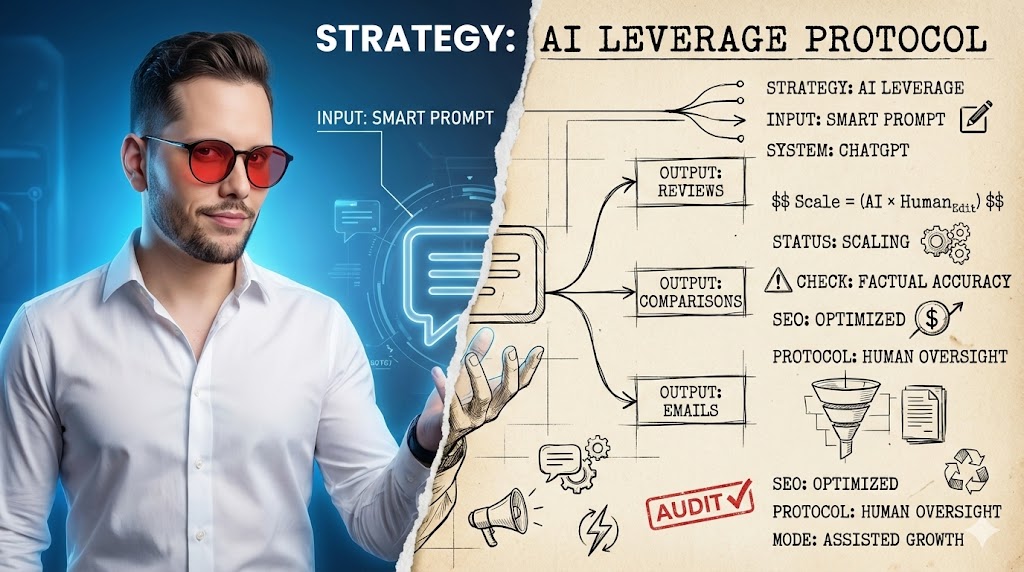
Strategic AI Content for Affiliate Sites: A Conditional Advantage
It depends heavily on implementation and oversight. Affiliate marketers aiming for scale and efficiency in content production can benefit significantly, provided they maintain strict quality control and human editing. This approach is not suitable for those seeking a ‘set it and forget it’ solution for high-converting content without any human intervention or strategic input.
- Accelerates content creation velocity significantly, allowing for broader topic coverage and keyword targeting.
- Requires substantial human editing, fact-checking, and optimization to ensure accuracy, originality, and adherence to brand voice.
- Ideal for generating comprehensive informational articles, product comparisons, and supporting content clusters that guide users towards affiliate offers.
What is AI Content Generation for Affiliate Sites?
AI content generation for affiliate sites involves using sophisticated artificial intelligence models to produce written material tailored for promoting products or services. These tools leverage machine learning algorithms trained on vast datasets to understand context, generate human-like text, and assist in various stages of content creation, from outlining to full article drafts.
The primary goal is to enhance content production efficiency, allowing affiliate marketers to scale their efforts without compromising quality, provided the AI output undergoes rigorous human review. It’s about augmenting human capabilities, not replacing them entirely.
AI Content Generation: The process of using artificial intelligence models to automatically produce written content, ranging from outlines and drafts to complete articles, often tailored for specific purposes like affiliate marketing, with the aim of increasing efficiency and scale.
Common applications include:
- Generating initial article outlines and structures.
- Drafting product reviews and comparisons based on provided specifications.
- Creating informational content clusters around niche topics.
- Producing social media posts and ad copy for affiliate promotions.
- Rewriting or optimizing existing content for better SEO performance.
The Core Benefits of AI for Affiliate Marketers
Leveraging AI in affiliate marketing content offers several compelling advantages, primarily centered around efficiency and scale. The ability to generate content at an accelerated pace can significantly impact an affiliate site’s growth trajectory, allowing for broader market penetration and keyword targeting.
Beyond speed, AI tools can help overcome writer’s block, maintain a consistent tone, and even suggest improvements for SEO, making the content creation process more streamlined and less labor-intensive. This frees up human editors to focus on strategic refinement and adding unique value.
Key Advantages of AI Content
- Rapid Content Scaling: Produce a high volume of articles quickly, covering more keywords and niches.
- Reduced Research Time: AI can quickly synthesize information, providing a strong foundation for human editors.
- Cost Efficiency: Potentially lower content production costs compared to solely relying on human writers for every draft.
- Consistent Output: Maintain a uniform style and tone across large content libraries, especially for initial drafts.
Limitations and Trade-offs
- Risk of Generic Content: Without careful prompting and editing, AI output can lack originality and a unique voice.
- Potential for Factual Errors: AI models can sometimes hallucinate or present outdated information, necessitating thorough fact-checking.
- Requires Significant Editing: Raw AI content often needs substantial human refinement to meet quality standards and SEO requirements.
- Lack of Nuance: AI may struggle with complex emotional intelligence, subtle humor, or deep personal insights crucial for certain niches.
The strategic deployment of AI content can lead to a substantial increase in content velocity, enabling affiliate marketers to respond faster to market trends and competitor activities. This agility is a significant competitive edge.
- Increased content volume for long-tail keywords.
- Faster publishing cycles for timely topics.
- Filling content gaps identified through keyword research.
- Automating initial draft creation for various content types.
Overcoming Quality Control Challenges with AI Content
A primary concern with AI-generated content is maintaining a high standard of quality. Unedited or poorly prompted AI output can be generic, factually incorrect, or lack the unique voice necessary to build authority and trust with an audience. Effective quality control is therefore paramount for any affiliate site utilizing AI.
This involves a multi-layered approach, starting from precise prompt engineering and extending through rigorous human editing, fact-checking, and optimization for both search engines and user experience. The goal is to transform raw AI drafts into polished, valuable assets.
Warning: The Pitfall of Unedited AI
Critical mistake to avoid: Publishing AI-generated content without thorough human review and editing. This can lead to factual inaccuracies, grammatical errors, a lack of unique perspective, and ultimately result in a loss of reader trust and potential search engine penalties for low-quality content.
Key strategies for ensuring high-quality AI content include:
- Human Editing and Refinement: Every AI draft should be reviewed, edited, and enhanced by a human writer to inject personality, clarify points, and ensure accuracy.
- Fact-Checking: Verify all data, statistics, and claims made by the AI against reliable sources. This is non-negotiable for maintaining credibility.
- Plagiarism Checks: Utilize tools to ensure the AI output is original and free from unintentional plagiarism, even if the AI is designed to be original.
- Tone and Voice Adjustment: Guide the AI with specific instructions to match your brand’s unique tone, then refine manually to perfect it.
- SEO Optimization: Integrate target keywords naturally, optimize headings, and ensure the content flows logically for both readers and search engines.
Ethical Considerations and Google Guidelines
The use of AI in content creation raises important ethical questions, particularly concerning transparency and originality. Google’s stance on AI-generated content has evolved, emphasizing the helpfulness and quality of the content for users, rather than the method of its creation. This means that AI-generated content is acceptable as long as it provides genuine value.
Affiliate marketers must prioritize creating content that is genuinely helpful, accurate, and trustworthy, regardless of whether AI was used in its production. Transparency with your audience, while not strictly mandated, can also build stronger relationships and trust.
“Google’s long-standing guidance about content has been, and remains, that content should be high-quality, helpful, original, and created for people first. […] AI can be used to generate helpful content, and that’s perfectly fine according to our guidelines.”
— Google Search Central, Official Blog Post
Adhering to Google’s guidelines is crucial to avoid penalties and ensure long-term success. The focus should always be on user helpfulness and providing unique value.
- Originality: Ensure the AI output is not merely a rehash of existing content but offers a fresh perspective or deeper insight.
- Helpfulness: The content must genuinely answer user queries and provide actionable information.
- Accuracy: All facts, figures, and claims must be verified and correct.
- Transparency: While not always required, disclosing AI assistance can build trust with certain audiences.
- Avoiding Spam: Do not use AI to mass-produce low-quality, keyword-stuffed, or misleading content.
Best AI Content Generation Methods for Affiliate Success
To truly leverage AI for affiliate success, it is essential to move beyond basic text generation and adopt strategic methods that integrate AI into a comprehensive content workflow. The most effective approach often involves a hybrid approach, combining AI’s speed with human creativity and critical thinking.
This includes using AI for specific tasks where it excels, such as generating detailed outlines, expanding on bullet points, or drafting initial product descriptions. The human element then refines, fact-checks, adds unique insights, and optimizes for semantic SEO and conversion.
Insider tip: Master Your Prompts
Always provide specific, detailed, and contextual prompts to your AI tool. The quality of the output is directly proportional to the clarity and specificity of your input instructions. Include desired tone, target audience, keywords, and structural requirements.
For affiliate marketers seeking to streamline their content creation workflow and produce high-quality, SEO-optimized articles, an advanced AI Blogging Tool like Postlabs.ai can be invaluable. Such platforms are designed to assist in generating content that aligns with search intent and conversion goals.
Effective methods include:
- Outline-First Approach: Use AI to generate a comprehensive outline, then manually fill in the sections with unique insights and data.
- Long-Form Article Generation with Editing: Have AI draft a full article, then heavily edit, fact-check, and enrich it with examples and expert commentary.
- Product Review Frameworks: Provide AI with product specs and key features to generate structured reviews, which are then human-polished.
- Comparison Table Creation: Feed AI data points for competing products to generate comparison tables and summaries.
- Content Repurposing: Use AI to transform existing long-form content into shorter blog posts, social media snippets, or email newsletters.
Structuring AI-Generated Content for SEO and Conversions
Even the most well-written AI content will underperform if it’s not structured effectively for both search engines and human readers. A clear, logical content structure enhances readability, improves SEO signals, and guides users seamlessly towards affiliate offers. This involves more than just headings; it encompasses internal linking, calls to action, and overall user experience.
Focus on creating a natural flow that answers user questions comprehensively while subtly nudging them towards conversion points. The structure should make it easy for readers to find the information they need and understand the value proposition of the affiliate products.
Engagement Boost from Structure
Studies suggest that content with a clear, logical structure, including scannable paragraphs and distinct headings, can increase reader engagement by up to 30% compared to dense, unstructured text, leading to lower bounce rates and higher time on page.
Key structural elements to optimize include:
- Clear H1/H2/H3 Hierarchy: Use headings to break up text, signal topic shifts, and incorporate target keywords naturally.
- Strategic Internal Links: Guide users and search engine bots to related content, building topical authority and improving site navigation.
- Prominent Calls to Action (CTAs): Integrate clear, compelling CTAs where appropriate, leading users to affiliate product pages.
- Engaging Introductions and Conclusions: Hook readers immediately and provide a strong summary with a clear next step.
- Use of Bullet Points and Numbered Lists: Improve readability and make complex information easier to digest, enhancing user experience.
Integrating AI Content into Your Affiliate Workflow
Successfully integrating AI content generation into an existing affiliate marketing workflow requires careful planning and a phased approach. It’s not about replacing your current process but rather augmenting it to achieve greater efficiency and output. This involves defining clear roles for AI and human input at each stage, from initial keyword research to final publication.
A well-defined workflow ensures that AI tools are used where they provide the most value, such as generating initial drafts or brainstorming ideas, while human expertise is reserved for critical tasks like fact-checking, adding unique insights, and optimizing for conversion. This workflow integration maximizes the benefits of both.
Case Study: From Overwhelm to Optimized Output
The trap: An affiliate site owner, overwhelmed by the need for fresh content, started publishing raw AI-generated product reviews without human oversight. This led to factual errors, generic language, and a sharp decline in search rankings due to perceived low quality. The win: After implementing a strict human editing and fact-checking phase for all AI drafts, focusing on adding unique value and personal anecdotes, the site saw a gradual recovery and sustained growth in organic traffic and affiliate conversions. The AI became a powerful assistant, not a replacement.
Consider these steps for effective integration:
- Keyword Research and Topic Ideation: Use AI to brainstorm topic clusters and long-tail keywords based on your niche.
- AI Draft Generation: Generate initial article drafts, outlines, or specific sections using your chosen AI tool.
- Human Editing and Optimization: This is the most critical step. Human editors refine, fact-check, add unique perspectives, and optimize for SEO and conversions.
- Affiliate Link Integration: Strategically place affiliate links within the content, ensuring they are relevant and provide value.
- Publishing and Monitoring: Publish the content and monitor its performance, using data to inform future AI content strategies and iterative refinement.
Common Myths About AI Content and Affiliate Marketing
The rapid rise of AI content generation has led to numerous misconceptions, particularly within the affiliate marketing community. These myths can deter marketers from exploring a valuable tool or lead them to misuse it, hindering their potential for growth. It’s important to separate fact from fiction to make informed decisions.
Many fears stem from early, less sophisticated AI outputs or a misunderstanding of how modern AI models function and how search engines evaluate content. Understanding the reality helps in adopting AI as a powerful collaborative tool rather than a perceived threat.
Myth: AI content is inherently low quality and will always be penalized by search engines.
Reality: Search engines, including Google, evaluate content based on its helpfulness, accuracy, and quality for users, not solely on how it was generated. Well-edited, valuable AI content that meets user needs can rank effectively and is not inherently penalized. The key is human oversight and value addition.
Reality: Quality and helpfulness are paramount.
The method of content creation is secondary to its ultimate value to the reader. If AI helps you produce high-quality, helpful, and unique content, it aligns with search engine goals. Poorly executed AI content, like any low-quality content, will struggle regardless of its origin.
Here are some common myths debunked:
- Myth: AI will completely replace human writers. Reality: AI is a powerful assistant that automates repetitive tasks, allowing human writers to focus on higher-level strategy, creativity, and adding unique insights.
- Myth: AI content is always plagiarized. Reality: Modern AI models are designed to generate original text. While they learn from existing data, their output is typically unique. Plagiarism checks are still a good practice, as with any content.
- Myth: AI content cannot rank in competitive niches. Reality: High-quality, well-optimized AI-assisted content, when properly edited and enhanced, can absolutely rank in competitive niches by providing superior value and meeting search intent.
- Myth: AI cannot understand complex topics. Reality: With detailed and specific prompts, AI can generate surprisingly nuanced content on complex subjects, though human expertise is still needed for deep analysis and critical evaluation.
Choosing the Right AI Tools for Your Affiliate Niche
The market for AI content generation tools is rapidly expanding, offering a wide array of options with varying features, pricing, and capabilities. Selecting the right tool is a critical decision that can significantly impact the efficiency and quality of your affiliate content strategy. The ideal tool will align with your specific niche, content volume needs, and budget.
Consider factors such as the tool’s ability to handle long-form content, its integration with other platforms, and its customization options for tone and style. A thorough evaluation of potential tools will ensure you invest in a solution that genuinely enhances your workflow and supports your affiliate goals.
Key AI Writing Tools for Affiliate Content
Context for Selection: Selecting the right AI writing assistant is crucial for optimizing your affiliate content strategy, balancing output quality with ease of use and specific feature sets.
- Jasper AI – Best for versatile long-form content generation with advanced templates and a strong focus on brand voice consistency. Ideal for marketers needing diverse content types.
- Surfer SEO AI – Excellent for content optimization and generating AI drafts directly integrated with SEO analysis. Best for those prioritizing on-page SEO.
- Copy.ai – Strong for short-form content, ad copy, and brainstorming, with a user-friendly interface. Suitable for quick content snippets and social media.
Decision Help: When choosing, prioritize tools that offer robust editing features, strong prompt engineering capabilities, and seamless integration with your existing workflow. Avoid tools that produce overly generic output or lack customization options, as they may require excessive manual correction and hinder your ability to create truly unique content for your niche.
AI Tool Effectiveness
A recent survey of affiliate marketers indicated that tools offering advanced prompt engineering and custom brand voice features were rated 40% more effective for producing high-quality, niche-specific content compared to generic AI writing assistants.
Key criteria for tool selection criteria include:
- Output Quality: Evaluate the human-likeness, coherence, and accuracy of the generated text.
- Customization Options: Look for tools that allow you to define tone, style, and specific instructions for better niche specificity.
- Feature Set: Consider templates for specific content types (e.g., product reviews, comparisons, blog posts).
- Integration: Check for integrations with SEO tools, content management systems, or other platforms you use.
- Pricing and Scalability: Ensure the pricing model fits your budget and can scale with your content needs.
Future Trends in AI Content for Affiliate Marketing
The landscape of AI content generation is continuously evolving, with new advancements promising even more sophisticated capabilities for affiliate marketers. Staying abreast of these future trends is crucial for maintaining a competitive edge and adapting your strategies effectively. The focus is shifting towards more personalized, data-driven, and integrated AI solutions.
Expect to see AI tools becoming more adept at understanding complex search intent, generating multimodal content (text, images, video scripts), and offering deeper insights into content performance. This will enable affiliate marketers to create highly targeted and engaging experiences for their audience.
Insider tip: Embrace Continuous Learning
Stay updated with AI advancements and new tool releases. Emerging tools are constantly improving their ability to understand complex prompts and generate more nuanced, human-like content, which can further enhance your affiliate strategies and efficiency.
Emerging trends to watch include:
- Hyper-Personalization: AI capable of generating content tailored to individual user preferences and historical behavior, leading to higher conversion rates.
- Multimodal AI: Tools that can generate not just text, but also suggest or create accompanying images, videos, and audio elements for richer content experiences.
- Deeper SEO Integration: AI tools with more advanced built-in SEO analysis, keyword research, and content optimization features, reducing the need for separate tools.
- Automated Content Updates: AI systems that can monitor content performance and suggest or even implement updates to existing articles for improved relevance and ranking.
- Ethical AI Development: Increased focus on developing AI responsibly, with safeguards against bias and misinformation, ensuring content remains trustworthy.
Your AI Affiliate Content Action Plan
- Define Your Content Strategy (1 week): Clearly outline your target audience, niche, and content goals before engaging with AI tools.
- Select and Test AI Tools (3 days): Choose 1-2 AI writing tools that align with your needs and conduct thorough tests on their output quality.
- Develop a Prompt Library (2 weeks): Create a collection of highly specific and effective prompts for various content types to ensure consistent, high-quality AI drafts.
- Implement a Human Review Process (Ongoing): Establish a mandatory workflow for human editing, fact-checking, and optimization for every piece of AI-generated content before publication.
- Publish and Monitor Performance (Ongoing): Release your AI-assisted content and continuously track its SEO performance and conversion rates to refine your strategy.
Frequently Asked Questions About AI Content for Affiliate Sites
Can AI content get my affiliate site penalized by Google?
No, not inherently. Google’s guidelines focus on the quality and helpfulness of content for users, regardless of how it was created. If AI content is poorly written, inaccurate, or spammy, it can be penalized, just like any low-quality human-written content. The key is to ensure your AI-generated content is thoroughly edited, fact-checked, and provides genuine value to your audience.
How much editing does AI content typically require?
The amount of editing required varies significantly based on the AI tool, the complexity of the topic, and the quality of your prompts. Generally, AI content serves as a strong first draft. Expect to spend 20-50% of the time you would on a fully human-written article on editing, fact-checking, adding unique insights, and optimizing for SEO and brand voice.
Is AI content suitable for all types of affiliate niches?
AI content is highly versatile and can be adapted for most affiliate niches, especially for informational content, product comparisons, and reviews. However, niches requiring deep personal experience, highly technical expertise, or strong emotional connection will still benefit immensely from significant human input to add authenticity and authority. AI is best used as an assistant to scale content, not to replace niche expertise.
How can I ensure AI content sounds natural and not robotic?
To make AI content sound natural, focus on detailed prompt engineering, specifying tone, style, and target audience. After generation, human editing is crucial. Inject personal anecdotes, unique perspectives, and refine sentence structure and word choice to remove any robotic phrasing. Reading the content aloud can help identify unnatural-sounding sentences.