

Feasibility of Building an AI Affiliate Website
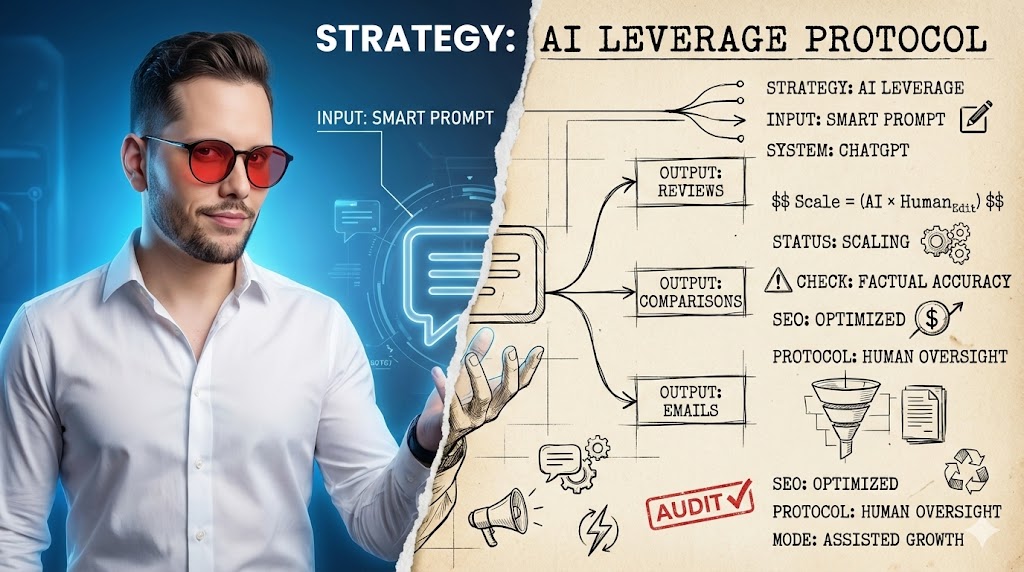
It depends significantly on your approach. Building an AI affiliate website can be fast and easy for those who prioritize strategic oversight and quality control, but it is not a ‘set it and forget it’ solution.
- Strongest advantage: Rapid content generation and scalability, allowing for quick market entry and broad topic coverage.
- Biggest limitation: Requires human expertise for fact-checking, unique insights, and maintaining brand voice to avoid generic, low-quality output.
- Concrete use case: Ideal for niche site builders aiming to test market demand quickly or scale content production in well-researched, factual domains.
What Exactly is an AI Affiliate Website?
An AI affiliate website leverages artificial intelligence tools to automate or significantly assist in the creation of content, keyword research, and even some aspects of site management, all with the primary goal of promoting affiliate products or services. This approach aims to streamline the traditional affiliate marketing process, making it faster and potentially more scalable than manual methods.
The core idea is to use AI not as a replacement for human intelligence, but as a powerful assistant. It helps in generating drafts, summarizing information, and identifying content gaps that would otherwise take considerable time and effort. The success hinges on the strategic integration of these tools into a well-defined workflow.
AI Affiliate Website: A digital platform that utilizes artificial intelligence technologies to automate content creation, SEO tasks, and other operational aspects to promote affiliate products and earn commissions.
Such websites often focus on specific niches, producing a high volume of articles, reviews, and guides designed to rank in search engines. The goal is to attract organic traffic interested in the products being promoted, leading to clicks on affiliate links and subsequent sales. Understanding the mechanics of these sites is crucial for effective implementation.
- Content Generation: AI tools create articles, product descriptions, and social media posts.
- Keyword Research: AI assists in identifying profitable keywords and content clusters.
- SEO Optimization: AI suggests improvements for on-page SEO elements.
- Scalability: Enables the production of content at a volume difficult to achieve manually.
Pros of AI Affiliate Websites
- Accelerated Content Production: Generate a high volume of articles quickly, allowing for rapid market penetration.
- Reduced Manual Effort: Automate repetitive tasks like drafting and research, freeing up time for strategy.
- Enhanced Scalability: Expand into multiple niches or significantly broaden content coverage without proportional increases in human resources.
Cons of AI Affiliate Websites
- Risk of Generic Content: Without careful oversight, AI output can lack unique insights, personality, and genuine authority.
- Fact-Checking Imperative: AI models can sometimes ‘hallucinate’ or produce inaccurate information, requiring diligent human verification.
- Potential for Penalties: Over-reliance on unedited AI content may lead to search engine penalties if quality standards are not met.
The Strategic Advantages of AI in Affiliate Marketing
Leveraging AI in affiliate marketing offers distinct strategic advantages that can significantly impact efficiency and growth. One primary benefit is the ability to rapidly identify and capitalize on emerging trends and underserved niches. AI tools can analyze vast datasets of search queries, competitor content, and social media discussions to pinpoint profitable opportunities faster than human analysts alone.
Another key advantage lies in the personalization of content and recommendations. While full personalization for every visitor might be complex, AI can help segment audiences based on broad interests or past interactions, allowing for more targeted content creation. This leads to higher engagement rates and, consequently, better conversion rates for affiliate products.
Furthermore, AI significantly reduces the time-to-market for new content. Instead of weeks spent on research and drafting, AI can produce initial content outlines and drafts in hours. This speed allows affiliate marketers to be agile, responding quickly to algorithm updates or seasonal demand shifts, which is a critical edge in competitive online environments.
- Market Trend Identification: AI quickly spots trending topics and keywords.
- Content Velocity: Accelerates the entire content creation pipeline from idea to draft.
- Competitive Analysis: Provides deep insights into competitor strategies and content gaps.
- A/B Testing Efficiency: AI can help analyze results of different content variations more effectively.
Selecting Your Niche and Essential AI Tools
Choosing the right niche is paramount for an AI affiliate website, as it dictates the type of content you’ll generate and the products you’ll promote. A profitable niche should have sufficient search demand, manageable competition, and a clear path to monetization. AI tools can greatly assist in this initial research phase, helping to validate ideas and uncover hidden opportunities that might be overlooked manually.
Once a niche is identified, selecting the appropriate AI tools becomes the next critical step. The market is flooded with options, each with its strengths and weaknesses. You’ll need tools for content generation, SEO analysis, and potentially image creation or social media management. The goal is to build a tech stack that complements your workflow and budget, rather than overwhelming it.
Insider tip: Niche Validation
Before committing fully, use AI-powered keyword research tools to analyze search volume and competition for your chosen niche. Look for topics with moderate search volume but lower competition, indicating an easier path to ranking.
Consider the integration capabilities of your chosen tools. A seamless workflow where tools can communicate or easily transfer data will save significant time and reduce errors. Prioritize tools that offer flexibility and allow for human oversight, as purely automated solutions often fall short in quality and uniqueness.
- Niche Research Tools: Utilize AI for competitor analysis and keyword gap identification.
- Content Generation Platforms: Select tools capable of producing long-form articles and diverse content types.
- SEO Optimization Suites: Integrate AI for on-page suggestions and technical SEO audits.
- Image & Video Creation: Explore AI tools for generating visuals to enhance content.
Essential AI Tools for Affiliate Marketers
Context label: These tools are crucial for streamlining content creation and SEO for an AI affiliate site.
- Jasper AI – Positioning: Versatile content generator. Concrete benefit: Excellent for generating various content formats, from blog posts to ad copy, with strong contextual understanding.
- Surfer SEO – Positioning: On-page SEO optimization. Concrete benefit: Provides data-driven recommendations for content structure, keywords, and length to improve search rankings.
- Midjourney/DALL-E – Positioning: AI image generation. Concrete benefit: Creates unique visuals quickly, enhancing article engagement without stock photo limitations.
- Semrush/Ahrefs (with AI features) – Positioning: Comprehensive SEO suites. Concrete benefit: Offers robust keyword research, competitor analysis, and site audit capabilities, increasingly integrated with AI insights.
Decision help label: When choosing, prioritize tools that offer strong integration with your existing workflow and allow for significant human input. Avoid tools that promise ‘one-click’ solutions without any need for review, as these often lead to generic or inaccurate content. Consider your budget and the specific content types you plan to produce most frequently.
Crafting Your AI-Powered Content Strategy
Developing a robust content strategy is critical, even when using AI. AI is a powerful engine, but it requires a human driver to set the direction and ensure quality. Your strategy should outline the types of content you’ll create, the target audience for each, and how AI will be integrated into each stage of the content lifecycle, from ideation to publication.
A common mistake is to let AI dictate the entire content creation process without a clear editorial guideline. This can lead to a fragmented brand voice, repetitive content, and a lack of depth. Instead, view AI as a tool to execute specific tasks within a human-designed framework, such as generating initial drafts, expanding on bullet points, or rephrasing sentences for clarity.
Warning: Over-Automation Trap
Critical mistake to avoid: Publishing AI-generated content without thorough human review and editing. Explanation of consequence: This can lead to factual inaccuracies, grammatical errors, a lack of unique perspective, and ultimately, search engine penalties for low-quality or spammy content, damaging your site’s authority and rankings.
Your strategy should also include a strong emphasis on content differentiation. Even with AI, strive to offer unique value, whether through deeper research, personal anecdotes, or a distinct perspective. AI can help synthesize information, but it’s the human touch that transforms raw data into compelling, authoritative content that truly resonates with readers.
- Topic Clustering: Use AI to identify related topics and build comprehensive content hubs.
- Outline Generation: AI can quickly create detailed outlines for articles, saving research time.
- Drafting & Expansion: Leverage AI for initial drafts and expanding on key points.
- Tone & Style Adaptation: Train AI to write in a specific brand voice or target audience tone.
Generating High-Quality Content with AI
The key to generating high-quality content with AI lies in effective prompting and a rigorous editing process. AI models respond best to clear, specific instructions that guide them towards the desired output. Instead of generic commands, provide detailed context, target keywords, desired tone, and specific points to cover. This upfront investment in prompting significantly improves the quality of the initial draft.
Once the AI generates a draft, the human element becomes indispensable. This involves fact-checking every claim, refining the language, adding unique insights, and ensuring the content flows naturally and provides genuine value to the reader. Think of AI as a very efficient junior writer who needs constant supervision and guidance to produce publishable work.
Content Production Efficiency
Studies suggest that using AI for initial content drafts can reduce the time spent on writing by 40-60%, allowing human editors to focus on refinement, fact-checking, and adding unique value rather than starting from scratch.
Tools like Postlabs.ai can act as powerful AI blogging tools, assisting in generating comprehensive articles and optimizing them for search engines. By integrating such platforms into your workflow, you can maintain a high volume of content while ensuring it meets quality standards through strategic human oversight. The goal is to blend AI’s speed with human creativity and accuracy.
- Detailed Prompting: Provide specific instructions, examples, and constraints to the AI.
- Iterative Refinement: Generate multiple versions and combine the best elements.
- Human Editing: Focus on accuracy, originality, tone, and adding unique perspectives.
- SEO Integration: Ensure AI-generated content aligns with your SEO strategy from the outset.
SEO Optimization for AI-Generated Content
Optimizing AI-generated content for search engines requires a nuanced approach that goes beyond simply stuffing keywords. While AI can assist with keyword integration and on-page elements, human expertise is crucial for understanding search intent, creating compelling meta descriptions, and building a strong internal linking structure. The goal is to make the content not only readable but also highly discoverable and valuable to search engine algorithms.
Focus on creating content that genuinely answers user queries and provides comprehensive information. Google’s algorithms prioritize helpful, reliable, and experience-rich content. This means your AI-assisted articles must demonstrate expertise, authority, and trustworthiness (E-E-A-T). Human editors play a vital role in ensuring these qualities are present, adding unique insights and real-world examples that AI alone cannot replicate.
Myth: AI content can’t rank well.
Myth statement: Content generated by AI is inherently low quality and will be penalized by search engines, making it impossible to rank for competitive keywords.
Reality: Quality and intent matter.
Fact explanation: Search engines prioritize helpful, relevant, and high-quality content, regardless of whether AI was used in its creation. If AI content is thoroughly edited, fact-checked, and enhanced with human insights to meet user intent and E-E-A-T standards, it can rank just as effectively as purely human-written content. The key is human oversight and value addition.
Technical SEO aspects, such as site speed, mobile responsiveness, and schema markup, are equally important. While AI can help identify issues, implementing solutions often requires human intervention or specialized tools. A holistic SEO strategy that combines AI’s efficiency with human strategic thinking is the most effective path to long-term ranking success.
- Keyword Integration: Naturally weave target keywords and semantic variations into the text.
- Meta Data Crafting: Write compelling, keyword-rich meta titles and descriptions manually.
- Internal Linking: Strategically link to other relevant content on your site to improve navigation and authority.
- User Experience (UX): Ensure content is easy to read, well-formatted, and provides a positive user experience.
Building Trust and Authority in an AI Landscape
In an era where AI-generated content is becoming prevalent, building trust and authority is more critical than ever. Readers are increasingly discerning, and search engines are prioritizing content that demonstrates genuine expertise, experience, authority, and trustworthiness (E-E-A-T). For an AI affiliate website, this means going beyond mere information dissemination to establish credibility.
One effective strategy is to infuse human elements into your AI-assisted content. This could involve adding personal anecdotes, expert quotes, case studies, or original research that AI cannot generate autonomously. Clearly stating who is behind the content and providing author bios with relevant credentials can also significantly boost perceived authority.
“The future of content isn’t about AI replacing humans, but about AI empowering humans to create more impactful, authentic, and scalable content. The human touch remains irreplaceable for trust and unique insight.”
— Rand Fishkin, Founder of SparkToro
Transparency about your use of AI can also foster trust, especially if framed as a tool to enhance efficiency rather than replace quality. Focus on demonstrating the value your site provides, whether through unbiased reviews, comprehensive guides, or solutions to common problems. Ultimately, a site that consistently delivers high-quality, trustworthy information will build a loyal audience and strong authority.
- Authoritative Sources: Cite reputable sources and experts to back up claims.
- Unique Perspectives: Add human insights, opinions, and experiences that AI cannot replicate.
- Transparency: Consider disclosing AI assistance where appropriate, emphasizing human oversight.
- Community Engagement: Respond to comments and foster a sense of community around your content.
Diversifying Monetization Beyond Affiliate Links
While affiliate links are the cornerstone of an AI affiliate website, diversifying monetization strategies can create more stable and substantial revenue streams. Relying solely on affiliate commissions can be risky, as rates can change, products can be discontinued, or algorithms can shift. Exploring additional income avenues provides a buffer against these uncertainties and maximizes the value of your traffic.
Consider integrating display advertising, sponsored content, or even selling your own digital products. If your AI-generated content attracts a significant audience interested in a specific niche, you could create an e-book, an online course, or a premium guide. This leverages your existing content and audience without requiring significant additional traffic generation efforts.
Case Study: The Niche Review Site
Label: The trap: A popular AI-assisted review site for smart home gadgets relied exclusively on Amazon affiliate links. When Amazon drastically cut commission rates for their category, revenue plummeted by 60% overnight, jeopardizing the entire operation.
Label: The win: The site pivoted by introducing a ‘premium buyer’s guide’ e-book for $19.99, offering deeper analysis and exclusive comparison charts not available on the free blog. They also integrated Google AdSense for passive income. Within six months, digital product sales and ad revenue surpassed their original affiliate income, creating a more resilient business model.
Building an email list is another powerful monetization strategy. By offering valuable lead magnets (e.g., a free AI-generated checklist or guide), you can capture emails and directly market to your audience. This allows for direct communication, promoting new affiliate offers, your own products, or even exclusive deals, bypassing reliance on search engines or social media algorithms.
- Display Advertising: Integrate ad networks like Google AdSense or Mediavine for passive income.
- Sponsored Content: Partner with brands for paid reviews or dedicated articles.
- Digital Products: Create and sell e-books, courses, or templates related to your niche.
- Email Marketing: Build an email list to directly promote offers and build a loyal audience.
Scaling Your AI Affiliate Business Efficiently
Scaling an AI affiliate business involves more than just generating more content; it requires optimizing your entire workflow, leveraging automation, and strategically expanding your reach. The goal is to increase output and revenue without a proportional increase in manual effort or operational costs. This often means refining your AI prompts, streamlining your editing process, and automating administrative tasks.
Consider investing in project management tools that can integrate with your AI content generation platforms. This allows for better tracking of content ideas, assignments, and publication schedules. As you scale, maintaining consistency in quality and brand voice becomes challenging, so robust systems and clear guidelines for your human editors are essential.
Insider tip: Batch Processing
To maximize efficiency, batch similar tasks together. Instead of generating one article at a time, create outlines for 10 articles, then generate drafts for all 10, then edit all 10. This reduces context switching and improves overall productivity.
Expanding into new niches should be a data-driven decision. Use AI tools to identify adjacent niches with similar audience demographics or product categories, allowing you to leverage existing knowledge and content frameworks. This strategic expansion minimizes the learning curve and maximizes the potential for cross-promotion across your portfolio of sites.
- Workflow Automation: Automate content scheduling, social media posting, and reporting.
- Team Expansion: Hire skilled human editors and strategists to oversee AI output.
- Performance Monitoring: Use analytics to identify top-performing content and replicate success.
- Strategic Niche Expansion: Identify and enter related niches that leverage existing expertise.
Scaling Content Production
Businesses that effectively integrate AI into their content workflow can increase content output by 3-5x compared to traditional methods, provided they maintain strict quality control and human oversight.
Avoiding Common Pitfalls in AI Affiliate Marketing
While AI offers incredible opportunities for affiliate marketers, several common pitfalls can derail even the most promising ventures. One significant trap is the pursuit of quantity over quality. Flooding your site with unedited, generic AI content will likely lead to poor user experience, high bounce rates, and eventual penalties from search engines, negating any initial gains.
Another pitfall is neglecting the human element. AI is a tool, not a replacement for strategic thinking, creativity, and genuine connection with your audience. Failing to infuse your content with unique insights, personal experiences, or a distinct brand voice will result in content that feels sterile and unengaging, struggling to build trust or authority.
Caution: Over-Optimization for AI
Critical mistake to avoid: Trying to ‘trick’ search engines by excessively optimizing AI-generated content with keywords or unnatural phrasing. Explanation of consequence: Modern search algorithms are sophisticated and can detect manipulative tactics. This can lead to de-ranking, manual penalties, and a complete loss of organic traffic, making recovery extremely difficult.
Finally, underestimating the need for continuous learning and adaptation is a major mistake. The AI landscape, search engine algorithms, and affiliate marketing trends are constantly evolving. Resting on past successes or failing to update your strategies and tools will leave you behind. Regular review of performance, staying informed about industry changes, and experimenting with new AI capabilities are crucial for long-term success.
- Quality Control: Implement a rigorous human editing and fact-checking process for all AI content.
- Brand Voice: Define a clear brand voice and ensure AI output aligns with it through careful prompting.
- Ethical Considerations: Be mindful of transparency regarding AI use and avoid deceptive practices.
- Adaptability: Stay updated on AI advancements and search engine guidelines to adjust strategies.
Action Checklist for Building Your AI Affiliate Website
Your AI Affiliate Site Launch Plan
- Week 1: Niche Selection & Initial Research. Identify 3-5 potential niches using AI-powered keyword tools and select one with promising search volume and manageable competition.
- Week 2: Domain & Hosting Acquisition. Secure your domain name and set up reliable web hosting. This is an irreversible action.
- Week 3-4: Core AI Tool Integration. Choose and integrate your primary AI content generation and SEO optimization tools into a cohesive workflow.
- Month 2: Content Strategy & First 10 Articles. Develop a detailed content strategy for your chosen niche and publish your first 10 high-quality, human-edited AI-generated articles.
- Month 3: Monetization Setup & Analytics. Implement your chosen monetization methods (e.g., affiliate links, display ads) and set up comprehensive analytics tracking.
- Ongoing: Regular Content Production & Review. Establish a consistent publishing schedule and conduct weekly performance reviews to refine your AI prompts and editing processes.
Common Questions
Can AI completely automate my affiliate website?
No, AI cannot completely automate an affiliate website while maintaining high quality and authority. While AI excels at generating drafts, outlines, and performing research, human oversight is essential for fact-checking, adding unique insights, ensuring brand voice, and strategic decision-making. A purely automated approach risks producing generic, inaccurate, or low-ranking content.
How do I ensure AI content is unique and not plagiarized?
Most advanced AI models generate original text based on their training data, rather than directly copying. To ensure uniqueness and avoid accidental similarity, always run AI-generated content through a plagiarism checker. More importantly, add your unique insights, examples, and editing to transform the AI draft into truly original content.
What are the legal considerations for using AI in affiliate marketing?
Legal considerations include copyright for AI-generated images (which can be murky), data privacy if using AI for audience analysis, and ensuring your content complies with advertising standards (e.g., clear disclosure of affiliate links). It’s crucial to stay informed about evolving regulations and potentially consult legal advice, especially regarding content ownership and disclosure requirements.
How fast can I see results with an AI affiliate website?
The speed of results varies greatly depending on your niche, competition, and SEO efforts. While AI can accelerate content production, ranking in search engines still takes time. Typically, you might start seeing initial traffic and conversions within 3-6 months, with significant growth often taking 12-18 months of consistent, high-quality content production and SEO optimization.
Is it expensive to build an AI affiliate website?
The cost can vary. You’ll need to invest in a domain name, hosting, and subscriptions to AI content generation and SEO tools. While some free AI tools exist, premium tools offer better quality and features. Initial setup might range from a few hundred to a couple of thousand dollars, with ongoing monthly costs for subscriptions. The ‘easy’ aspect refers more to workflow efficiency than zero cost.