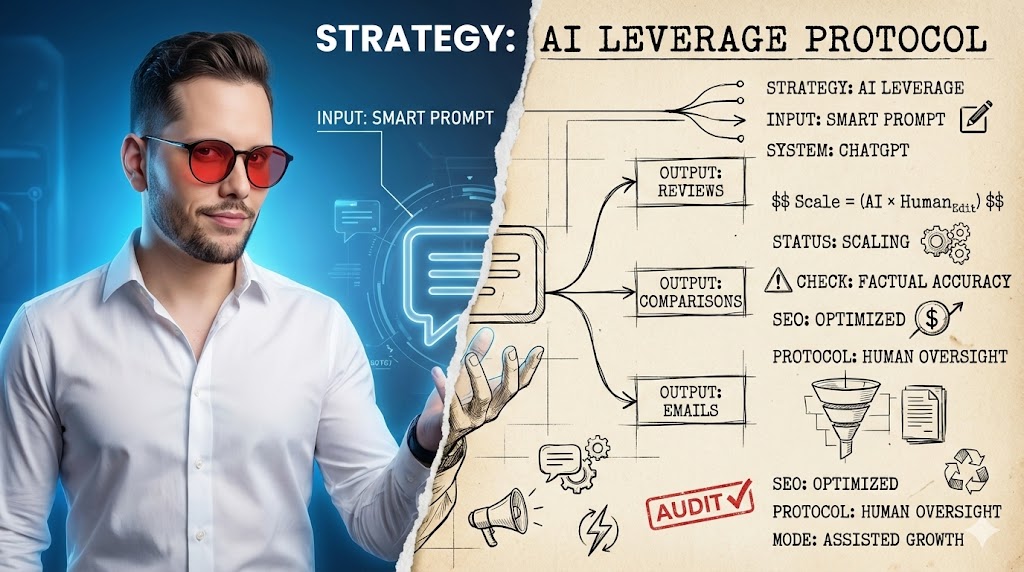
Navigating AI for Affiliate SEO: A Strategic Imperative
It depends significantly on implementation. AI SEO offers powerful enhancements for affiliate sites but demands strategic oversight and ethical considerations to truly thrive.
- AI significantly boosts efficiency in keyword research, content generation, and on-page optimization, leading to faster content deployment.
- Over-reliance on AI without human editing or strategic input can result in generic content and potential penalties.
- Best suited for affiliate marketers looking to scale content production and analysis while maintaining quality and brand voice.
What is AI SEO for Affiliate Sites?
AI SEO for affiliate sites involves leveraging artificial intelligence tools and algorithms to enhance various aspects of search engine optimization specifically for websites promoting third-party products or services. This integration aims to improve organic visibility, drive targeted traffic, and ultimately increase affiliate conversions. It moves beyond traditional manual processes, offering capabilities for deep data analysis and content creation at scale.
The core idea is to automate or augment tasks that are typically time-consuming and labor-intensive. From identifying lucrative keywords to generating compelling product reviews, AI streamlines the entire SEO workflow. However, it requires a clear understanding of both AI capabilities and affiliate marketing principles to be effective. Many affiliate marketers face initial execution anxiety when considering how to integrate these powerful technologies without compromising quality or authenticity.
AI SEO: The application of artificial intelligence technologies to optimize websites for search engines, encompassing tasks like keyword research, content creation, technical SEO, and performance analysis, with the goal of improving organic rankings and traffic.
Key areas where AI impacts affiliate SEO include:
- Keyword Discovery: Uncovering long-tail and semantic keywords with high commercial intent.
- Content Generation: Drafting articles, product descriptions, and reviews that are optimized for SEO and user engagement.
- On-Page Optimization: Analyzing existing content for optimization opportunities and suggesting improvements.
- Competitive Analysis: Gaining insights into competitor strategies and identifying gaps.
Advantages of AI in Affiliate SEO
- Scalable Content Production: Generate a high volume of SEO-optimized content quickly, expanding market reach.
- Enhanced Keyword Accuracy: Identify highly specific, low-competition keywords with strong commercial intent, improving targeting.
- Improved Efficiency: Automate repetitive tasks like data analysis and content drafting, freeing up time for strategic planning.
- Data-Driven Decisions: Utilize AI’s analytical power to make more informed choices regarding content, links, and site structure.
Limitations of AI in Affiliate SEO
- Risk of Generic Content: Over-reliance can lead to bland, unoriginal content lacking unique insights or human touch.
- Ethical and Trust Concerns: Potential for AI-generated content to be perceived as inauthentic, impacting audience trust and E-E-A-T.
- Requires Human Oversight: AI tools are not autonomous; they need continuous human editing, fact-checking, and strategic guidance.
- Cost and Complexity: Implementing and managing advanced AI tools can be expensive and require a learning curve for effective use.
How AI Transforms Affiliate Keyword Research?
Traditional keyword research often involves manual sifting through data, which can be exhaustive and prone to overlooking nuanced opportunities. AI tools revolutionize this process by analyzing vast datasets, including search queries, competitor rankings, and user behavior patterns, far more efficiently than any human. They can identify not just high-volume keywords, but also semantic variations, long-tail phrases, and emerging trends that indicate strong buying intent, which are critical for affiliate success.
These tools excel at uncovering keywords that signal a user is close to making a purchase decision. For instance, instead of just ‘best laptop’, AI might suggest ‘best laptop for video editing under $1500’ or ‘lightweight travel laptop review’. This precision helps affiliate marketers target their content more effectively, leading to higher conversion rates. The ability to quickly pivot to new keyword opportunities also gives affiliate sites a significant competitive edge.
Insider tip
Focus on ‘buying intent’ keywords identified by AI. These often include terms like ‘best’, ‘review’, ‘vs’, ‘deal’, ‘coupon’, or ‘price’. AI can help you find less competitive variations of these high-value phrases.
Key AI-driven keyword research benefits include:
- Semantic Analysis: Understanding the underlying meaning and context of search queries, not just exact matches.
- Competitor Gap Analysis: Identifying keywords your competitors rank for that you don’t, or vice-versa.
- Trend Prediction: Spotting upcoming keyword trends before they become saturated.
- Intent Classification: Categorizing keywords by user intent (informational, navigational, transactional) to guide content strategy.
Crafting High-Converting Content with AI Tools
Content is the backbone of any successful affiliate site, and AI tools are rapidly changing how it’s created. These tools can assist in generating outlines, drafting entire articles, writing product reviews, and even crafting compelling calls to action. By inputting target keywords and a brief, an AI blogging tool can produce initial drafts that are both SEO-optimized and structured for readability, significantly reducing the time spent on content creation.
However, the true power lies in using AI as an assistant, not a replacement. The output from an AI needs human refinement to inject unique perspectives, personal experiences, and a distinct brand voice. This blend of AI efficiency and human creativity results in content that ranks well and genuinely connects with readers, building trust—a paramount factor in affiliate marketing. For example, using an advanced AI blogging tool like those found at Postlabs.ai can streamline the initial content generation process, allowing you to focus on adding the critical human element.
Case Study: Scaling Product Reviews
The trap: An affiliate marketer struggled to keep up with new product releases, often missing out on early review opportunities due to slow content production.
The win: By using an AI content generator to draft initial product overviews and feature comparisons, the marketer could publish reviews 3x faster. Human editors then added personal insights, pros/cons, and unique testing experiences, resulting in a significant increase in early-stage affiliate conversions for new products.
AI content creation tools can help with:
- Outline Generation: Structuring articles for comprehensive coverage and logical flow.
- Drafting Paragraphs: Creating initial text for sections, saving significant writing time.
- Optimizing for Readability: Suggesting improvements for sentence structure and vocabulary.
- Call-to-Action (CTA) Suggestions: Proposing effective CTAs to guide users towards affiliate links.
Automating On-Page Optimization for Affiliate Offers
On-page SEO is crucial for affiliate sites, ensuring that content is not only valuable but also discoverable by search engines. AI tools can automate many aspects of this process, from optimizing title tags and meta descriptions to suggesting internal linking opportunities and improving content relevance. They analyze your content against top-ranking competitors, identifying gaps and recommending precise changes to boost your rankings.
These tools can quickly scan entire websites, pinpointing areas where optimization is lacking. This includes identifying keyword cannibalization, suggesting optimal image alt text, and ensuring proper heading structure. The automation aspect allows affiliate marketers to maintain a high standard of on-page SEO across a large portfolio of content, which is often unfeasible with manual methods. However, relying solely on AI without understanding the underlying SEO principles can lead to superficial optimization that misses deeper strategic nuances.
Warning: Over-Optimization Risk
Critical mistake to avoid: Blindly implementing all AI-suggested on-page optimizations without human review. This can lead to keyword stuffing, unnatural phrasing, or changes that detract from user experience, potentially triggering search engine penalties.
Automated on-page optimization typically covers:
- Meta Data Generation: Creating compelling and keyword-rich titles and descriptions.
- Content Scoring: Evaluating content for keyword density, readability, and topic coverage.
- Internal Linking Suggestions: Identifying relevant pages for internal links to improve site authority.
- Schema Markup Recommendations: Suggesting structured data to enhance search engine understanding and rich snippets.
Leveraging AI for Competitive Analysis in Affiliate Marketing
Understanding your competitors is paramount in the crowded affiliate landscape. AI tools provide an unparalleled ability to dissect competitor strategies, identify their strengths, weaknesses, and the opportunities they might be missing. Instead of manually reviewing individual competitor sites, AI can aggregate and analyze data from dozens or hundreds of competitors simultaneously, offering a holistic view of the market.
This includes analyzing competitor keyword portfolios, backlink profiles, content strategies, and even their affiliate product selections. AI can spot patterns in successful competitor content, reveal their top-performing affiliate products, and highlight areas where your site can differentiate itself. This deep insight allows affiliate marketers to make proactive strategic decisions rather than reactive ones, ensuring their site remains competitive and relevant.
Data Insight: Competitive Keyword Overlap
Studies show that affiliate sites using AI for competitive analysis can identify up to 40% more high-value, low-competition keywords compared to manual methods, by uncovering gaps in competitor content strategies.
AI-driven competitive analysis helps with:
- Keyword Gap Identification: Discovering keywords that competitors rank for but your site does not.
- Content Strategy Deconstruction: Analyzing competitor content for structure, topics, and engagement metrics.
- Backlink Profile Assessment: Understanding competitor link-building tactics and identifying potential link opportunities.
- Affiliate Product Performance: Inferring which products are most profitable for competitors based on their content focus and ranking.
Building an Efficient AI-Powered Affiliate Workflow
Integrating AI into an affiliate marketing strategy isn’t about replacing human effort but about creating a synergistic workflow that maximizes efficiency and output. An efficient AI-powered workflow typically involves a series of interconnected tools and processes, where AI handles the heavy lifting of data analysis and initial content generation, while human experts provide strategic direction, creative input, and quality control.
This workflow might start with AI-driven keyword research, feeding insights directly into an AI content generator. The generated content then moves to a human editor for refinement, fact-checking, and brand voice alignment. Finally, AI tools can assist with on-page optimization and performance monitoring. The key is to establish clear hand-off points and responsibilities to ensure a seamless process and avoid bottlenecks, thereby reducing common workflow inefficiencies.
Myth
AI will completely automate my affiliate marketing and I won’t need human staff.
Reality
AI is a powerful augmentation tool, not a full replacement. Human oversight is crucial for strategic planning, ethical considerations, brand voice, fact-checking, and injecting unique insights that resonate with an audience. The best results come from a hybrid approach.
Components of an effective AI affiliate workflow:
- Discovery Phase: AI identifies market trends, keywords, and competitor strategies.
- Creation Phase: AI drafts content, outlines, and meta descriptions, followed by human editing.
- Optimization Phase: AI suggests on-page improvements and internal linking, implemented by human SEOs.
- Monitoring Phase: AI tracks performance metrics and identifies new opportunities or issues.
Ethical Considerations and AI Content Disclosure
As AI becomes more prevalent in content creation, ethical considerations and transparency are increasingly important, especially for affiliate sites that rely heavily on trust. Search engines are evolving their guidelines regarding AI-generated content, emphasizing quality, originality, and helpfulness. Simply publishing AI content without human review or disclosure can erode trust with both users and search engines, potentially impacting long-term rankings and affiliate revenue.
Affiliate marketers should strive for transparency where appropriate, especially if the content is largely AI-generated. More importantly, the focus should always be on providing genuine value, expertise, experience, authoritativeness, and trustworthiness (E-E-A-T). AI should be used to enhance these qualities, not diminish them. The goal is to produce content that is indistinguishable from human-written content in terms of quality and insight, while still being efficient.
“The future of content isn’t AI vs. human; it’s AI with human. The most successful strategies will blend the efficiency of machines with the creativity and empathy of people.”
— Rand Fishkin, Founder of SparkToro
Key ethical practices include:
- Human Review: Always have a human editor review and refine AI-generated content for accuracy, tone, and originality.
- Fact-Checking: Verify all claims and data points, as AI can sometimes ‘hallucinate’ information.
- Value-First Approach: Prioritize creating helpful, insightful content over simply generating high volumes of text.
- Disclosure (Optional but Recommended): Consider transparently disclosing AI assistance if it enhances user trust or is required by platform guidelines.
Measuring AI SEO Performance and ROI for Affiliates
Implementing AI tools for SEO is an investment, and like any investment, it requires careful measurement of performance and return on investment (ROI). For affiliate sites, this means tracking key metrics beyond just traffic, focusing on how AI contributes to actual conversions and revenue. It’s essential to establish baseline metrics before AI integration to accurately assess its impact.
Metrics to monitor include organic traffic growth, keyword ranking improvements, time on page, bounce rate, and most importantly, affiliate click-through rates and conversion rates. AI tools themselves can often provide analytics, but integrating this data with your existing affiliate tracking and web analytics platforms offers a more comprehensive view. Understanding which AI applications yield the highest ROI allows for continuous optimization of your AI SEO strategy, ensuring resources are allocated effectively and addressing potential underperformance issues.
Data Insight: Conversion Rate Impact
Affiliate sites that effectively integrate AI for content optimization and keyword targeting often report a 15-25% increase in conversion rates for AI-assisted content compared to purely manual efforts, primarily due to better keyword alignment and user engagement.
Key performance indicators for AI SEO:
- Organic Traffic: Monitor growth from search engines to AI-optimized pages.
- Keyword Rankings: Track improvements for targeted affiliate keywords.
- Affiliate Link Clicks: Measure the engagement with affiliate links within AI-assisted content.
- Conversion Rate: Analyze the percentage of visitors who complete an affiliate purchase or action.
- Time-to-Publish: Assess the reduction in content creation and publishing cycles.
Common Mistakes When Integrating AI into Affiliate SEO
While AI offers immense potential, several pitfalls can hinder its effectiveness in affiliate SEO. One of the most common mistakes is treating AI as a ‘set it and forget it’ solution. AI tools require continuous monitoring, refinement, and human intervention to ensure their output aligns with strategic goals and maintains quality standards. Without this oversight, content can become repetitive, inaccurate, or simply unengaging, failing to resonate with the target audience.
Another significant error is neglecting the importance of E-E-A-T. If AI-generated content lacks genuine expertise, personal experience, or a trustworthy voice, it will struggle to rank and convert in competitive niches. Affiliate marketers must ensure that AI outputs are thoroughly fact-checked and enhanced with unique insights that demonstrate real understanding of the product or service being promoted. Avoiding these common errors is crucial for long-term success and preventing diminished returns.
Warning: Losing Your Brand Voice
Critical mistake to avoid: Allowing AI to dictate your brand’s tone and style entirely. This can lead to a generic, soulless brand identity. Always use AI as a tool to amplify your unique voice, not replace it, by providing clear style guides and editing for brand consistency.
Mistakes to actively avoid:
- Ignoring Human Editing: Publishing raw AI output without critical review and refinement.
- Over-Automating: Trying to automate every single step, leading to a loss of control and quality.
- Neglecting E-E-A-T: Failing to inject unique expertise, experience, authoritativeness, and trustworthiness into AI-assisted content.
- Lack of Performance Tracking: Not measuring the actual impact of AI on affiliate conversions and revenue.
- Keyword Stuffing: Allowing AI to generate content that is unnaturally optimized with too many keywords.
AI Affiliate SEO Action Checklist
- Evaluate AI Tools (Week 1): Research and select AI tools for keyword research, content generation, and on-page optimization that align with your budget and needs.
- Define Workflow (Week 2): Map out a clear AI-human workflow, assigning responsibilities for AI output generation, human editing, and final publication.
- Pilot Content Creation (Weeks 3-4): Generate 5-10 pieces of AI-assisted content, focusing on high-intent keywords, and rigorously review for quality and E-E-A-T.
- Implement On-Page Optimizations (Month 2): Use AI suggestions to optimize existing and new content, ensuring proper meta data, internal links, and schema markup.
- Monitor & Refine (Ongoing): Establish a system to track key performance indicators (traffic, rankings, conversions) monthly, and adjust your AI strategy based on actual results.
- Invest in Training (Ongoing): Continuously educate yourself and your team on new AI capabilities and ethical best practices to stay ahead.
FAQ
Can AI completely replace human writers for affiliate content?
No, AI cannot completely replace human writers. While AI can efficiently generate drafts and assist with optimization, human writers are essential for injecting unique perspectives, personal experiences, emotional resonance, and ensuring factual accuracy and brand voice, which are critical for building trust in affiliate marketing.
How do search engines view AI-generated content for affiliate sites?
Search engines like Google prioritize helpful, reliable, and people-first content, regardless of how it’s produced. The key is quality, originality, and E-E-A-T. If AI-generated content is low-quality, spammy, or lacks unique value, it will likely perform poorly. If it’s well-researched, edited, and genuinely helpful, it can rank effectively.
What are the best AI tools for affiliate SEO?
The ‘best’ tools depend on your specific needs and budget. Popular categories include AI content generators (e.g., Jasper, Copy.ai, Surfer SEO), keyword research tools with AI features (e.g., Semrush, Ahrefs), and on-page optimization tools (e.g., Frase, PageOptimizer Pro). Many tools now offer integrated AI capabilities across multiple functions.
Is AI SEO expensive for small affiliate sites?
The cost varies. Many AI tools offer free trials or freemium models, and entry-level subscriptions can be quite affordable. For small affiliate sites, starting with one or two key AI tools for content generation or keyword research can provide significant benefits without a large upfront investment. The ROI often justifies the cost through increased efficiency and conversions.