

Unlocking Affiliate Potential with AI Prompts
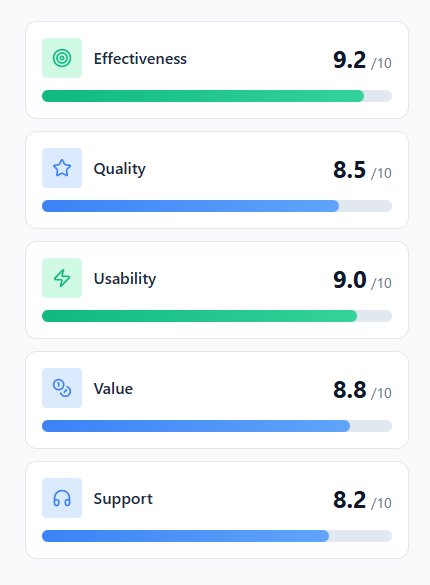
Highly effective, but requires strategic input. AI prompts are a powerful asset for affiliate marketers seeking to scale content creation and enhance SEO, provided they are used with skill and oversight.
- Significantly boosts content production speed and SEO optimization efforts.
- Quality is directly proportional to the prompt engineering skill of the user.
- Ideal for generating high-converting product reviews, comparison articles, and social media copy.
What Exactly Are AI Prompts for Affiliate Marketing?
AI prompts for affiliate marketing are specific instructions or queries given to artificial intelligence models to generate content tailored for promotional purposes. These prompts guide the AI to produce text that can be used in various affiliate marketing assets, from blog posts and product descriptions to email campaigns and social media updates. The goal is to create persuasive, SEO-optimized copy that drives conversions and earns commissions.
Effective prompting involves more than just asking a question; it requires defining the target audience, desired tone, key selling points, and specific calls-to-action. By clearly articulating these elements, marketers can leverage AI to produce content that resonates with potential buyers and aligns with their affiliate strategies. This approach transforms generic AI output into highly relevant and impactful marketing material.
AI Prompt for Affiliate Marketing: A structured instruction provided to an AI model to generate specific, persuasive content designed to promote products or services and drive affiliate conversions.
- Clarity: Prompts must be unambiguous, leaving no room for misinterpretation by the AI.
- Context: Include background information about the product, audience, and marketing goal.
- Constraints: Specify length, tone, keywords, and desired output format.
- Call-to-Action: Clearly define the desired action the reader should take.
- Iteration: Be prepared to refine prompts based on initial AI outputs to achieve optimal results.
Why Should Affiliate Marketers Embrace AI Prompts for SEO and Copy?
Affiliate marketers face constant pressure to produce high-quality, engaging content at scale, often with limited resources. AI prompts offer a transformative solution by drastically reducing the time and effort required for content creation. This efficiency allows marketers to cover more topics, target a broader range of keywords, and maintain a consistent publishing schedule, all critical factors for SEO success and audience engagement.
Beyond speed, AI-generated content, when properly prompted, can be highly optimized for search engines. Marketers can instruct AI to incorporate specific keywords, structure content for readability, and even suggest internal linking opportunities. This dual benefit of increased output and enhanced SEO potential makes AI prompts an indispensable tool for staying competitive in the dynamic affiliate marketing landscape.
“The future of content creation isn’t about AI replacing humans, but about humans leveraging AI to amplify their creativity and efficiency.”
— Ethan Mollick, Professor at Wharton School
- Scalability: Generate a large volume of content quickly for diverse products and niches.
- SEO Enhancement: Integrate target keywords, meta descriptions, and structured data elements effectively.
- Cost-Efficiency: Reduce reliance on expensive freelance writers for initial drafts or bulk content.
- Idea Generation: Overcome writer’s block by prompting AI for fresh angles and content ideas.
- Personalization: Tailor content for different audience segments with specific prompts.
Pros of Using AI Prompts for Affiliate Marketing
- Accelerated Content Production: Drastically cut down the time needed to draft articles, reviews, and social posts, leading to more published content.
- Improved SEO Performance: Facilitate the natural inclusion of target keywords and optimal content structures, potentially boosting search rankings.
- Enhanced Content Quality (with oversight): Generate well-researched and coherent initial drafts that serve as a strong foundation for human refinement.
Cons of Using AI Prompts for Affiliate Marketing
- Dependency on Prompt Quality: Poorly constructed prompts lead to generic, unhelpful, or even inaccurate content that requires extensive editing.
- Risk of Generic Output: Without specific instructions, AI can produce bland, unoriginal content that lacks a unique voice or perspective.
- Ethical and Trust Concerns: Over-reliance on AI without human fact-checking can lead to factual errors or a lack of genuine authority, impacting audience trust.
How to Craft Effective AI Prompts for High-Converting Content
Crafting effective AI prompts is an art that combines clarity, specificity, and strategic thinking. The key is to provide the AI with all the necessary information to understand the task, the audience, and the desired outcome. Start by defining the content type, such as a product review or a comparison article, and then layer on details like the product name, its unique selling propositions, and the target demographic’s pain points. The more context you provide, the better the AI can tailor its output.
Beyond basic information, consider including instructions on tone, style, and even specific examples of content you admire. For instance, you might ask the AI to write in an “authoritative yet friendly tone” or to “mimic the structure of a top-ranking article on [competitor’s site].” Experimentation is crucial; what works for one type of content or product might need adjustment for another. Continuously refine your prompts based on the quality of the AI’s output to achieve increasingly sophisticated and effective results.
- Define the Goal: Clearly state what you want the content to achieve (e.g., product sale, lead generation).
- Specify Audience: Describe your target reader’s demographics, interests, and pain points.
- Provide Keywords: Include primary and secondary keywords for SEO optimization.
- Set Tone and Style: Instruct the AI on the desired voice (e.g., informative, persuasive, humorous).
- Outline Structure: Suggest headings, subheadings, and specific sections to include.
- Include Call-to-Action: Direct the AI to incorporate a clear and compelling CTA.
Using AI Prompts to Generate Compelling Product Reviews and Comparisons
Product reviews and comparison articles are staples of affiliate marketing, directly influencing purchasing decisions. AI prompts can significantly streamline the creation of these critical pieces. To generate a compelling product review, provide the AI with detailed product specifications, benefits, potential drawbacks, and target audience insights. Emphasize the unique selling propositions and how the product solves specific problems for the consumer. For comparison articles, clearly list the products, their features, and the criteria for comparison, guiding the AI to highlight differences and similarities effectively.
The challenge lies in making AI-generated reviews sound authentic and trustworthy. This often requires a two-step process: first, use AI to generate a comprehensive draft, and second, infuse it with human insights, personal anecdotes, and genuine opinions. This human touch ensures the content feels less robotic and more relatable, which is vital for building trust with your audience and driving conversions. Remember to always fact-check any claims made by the AI.
Case Study: Boosting Review Content Production
The trap: An affiliate marketer struggled to produce enough detailed product reviews for a growing niche, leading to missed ranking opportunities and slow content growth.
The win: By developing a structured prompt template for product reviews, including sections for features, benefits, user experience, and a clear CTA, they were able to generate first drafts in minutes. After human editing and adding unique insights, their review output increased by 300% in a month, leading to a significant boost in organic traffic and affiliate sales.
- Product Details: Supply comprehensive information about the product’s features, benefits, and specifications.
- User Persona: Describe the ideal user and their needs or problems the product addresses.
- Comparison Criteria: For comparison articles, list key metrics or features to evaluate against competitors.
- Pros and Cons: Ask the AI to identify balanced advantages and disadvantages.
- Call-to-Action Integration: Ensure the review concludes with a strong, relevant CTA.
Can AI Prompts Create High-Converting Call-to-Actions (CTAs)?
Absolutely, AI prompts can be highly effective in generating compelling Call-to-Actions (CTAs) that encourage readers to take the next step. The key is to provide the AI with sufficient context about the product, the target audience’s motivation, and the desired action. Instead of a generic “Buy Now,” instruct the AI to create CTAs that are benefit-driven, urgent, or curiosity-inducing. For example, you might ask for a CTA that highlights a limited-time offer or addresses a specific pain point the product solves.
To maximize conversion rates, experiment with different CTA formats and placements. AI can help brainstorm variations for buttons, in-text links, or end-of-article prompts. Always test the AI-generated CTAs to see which ones perform best with your audience. A well-crafted prompt can lead to CTAs that not only grab attention but also align perfectly with the user’s journey, guiding them smoothly towards a purchase or subscription.
CTA Effectiveness Data
Studies commonly observe that personalized or benefit-driven CTAs can achieve conversion rates up to 202% higher than generic ones, based on typical e-commerce usage patterns.
- Benefit-Oriented: Focus on what the user gains (e.g., ‘Unlock Your Savings Now’).
- Urgency/Scarcity: Create a sense of immediate need (e.g., ‘Limited Stock – Get Yours Today!’).
- Problem/Solution: Directly address a pain point (e.g., ‘Solve Your [Problem] – Learn More’).
- Exclusivity: Appeal to a desire for special access (e.g., ‘Join Our VIP List’).
- Clarity: Ensure the action is unambiguous and easy to understand.
How AI Prompts Streamline Keyword Research and Content Outlining
AI prompts are not just for generating full articles; they are incredibly valuable for the foundational stages of content creation, such as keyword research and outlining. Instead of manually sifting through data, you can prompt an AI to suggest long-tail keywords related to a broad topic, identify user intent behind specific queries, or even cluster keywords into thematic groups. This significantly speeds up the research phase, allowing marketers to quickly pinpoint high-potential keywords that their target audience is actively searching for.
Once keywords are identified, AI can assist in generating comprehensive content outlines. By feeding the AI your target keywords and the article’s main topic, you can receive suggestions for headings, subheadings, and key points to cover. This structured approach ensures that your content is well-organized, covers all essential aspects, and is optimized for SEO from the ground up. It acts as a powerful co-pilot, transforming raw ideas into actionable content plans.
Insider Tip: Reverse Engineering Competitor Outlines
Provide the AI with the URL of a top-ranking competitor’s article and ask it to generate a detailed outline, identifying key subtopics and angles. Then, use this as a starting point to create a more comprehensive and unique outline for your own content, ensuring you cover all essential points and add your distinct value.
- Keyword Expansion: Generate variations and long-tail keywords from a seed keyword.
- Intent Analysis: Ask the AI to infer user intent for specific search queries.
- Topic Clustering: Group related keywords into logical content themes.
- Outline Generation: Create detailed article structures with headings and subheadings.
- Question Brainstorming: Identify common questions users ask around a topic for FAQ sections.
Applying AI Prompts for Engaging Social Media Copy and Ad Creatives
Social media is a crucial channel for affiliate marketers, but creating fresh, engaging copy consistently can be demanding. AI prompts can revolutionize this process by generating a variety of social media posts, captions, and ad creatives tailored to different platforms and campaign goals. Whether you need a short, punchy tweet, a detailed Instagram caption, or compelling Facebook ad copy, AI can produce options quickly, freeing up time for strategic planning and audience interaction.
When prompting for social media content, specify the platform, character limits, desired emotional tone, and any relevant hashtags or emojis (though emojis should be used sparingly and strategically by the human editor). For ad creatives, include details about the product’s unique selling proposition, the target audience’s pain points, and the desired call-to-action. AI can help you A/B test different angles and messages, ensuring your social media efforts are both efficient and effective in driving affiliate traffic.
- Platform Specificity: Tailor prompts for Twitter, Instagram, Facebook, or LinkedIn.
- Tone and Emotion: Instruct the AI to write with humor, urgency, inspiration, or authority.
- Hashtag Generation: Request relevant and trending hashtags for increased visibility.
- Ad Copy Variations: Generate multiple headlines and body copy options for A/B testing.
- Image/Video Prompts: Use AI to suggest visual concepts that complement the text.
What Are the Common Pitfalls When Using AI for Affiliate Content?
While AI offers immense benefits, several common pitfalls can undermine its effectiveness in affiliate marketing. One significant risk is generating generic or unoriginal content that fails to stand out in a crowded market. Without specific instructions for unique angles or a distinct brand voice, AI tends to produce bland text that lacks personality and authority. This can lead to low engagement, poor SEO performance, and a failure to convert readers into buyers.
Another critical pitfall is factual inaccuracy or hallucination. AI models, especially older or less refined ones, can sometimes generate information that is incorrect, outdated, or entirely fabricated. Relying solely on AI without human fact-checking can damage your credibility and lead to serious consequences for your audience. Always verify any claims, statistics, or product details generated by AI before publishing. Over-optimization for keywords, leading to keyword stuffing, is also a risk if not carefully managed through prompt engineering.
Warning: The Hallucination Trap
Critical mistake to avoid: Publishing AI-generated content without thorough human fact-checking. This can lead to the dissemination of false information, severely damaging your brand’s credibility and potentially resulting in legal or ethical issues.
- Lack of Originality: Producing content that sounds generic or indistinguishable from competitors.
- Factual Errors: AI generating incorrect statistics, product details, or claims.
- Inconsistent Brand Voice: Content lacking a cohesive tone or personality across different pieces.
- Keyword Stuffing: Over-optimizing for keywords, leading to unnatural-sounding text.
- Ethical Concerns: Failing to disclose AI usage or presenting AI content as purely human-created.
How to Optimize AI Output for E-A-T and Build Trust
In the realm of affiliate marketing, Expertise, Authoritativeness, and Trustworthiness (E-A-T) are paramount for both SEO and audience conversion. While AI can generate content, it doesn’t inherently possess E-A-T. Optimizing AI output for E-A-T involves strategically infusing human expertise and verifiable information. This means guiding the AI to cite sources, include expert opinions, and present information in a clear, unbiased manner. After generation, human editors must review, fact-check, and enrich the content with unique insights and personal experiences.
Building trust also requires transparency. Consider disclosing when AI has been used to assist in content creation, especially for informational pieces. Focus on using AI to support human expertise, not replace it. By combining AI’s efficiency with human oversight, specialized knowledge, and a commitment to accuracy, affiliate marketers can produce content that not only ranks well but also genuinely earns the trust of their audience, leading to sustainable affiliate success.
Myth
AI-generated content cannot achieve high E-A-T scores.
Reality
While AI doesn’t inherently possess E-A-T, human editors can significantly enhance AI-generated content by adding expert insights, verifiable sources, unique perspectives, and transparent disclosures, allowing it to meet high E-A-T standards.
- Human Review: Always have a subject matter expert review and edit AI-generated content.
- Source Citations: Instruct AI to suggest reputable sources or manually add them.
- Unique Insights: Infuse personal experiences, case studies, or original research.
- Author Bio: Ensure content is attributed to a credible author with relevant expertise.
- Transparency: Consider a clear disclosure about AI assistance where appropriate.
Integrating AI Prompts Seamlessly into Your Affiliate Workflow
Integrating AI prompts into an existing affiliate marketing workflow requires a thoughtful approach to maximize efficiency without sacrificing quality. Start by identifying specific content creation tasks where AI can provide the most value, such as drafting initial outlines, generating product descriptions, or brainstorming social media posts. Instead of trying to automate entire processes at once, focus on integrating AI as a supportive tool for specific, repetitive tasks that consume significant time.
Establish clear guidelines for prompt creation and content review within your team. Train your team members on effective prompt engineering techniques and the importance of human oversight and fact-checking. The goal is to create a hybrid workflow where AI handles the heavy lifting of content generation, and human experts refine, optimize, and add the critical elements of trust and originality. This seamless integration can lead to a significant boost in productivity and content output.
Productivity Boost with AI
Teams integrating AI tools into their content workflows commonly report productivity increases ranging from 30% to 50%, based on internal company reports and industry surveys.
- Identify Bottlenecks: Pinpoint content tasks that are time-consuming and repetitive.
- Develop Prompt Templates: Create standardized templates for common content types.
- Define Review Process: Establish clear steps for human editing, fact-checking, and optimization.
- Train Your Team: Educate marketers on effective prompt engineering and AI limitations.
- Iterate and Optimize: Continuously refine your workflow based on performance and feedback.
What Advanced Prompt Engineering Techniques Boost Niche Affiliate Success?
Beyond basic instructions, advanced prompt engineering techniques can unlock deeper levels of AI capability for niche affiliate success. One such technique is “chain-of-thought” prompting, where you ask the AI to break down a complex task into smaller, logical steps, guiding it through a reasoning process. This is particularly useful for generating highly detailed analyses or troubleshooting guides for specialized products. Another advanced method involves “persona prompting,” where you instruct the AI to adopt a specific persona (e.g., “Act as a seasoned tech reviewer”) to generate content with a consistent and authoritative voice.
Furthermore, “few-shot learning” can be applied by providing the AI with a few examples of desired output within the prompt itself. For niche markets, where specific jargon or nuanced understanding is crucial, providing examples of successful content can dramatically improve the AI’s ability to generate relevant and high-quality text. These techniques move beyond simple content generation, enabling AI to assist in more complex strategic tasks, such as identifying unique selling propositions for obscure products or crafting highly targeted messaging for specific sub-audiences.
Insider Tip: The ‘Think Step-by-Step’ Method
When asking AI to generate complex content for a niche, include the phrase ‘Think step-by-step’ or ‘Explain your reasoning’ in your prompt. This encourages the AI to process the request more thoroughly, often leading to more structured, logical, and higher-quality output, especially for technical or specialized topics.
- Chain-of-Thought: Guide AI through multi-step reasoning for complex topics.
- Persona Prompting: Instruct AI to adopt a specific expert or audience persona.
- Few-Shot Learning: Provide examples of desired output within the prompt for better context.
- Constraint-Based Prompting: Define strict limitations on style, length, or keyword density.
- Iterative Refinement: Use previous AI outputs as input for subsequent, more refined prompts.
Which AI Tools and Platforms Best Support Affiliate Content Creation?
The market for AI content generation tools is rapidly expanding, offering various features tailored to affiliate marketers. Platforms like Jasper, Copy.ai, and Surfer SEO are popular choices, each with unique strengths. Jasper excels at generating creative copy and long-form content, often integrated with SEO tools. Copy.ai provides a wide array of templates for different marketing needs, from social media to email. Surfer SEO, while primarily an SEO optimization tool, often integrates with AI writers to ensure content is highly optimized for search engines from the outset.
When selecting a tool, consider its integration capabilities, the variety of templates offered, the quality of its output for your specific niche, and its pricing model. Some tools are better for brainstorming, while others are designed for full article generation. For those looking for comprehensive solutions that automate content creation and SEO, exploring platforms like PostLabs AI, an AI SEO Writer and AI Autoblogger Tool, can provide significant advantages by streamlining the entire content workflow from keyword research to publishing. The best tool is one that seamlessly fits into your existing workflow and enhances your overall content strategy without requiring excessive manual intervention.
Top AI Tools for Affiliate Content
Context for selection: These tools are chosen for their ability to generate high-quality copy, integrate with SEO practices, and offer diverse content formats suitable for affiliate marketing.
- Jasper AI – Positioning as a versatile AI writing assistant. Concrete benefit: Excellent for generating creative, long-form content and adapting to various brand voices.
- Copy.ai – Positioning as a comprehensive content generator. Concrete benefit: Offers a wide range of templates for social media, ads, and blog outlines, speeding up diverse content creation.
- Surfer SEO (with AI integration) – Positioning as an SEO optimization powerhouse. Concrete benefit: Ensures AI-generated content is highly optimized for search engine rankings, covering keyword density and structure.
Decision help: Choose based on your primary need: Jasper for creative long-form, Copy.ai for diverse short-form, or Surfer SEO for strong SEO focus. None of these tools are ideal if you require entirely hands-off, unedited content, as human oversight remains crucial for quality and accuracy.
How to Measure the ROI of AI Prompts in Affiliate Marketing
Measuring the Return on Investment (ROI) of using AI prompts in affiliate marketing is essential to justify the investment and refine your strategy. Start by establishing clear key performance indicators (KPIs) before implementing AI. These might include content production speed, organic traffic growth to AI-assisted articles, conversion rates on pages with AI-generated CTAs, and ultimately, the increase in affiliate commissions. Track these metrics diligently over time to identify trends and assess the impact of AI on your bottom line.
Beyond direct financial metrics, consider qualitative improvements. Is your team spending less time on initial drafts and more on strategic optimization? Is your content covering a wider range of topics, leading to increased brand visibility? By combining quantitative data with qualitative observations, you can gain a holistic understanding of AI’s value. This allows for informed decisions on where to further invest in AI tools and training, ensuring that your AI strategy is continually optimized for maximum affiliate success.
ROI of AI in Content Creation
Businesses that effectively integrate AI into their content strategy often see an average increase of 15-25% in organic traffic within 6-12 months, alongside a reduction in content creation costs by up to 40%, based on aggregated industry benchmarks.
- Content Velocity: Track the number of articles or pieces of content produced per week/month.
- Organic Traffic: Monitor traffic increases to pages where AI-assisted content is published.
- Conversion Rates: Analyze the conversion rates of CTAs and landing pages with AI-generated copy.
- Affiliate Commissions: Directly measure the revenue generated from AI-driven content.
- Time Savings: Quantify the hours saved by your team on content drafting and ideation.
Affiliate AI Prompt Action Checklist
- Define your content goals: Within 24 hours, identify the top 3 content types you want to generate with AI (e.g., product reviews, social media posts).
- Create your first prompt template: By end of week, draft a detailed prompt template for one content type, including audience, tone, and keywords.
- Generate initial AI content: Within 3 days of template creation, produce at least 5 pieces of content using your template and an AI tool.
- Conduct human review and edit: Immediately after generation, meticulously fact-check and refine all AI-generated content, adding unique insights.
- Publish and monitor performance: Within 48 hours of editing, publish the content and set up tracking for organic traffic and conversions.
- Iterate and refine prompts: Continuously analyze content performance and adjust your prompt templates monthly to improve output quality.
Frequently Asked Questions
Can AI completely replace human writers for affiliate marketing?
No, AI cannot completely replace human writers. While AI excels at generating drafts and optimizing for SEO, human writers are crucial for adding unique insights, personal experiences, emotional depth, and ensuring factual accuracy and brand voice. AI serves best as a powerful assistant, not a replacement.
How do I ensure AI-generated content is unique and not plagiarized?
Most modern AI models are designed to generate original content. To ensure uniqueness, provide specific and detailed prompts that guide the AI away from generic phrasing. Always run the final content through a plagiarism checker and, more importantly, infuse it with your unique perspective and expertise.
What is the best AI tool for a beginner in affiliate marketing?
For beginners, tools like Copy.ai or Jasper AI are often recommended due to their user-friendly interfaces and extensive template libraries. They offer a good balance of features for generating various types of affiliate content, from product descriptions to social media posts, making them accessible for those new to AI.
Is AI content penalized by search engines?
Search engines like Google state they do not penalize content simply because it was generated by AI. The focus is on the quality, helpfulness, and originality of the content, regardless of how it was produced. High-quality, human-edited AI content that provides value to users is generally treated the same as human-written content.