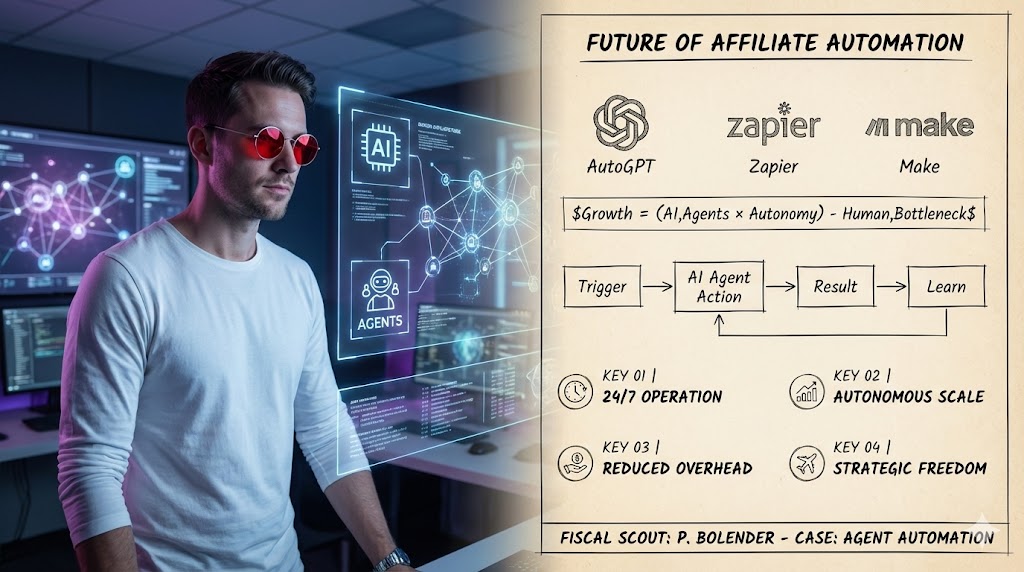
The Future of Affiliate Automation: A Verdict
It largely depends on strategic implementation and tool selection. AI agents offer significant leverage for affiliate marketers willing to adapt and integrate new technologies, but they are not a magic bullet.
- Drastically increases operational efficiency and content output, allowing for scale.
- Requires initial setup, ongoing human oversight, and a clear understanding of AI limitations.
- Ideal for automating content generation, keyword research, and campaign optimization for niche affiliate blogs.
What Are AI Agents in Affiliate Marketing?
AI agents in affiliate marketing are sophisticated, autonomous systems designed to perform complex tasks that traditionally require human intervention. These agents leverage artificial intelligence to analyze data, make decisions, and execute actions across various aspects of an affiliate business. Unlike simple automation scripts that follow predefined rules, AI agents can learn, adapt, and optimize their performance over time.
AI Agent: An autonomous software entity that perceives its environment, makes decisions, and takes actions to achieve specific goals, often involving learning and adaptation.
Their primary goal is to enhance efficiency, scale operations, and improve profitability for affiliate marketers. By handling repetitive or data-intensive tasks, AI agents free up human marketers to focus on higher-level strategy, creativity, and relationship building. Understanding these autonomous systems is crucial for leveraging their full potential.
- Content Generation: Drafting articles, product reviews, and social media posts.
- Keyword Research: Identifying profitable niches and long-tail keywords.
- Campaign Optimization: Adjusting bids, targeting, and ad copy for better performance.
- Audience Analysis: Segmenting audiences and predicting consumer behavior.
The distinction between an AI agent and basic automation lies in its ability to handle complex tasks with a degree of intelligence and adaptability. This means they can respond to dynamic market conditions rather than just executing static instructions.
Pros of AI Agents in Affiliate Marketing
- Achieve unprecedented scalability in content production and campaign management.
- Significantly boost operational efficiency by automating time-consuming, repetitive tasks.
- Enable data-driven decisions through advanced analytics and predictive insights.
Cons of AI Agents in Affiliate Marketing
- Involves considerable initial setup complexity and ongoing configuration.
- Raises ethical concerns regarding content originality, transparency, and data privacy.
- Carries the risk of over-reliance, potentially leading to a loss of human intuition and critical oversight.
How AI Agents Automate Affiliate Workflows
AI agents are transforming affiliate marketing by automating entire workflows, from initial research to content distribution and performance analysis. This shift allows affiliate marketers to manage more campaigns, target more niches, and generate more content without proportionally increasing their manual workload. The automation extends across various stages of the affiliate funnel, creating a more streamlined and efficient operation.
- Automated Keyword Research: Agents can identify trending topics and profitable keywords.
- Content Drafting and Optimization: Generating blog posts, product descriptions, and SEO-optimized articles.
- Email Marketing Sequences: Crafting personalized email campaigns and follow-ups.
- Social Media Scheduling: Creating and scheduling posts tailored to different platforms.
- Ad Copy Generation: Producing compelling ad creatives and headlines for various ad networks.
The power of end-to-end automation means that once configured, these agents can handle a sequence of repetitive tasks seamlessly. This not only saves time but also reduces the likelihood of human error, leading to more consistent and effective campaign execution. The focus shifts from manual execution to strategic planning and oversight.
Insider tip
Start by automating one small, well-defined workflow, such as keyword clustering or drafting product review outlines. This allows you to learn the agent’s capabilities and limitations before scaling to more complex operations.
Key Capabilities of AI Agents for Affiliates
Beyond basic automation, AI agents offer a suite of advanced capabilities that provide a significant competitive edge in the affiliate landscape. These capabilities move beyond simple task execution to offer genuine intelligence and strategic support. Understanding these deeper functionalities is crucial for maximizing their impact on your affiliate business model.
- Predictive Analytics: Forecasting market trends, audience behavior, and campaign performance.
- Hyper-Personalization: Delivering tailored content and product recommendations to individual users.
- Dynamic Content Updates: Automatically adjusting website content based on real-time performance data or seasonal trends.
- Competitor Analysis: Monitoring competitor strategies, keyword rankings, and content gaps.
- Fraud Detection: Identifying and mitigating fraudulent clicks or conversions in affiliate programs.
The ability to perform predictive modeling allows affiliates to anticipate changes and adapt their strategies proactively, rather than reactively. This foresight can lead to more profitable campaigns and a stronger market position. Furthermore, hyper-personalization ensures that marketing messages resonate more deeply with target audiences, increasing engagement and conversion rates.
Efficiency Gains with AI Automation
Studies suggest that businesses implementing AI automation in marketing can see a 15-30% increase in operational efficiency within the first year, primarily due to reduced manual labor and optimized resource allocation.
Choosing the Right AI Tools for Your Affiliate Business
Selecting the appropriate AI tools is a critical step in successfully integrating AI agents into your affiliate marketing strategy. The market is rapidly expanding, offering a diverse range of solutions, each with unique strengths and specializations. A thoughtful evaluation process is essential to ensure the tools align with your specific business needs and long-term goals.
- Integration Capabilities: Ensure compatibility with your existing platforms (CMS, CRM, analytics).
- Scalability: Choose tools that can grow with your business and handle increasing data volumes.
- Cost-Effectiveness: Evaluate pricing models against the projected ROI and your budget.
- Specific Features: Prioritize tools that address your most pressing automation needs, such as content generation or ad optimization.
- Ease of Use: Consider the learning curve and available support resources.
Prioritizing tools with strong integration capabilities will prevent data silos and ensure a seamless workflow across your tech stack. Equally important is considering scalability, as your needs will likely evolve as your affiliate business expands. For instance, an advanced AI SEO Writer can generate high-quality, optimized content at scale, significantly reducing manual effort and boosting your content output.
Essential AI Tools for Affiliate Marketers
Context for Selection: These tools are relevant for automating content, research, and optimization tasks, crucial for scaling affiliate operations efficiently.
- Jasper AI – Positioning as a comprehensive content creation assistant. Concrete benefit: Generates diverse content formats quickly, from blog posts to ad copy.
- Surfer SEO – Positioning as an on-page SEO optimization tool. Concrete benefit: Provides data-driven recommendations for content structure and keyword usage to rank higher.
- Semrush (AI Features) – Positioning as an all-in-one marketing suite with AI-powered insights. Concrete benefit: Offers AI-driven keyword research, competitor analysis, and content ideas.
Decision Help: When choosing, consider your primary pain point. If content volume is your biggest challenge, focus on generation tools. If SEO performance is lagging, prioritize optimization tools. None of these tools are ideal if your core issue is a lack of fundamental marketing strategy or a very niche market with limited data for AI to learn from.
Common Pitfalls and How to Avoid Them
While AI agents offer immense potential for affiliate automation, several common pitfalls can hinder their effectiveness or even lead to detrimental outcomes. Recognizing and actively avoiding these mistakes is crucial for a successful implementation. Many of these issues stem from an over-reliance on technology without adequate human oversight or strategic planning.
Warning: The Automation Trap
Critical mistake to avoid: Fully automating critical processes without human review or quality checks. Explanation of consequence: This can lead to the propagation of errors, publication of low-quality or inaccurate content, brand damage, and wasted ad spend, ultimately eroding trust and profitability.
- Poor Data Quality: AI agents are only as good as the data they’re fed; inaccurate data leads to flawed decisions.
- Lack of Human Review: Over-automating content or campaigns without human oversight can result in irrelevant or nonsensical outputs.
- Neglecting Ethical Guidelines: Failing to consider transparency, bias, and data privacy can lead to legal issues and reputational damage.
- Ignoring AI Limitations: Expecting AI to handle complex creative or nuanced strategic tasks beyond its current capabilities.
- Insufficient Testing: Launching AI-driven campaigns without thorough A/B testing and performance monitoring.
To mitigate these risks, prioritize data integrity by ensuring your input data is clean and relevant. Implement a robust system of human oversight for all AI-generated content and campaign adjustments. Regular auditing and continuous learning are key to refining your AI strategies and avoiding costly mistakes.
Maximizing ROI with AI-Powered Content Creation
Content is the lifeblood of affiliate marketing, and AI agents are revolutionizing its creation, allowing marketers to produce high volumes of quality content at unprecedented speeds. This capability directly impacts ROI by enabling broader market reach, improved SEO performance, and more consistent engagement with target audiences. The strategic application of AI in content generation can be a game-changer for scaling affiliate operations.
- Increased Content Velocity: Produce articles, reviews, and social posts much faster than manual methods.
- Enhanced SEO Performance: AI can optimize content for target keywords, readability, and structure.
- Diverse Content Formats: Generate various content types, from short social snippets to long-form guides.
- Personalized Content at Scale: Tailor content to specific audience segments without manual effort.
The ability to achieve high content velocity means you can cover more topics, target more keywords, and maintain a fresh content pipeline, all contributing to better search engine visibility. Moreover, AI-powered tools can significantly improve SEO performance by ensuring content adheres to best practices for ranking. Tools like an AI Autoblogger Tool can transform raw data into engaging articles, freeing up time for strategic tasks and content promotion.
Leveraging AI for Niche Research and Keyword Discovery
Identifying profitable niches and uncovering high-value keywords are foundational to successful affiliate marketing. AI agents excel in this area by processing vast amounts of data far more efficiently than human researchers, revealing opportunities that might otherwise remain hidden. This capability allows affiliates to enter new markets with confidence and optimize existing strategies for maximum impact.
- Identifying Emerging Trends: AI can spot nascent market trends and consumer interests before they become mainstream.
- Competitor Keyword Analysis: Automatically analyze competitor rankings and identify their top-performing keywords.
- Long-Tail Keyword Discovery: Uncover less competitive, highly specific keywords with strong conversion potential.
- Audience Sentiment Analysis: Understand the emotional tone and opinions surrounding specific topics or products.
- Content Gap Analysis: Pinpoint areas where your competitors are creating content, but you are not.
By leveraging AI for market trends analysis, affiliate marketers can be among the first to capitalize on new opportunities, gaining a significant first-mover advantage. The power of semantic analysis allows AI to understand the context and intent behind search queries, leading to more accurate and profitable keyword recommendations. This deep insight empowers marketers to build highly targeted campaigns.
Insider tip
Don’t just rely on AI to give you keywords; use it to understand the underlying user intent. Combine AI-generated keyword clusters with your own market intuition to craft content that truly solves user problems and drives conversions.
Ethical Considerations and Future Trends
As AI agents become more integrated into affiliate marketing, it’s imperative to address the ethical implications and consider the future trajectory of this technology. Issues such as content originality, transparency, and data privacy are paramount. Responsible AI implementation ensures long-term sustainability and maintains consumer trust, which is vital for any affiliate business.
“The development of full artificial intelligence could spell the end of the human race.”
— Stephen Hawking, Theoretical Physicist
- Content Originality and Plagiarism: Ensuring AI-generated content is unique and doesn’t infringe on copyrights.
- Algorithmic Bias: Preventing AI from perpetuating or amplifying biases present in its training data, especially in targeting.
- Data Privacy and Security: Adhering to regulations like GDPR and CCPA when handling user data for personalization.
- Transparency with Consumers: Deciding whether and how to disclose the use of AI in content creation or recommendations.
- Job Displacement: Considering the impact of automation on human roles within the industry.
Addressing algorithmic bias requires careful auditing of AI models and diverse training data. Upholding data privacy standards is not just a legal requirement but a fundamental aspect of building trust with your audience. The future of AI in affiliate marketing will likely involve even more sophisticated agents capable of complex decision-making, requiring marketers to continuously adapt their ethical frameworks and operational guidelines.
Real-World Applications: Case Studies in Affiliate Success
Understanding how AI agents translate into tangible results for affiliate marketers can provide valuable insights and inspiration. These real-world applications demonstrate the practical benefits of integrating AI into various aspects of an affiliate business, highlighting both the challenges and the triumphs. Success stories often involve strategic deployment of AI to overcome specific operational bottlenecks or to achieve unprecedented scale.
Scaling Content for a Niche Affiliate Site
The trap: A small affiliate team struggled to produce enough high-quality content to compete in a rapidly growing niche, leading to stagnant traffic and missed revenue opportunities.
The win: By implementing an AI content generation agent, they automated the drafting of product reviews and informational articles. This allowed them to increase their content output by 300% within six months, resulting in a 75% increase in organic traffic and a 40% boost in affiliate commissions.
- Massive Content Expansion: An affiliate publishing network used AI to generate thousands of unique product descriptions, significantly expanding their product catalog.
- Targeted Ad Campaign Optimization: An e-commerce affiliate employed AI to dynamically adjust ad bids and creatives based on real-time performance data, reducing CPA by 20%.
- Niche Market Penetration: A marketer used AI for deep keyword research and content gap analysis to successfully enter and dominate several micro-niches previously deemed too small for manual effort.
- Personalized Email Marketing: An affiliate program leveraged AI to segment subscribers and send highly personalized product recommendations, increasing email conversion rates by 15%.
These examples illustrate the potential for scalable growth and achieving a significant strategic advantage through AI. The key often lies in identifying specific pain points where AI can provide the most leverage, rather than attempting to automate everything at once. Learning from these applications can help new adopters navigate their own AI integration journey.
Debunking Myths About AI in Affiliate Automation
The rapid advancement of AI has inevitably led to various misconceptions and myths, particularly concerning its role in industries like affiliate marketing. Addressing these myths with factual information is essential to foster realistic expectations and encourage effective adoption. Many fears or hesitations stem from a misunderstanding of current AI capabilities and limitations.
Myth
AI agents will completely replace human affiliate marketers.
Reality
AI agents are powerful tools designed to augment human capabilities, not replace them. They excel at repetitive, data-intensive tasks, freeing up human marketers to focus on strategy, creativity, relationship building, and critical oversight. The future is about human-AI collaboration.
- Myth: AI is too expensive for small businesses. Reality: Many AI tools now offer tiered pricing, making them accessible even for smaller operations, with significant ROI potential.
- Myth: AI lacks creativity and produces generic content. Reality: While early AI content could be generic, modern AI models can generate highly creative, nuanced, and engaging content when given proper prompts and context.
- Myth: Implementing AI is too complex and requires coding skills. Reality: Most modern AI tools for marketers feature user-friendly interfaces and require no coding, simplifying the adoption process.
- Myth: AI-generated content will always be flagged by search engines. Reality: High-quality, original, and valuable AI-generated content, when properly reviewed and optimized, performs just as well as human-written content.
The reality is that AI is becoming increasingly accessible and cost-effective, making it a viable option for a wide range of affiliate marketers. The focus should be on how AI enhances human capabilities, leading to a more efficient and productive workflow. Understanding the true potential and limitations of AI allows for a more strategic and successful integration into your affiliate business, emphasizing cost-effectiveness and strategic advantage.
AI Adoption in Marketing
Approximately 60% of marketing leaders report that their organizations have already implemented AI in at least one marketing function, indicating a growing trend towards AI integration across the industry.
Your AI Affiliate Automation Action Checklist
- Define Clear Goals (Week 1): Identify specific affiliate marketing tasks you want to automate and set measurable objectives (e.g., increase content output by X%, reduce keyword research time by Y%).
- Research and Select Tools (Weeks 2-3): Evaluate AI tools based on your defined goals, budget, and integration needs. Sign up for trials and compare features.
- Pilot a Small Project (Month 1): Implement an AI agent for a single, manageable task, such as generating five blog post outlines or optimizing a small ad campaign.
- Establish Oversight and Review Processes (Ongoing): Designate a human reviewer for all AI-generated content and campaign adjustments. Set up regular performance monitoring.
- Monitor KPIs and Iterate (Monthly): Track key performance indicators related to your automated tasks. Analyze results and make necessary adjustments to prompts, settings, or tool choices.
- Scale Gradually (Quarterly): Once initial pilot projects prove successful, gradually expand AI automation to more complex workflows and additional areas of your affiliate business.
Common Questions About AI Agents in Affiliate Marketing
Can AI agents fully replace human affiliate managers?
No, AI agents are designed to augment human capabilities, not replace them entirely. They excel at automating repetitive, data-intensive tasks, freeing up human affiliate managers to focus on strategic planning, creative direction, relationship building, and critical oversight that AI cannot yet replicate.
What’s the typical cost of implementing AI agents?
The cost varies significantly depending on the complexity of the tasks, the specific tools chosen, and the scale of implementation. Many AI tools offer tiered pricing, ranging from free or low-cost basic plans for small businesses to enterprise-level solutions that can cost hundreds or thousands per month. Initial setup costs might also be a factor.
How do I measure the success of AI automation?
Success is measured against your predefined goals and KPIs. This could include increased content output, reduced time spent on keyword research, improved SEO rankings, higher conversion rates, lower cost per acquisition (CPA), or increased affiliate commissions. Regular tracking and A/B testing are crucial.
Is AI automation suitable for small affiliate businesses?
Absolutely. Many AI tools are now accessible and affordable for small businesses. By automating key tasks, even a small affiliate can achieve a level of efficiency and scale that would otherwise require a larger team, allowing them to compete more effectively in their chosen niches.