
Navigating Amazon SiteStripe Image Alternatives for 2026
It depends significantly on your technical comfort and desired control. Relying solely on Amazon SiteStripe for images is becoming increasingly unreliable, necessitating proactive alternative strategies for affiliate marketers and content creators.
- Strongest Advantage: Adopting alternatives grants greater control over image presentation, compliance, and long-term stability for your affiliate content.
- Biggest Limitation: These methods often require more initial setup, technical understanding, or investment in third-party tools compared to SiteStripe’s simplicity.
- Concrete Use Case: Ideal for affiliate sites building high-quality, visually rich product reviews and comparisons that need to remain compliant and performant beyond 2025.
Understanding the Shift: Why Amazon SiteStripe Images are Evolving
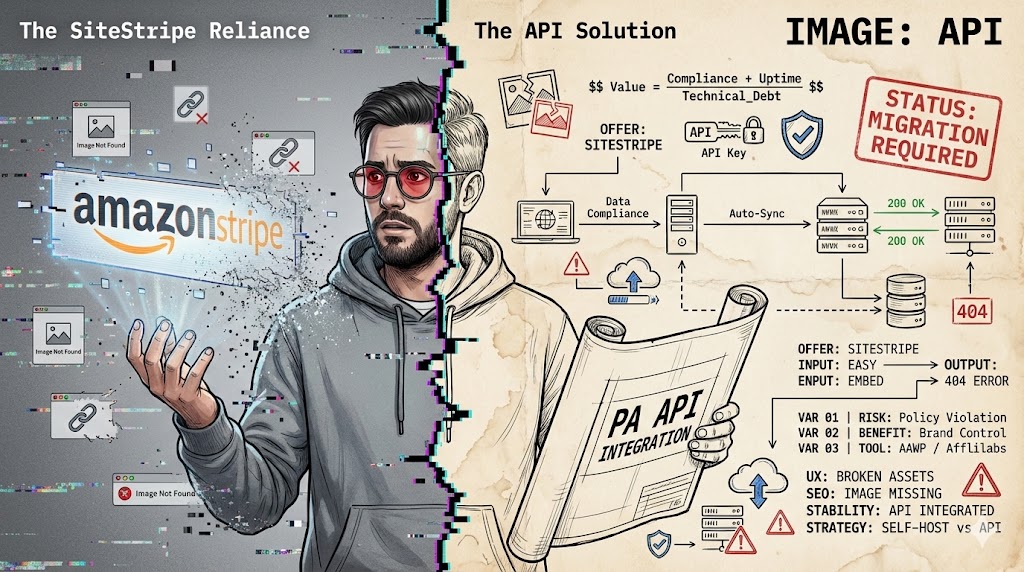
Amazon SiteStripe has historically offered a convenient way for affiliates to generate quick links and embed product images directly onto their websites. However, the landscape of affiliate marketing, coupled with Amazon’s evolving policies and technical infrastructure, indicates a significant shift away from the long-term viability of SiteStripe’s image functionality. This change is driven by a need for greater control over brand presentation, consistent user experience, and robust compliance measures across the vast Amazon ecosystem.
Affiliates who continue to rely solely on SiteStripe for image display risk encountering broken images, non-compliance issues, or a sudden loss of functionality as Amazon refines its offerings. Proactive adoption of alternative methods is not merely a recommendation but a strategic necessity to maintain the integrity and profitability of affiliate content. Understanding these underlying reasons helps in choosing the most appropriate and future-proof image display strategy for your specific needs.
- Policy Evolution: Amazon frequently updates its Associates Program Operating Agreement, impacting how content, including images, can be displayed.
- Technical Debt: Older tools like SiteStripe may not integrate seamlessly with newer web standards or Amazon’s evolving API infrastructure.
- Brand Control: Amazon seeks tighter control over how its brand and product imagery are represented across the web.
- User Experience: Ensuring consistent, high-quality image delivery across all affiliate touchpoints is a priority for Amazon.
Pros of Adopting Alternatives
- Enhanced Control: Gain full autonomy over image size, quality, alt text, and loading behavior, improving SEO and user experience.
- Future-Proofing: Reduce reliance on a potentially deprecated feature, ensuring your content remains functional and compliant long-term.
- Improved Performance: Optimize images for faster loading times, directly impacting bounce rates and conversion metrics.
Cons of Relying on SiteStripe
- Compliance Risks: Potential for non-compliance with Amazon’s evolving image policies, leading to account issues.
- Broken Images: Increased likelihood of images failing to load or disappearing without warning, degrading user experience.
- Limited Customization: SiteStripe offers minimal control over image appearance, hindering brand consistency and optimization efforts.
The Core Challenge: Amazon’s Affiliate Image Policy in 2026
Amazon’s Associates Program Operating Agreement contains specific clauses regarding the display of product images, which are often overlooked by affiliates. These policies are designed to protect Amazon’s brand, ensure accurate product representation, and maintain a consistent customer experience. By 2026, it’s anticipated that Amazon will further tighten these regulations, making it critical for affiliates to understand the nuances of image sourcing and display to avoid potential penalties, including account suspension or loss of earnings.
The primary challenge lies in the distinction between images directly served by Amazon via approved methods (like the Product Advertising API) and those hosted independently. Affiliates must ensure that any image used is either directly from Amazon’s approved sources or, if self-hosted, complies with strict attribution and linking requirements. Misinterpreting these policies can lead to significant issues, highlighting the need for a robust and compliant image strategy.
- Direct Sourcing: Images must originate from Amazon’s servers or approved API endpoints.
- Attribution: Proper attribution to Amazon is often required, especially for manually sourced images.
- No Modification: Images generally cannot be altered or modified in any way that misrepresents the product.
- Up-to-Date: Images must reflect the current product details on Amazon, preventing outdated information.
Amazon SiteStripe: A toolbar provided by Amazon to Associates, allowing quick generation of affiliate links, text, and image links directly from Amazon product pages while browsing the site. Its image functionality is becoming less reliable for long-term use.
Direct Linking: A Simple, Compliant Alternative for Product Images
For affiliates seeking a straightforward and compliant method without complex technical setups, direct linking to Amazon product pages remains a viable option. This approach involves using a text link with your affiliate tag, which, when clicked, takes the user directly to the product page on Amazon. While this doesn’t display the image *on your site*, it ensures full compliance as the user views the product image directly on Amazon’s platform, where all policies are inherently met.
To enhance user experience, you can pair this method with descriptive text links or even use a generic placeholder image on your site that links to the Amazon product. This strategy prioritizes compliance and simplicity, making it suitable for those who prefer minimal technical overhead. It avoids any direct image hosting or API integration, significantly reducing the risk of policy violations related to image display.
- Simplicity: Requires only creating a standard Amazon affiliate text link.
- Compliance: Fully compliant as images are viewed on Amazon’s domain.
- No Hosting: Eliminates the need for image hosting or API keys.
- User Experience: Can be less visually engaging on your site but ensures accuracy on Amazon.
Harnessing the Amazon Product Advertising API (PA API) for Dynamic Visuals
The Amazon Product Advertising API (PA API) offers the most robust and compliant method for displaying dynamic product images and information directly on your website. By integrating with the PA API, affiliates can programmatically fetch up-to-date product images, titles, prices, and descriptions from Amazon’s vast catalog. This ensures that your displayed content is always current and directly sourced from Amazon, adhering to their strict policies.
Utilizing the PA API requires some technical proficiency or the use of a WordPress plugin designed for API integration. While the initial setup can be more involved than SiteStripe, the benefits include full control over image presentation, automatic updates, and a significantly reduced risk of compliance issues. It’s the recommended long-term solution for serious affiliate marketers looking for scalability and reliability in their image display strategy.
- Dynamic Content: Images and data are always current, fetched directly from Amazon.
- Full Compliance: Directly adheres to Amazon’s image sourcing policies.
- Customization: Allows for flexible display options, including image size and placement.
- Scalability: Ideal for sites with a large number of Amazon product promotions.
Warning: API Key Security
Never expose your Amazon PA API access keys or secret keys in client-side code or publicly accessible files. Doing so can lead to unauthorized usage, potential account compromise, and service interruptions, resulting in a loss of affiliate revenue.
WordPress Affiliate Plugins: Streamlining Amazon Image Integration
For WordPress users, a range of affiliate plugins can significantly simplify the process of integrating Amazon product images and data via the PA API. These plugins abstract away the complexities of direct API calls, offering user-friendly interfaces to search for products, display images, and generate compliant affiliate links. They are an excellent bridge for affiliates who want the power of the PA API without needing to write custom code.
When selecting a plugin, consider features like automatic image updates, customizable templates, and compliance tools. For those seeking a comprehensive solution for managing affiliate links and displaying product information, including images, exploring advanced affiliate marketing plugins is crucial. For instance, affililabs.ai offers a robust platform that can serve as an alternative WordPress Affiliate Plugin, providing tools for creating high-converting product displays and managing your affiliate content effectively. Such plugins ensure your image strategy is both compliant and optimized for performance.
- Ease of Use: Simplifies PA API integration with intuitive dashboards and shortcodes.
- Compliance Features: Many plugins include built-in features to help maintain Amazon’s policy adherence.
- Time-Saving: Automates much of the image sourcing and linking process.
- Customization: Offers templates and styling options for consistent branding.
Insider Tip: Choosing the Right Plugin
When evaluating WordPress affiliate plugins, prioritize those with active development, strong user reviews, and explicit support for the latest Amazon PA API versions. Look for features like geo-targeting for international sites and robust caching to optimize performance.
Manual Image Hosting: Gaining Full Control Over Your Visuals
While generally discouraged by Amazon for direct product images due to compliance risks, manual image hosting can be considered for supplementary visuals, such as lifestyle shots or comparison charts, that you create yourself. This method grants absolute control over image quality, file size, and hosting environment, which can be beneficial for site performance and unique content creation. However, it is paramount that any manually hosted image of an Amazon product is clearly attributed and links back to the Amazon product page with your affiliate tag, and does not misrepresent the product.
This approach requires careful adherence to Amazon’s policies, ensuring that you are not using Amazon’s copyrighted product images without explicit permission or via approved API channels. It’s best reserved for original content that complements your affiliate links, rather than replacing direct product images. Always prioritize compliance by linking directly to Amazon for the official product image whenever possible, or using the PA API.
- Full Control: Complete autonomy over image attributes, hosting, and optimization.
- Original Content: Ideal for unique lifestyle photos, infographics, or comparison tables.
- Performance: Optimize images for your specific server and CDN setup.
- Compliance Risk: Highest risk of policy violation if Amazon’s product images are used improperly.
Data Insight: Impact of Custom Visuals
Studies suggest that high-quality, relevant custom images and lifestyle shots can increase click-through rates on affiliate links by up to 25% compared to generic product images, provided they are used compliantly and enhance the user experience.
Optimizing Images for Performance and Compliance Beyond SiteStripe
Regardless of the method chosen for displaying Amazon product images, optimization remains a critical step for both user experience and search engine ranking. Large, unoptimized images can significantly slow down page load times, leading to higher bounce rates and a negative impact on SEO. Beyond technical optimization, ensuring compliance with Amazon’s image policies is non-negotiable to protect your affiliate account.
Optimization involves techniques such as compressing images without losing quality, choosing appropriate file formats (e.g., WebP for modern browsers), and implementing lazy loading. For compliance, always double-check that images are sourced correctly, accurately represent the product, and are accompanied by proper attribution or linking. A proactive approach to both performance and compliance will safeguard your affiliate business and enhance your site’s overall effectiveness.
- Compression: Use tools to reduce file size while maintaining visual quality.
- File Formats: Opt for modern formats like WebP for better compression and faster loading.
- Lazy Loading: Implement lazy loading to defer image loading until they are in the viewport.
- Alt Text: Provide descriptive alt text for accessibility and SEO benefits.
Future-Proofing Your Amazon Affiliate Strategy for Long-Term Success
The evolving nature of Amazon’s affiliate program and web technologies means that a static strategy is a failing strategy. To ensure long-term success, affiliate marketers must adopt a flexible and adaptable approach to their content, especially concerning product imagery. Future-proofing involves not only selecting robust image display methods but also staying informed about policy changes and investing in tools and practices that offer longevity.
This includes regularly reviewing Amazon’s Associates Program Operating Agreement, subscribing to updates from Amazon and reputable affiliate marketing resources, and being prepared to pivot strategies when necessary. Embracing solutions like the PA API or comprehensive affiliate plugins, such as those found at affililabs.ai, provides a stronger foundation against unforeseen changes. The goal is to build a resilient affiliate business that can withstand shifts in platform policies and technological advancements.
- Stay Informed: Regularly monitor Amazon’s policy updates and industry news.
- Diversify: Avoid over-reliance on a single tool or method for image display.
- Invest in Tools: Utilize robust plugins or API integrations for stability.
- Adaptability: Be prepared to adjust your strategy as the affiliate landscape evolves.
“The only constant in affiliate marketing is change. Adaptability and a proactive approach to compliance are the cornerstones of long-term success.”
— Sarah Miller, Digital Marketing Strategist
Common Mistakes to Avoid When Displaying Amazon Product Images
Affiliate marketers often make several critical errors when displaying Amazon product images, which can lead to compliance issues, poor user experience, or even account termination. One of the most frequent mistakes is directly downloading and re-hosting Amazon product images without using the PA API or SiteStripe. This practice violates Amazon’s intellectual property rights and their operating agreement, as it bypasses their tracking and control mechanisms.
Another common pitfall is failing to keep product information, including images, up-to-date. Amazon product details, prices, and availability can change frequently, and displaying outdated information can mislead customers and damage your credibility. Always ensure your chosen image display method automatically updates or that you have a manual process in place to verify accuracy regularly. Avoiding these mistakes is crucial for maintaining a healthy and profitable Amazon Associates account.
- Direct Re-hosting: Downloading and uploading Amazon images to your server without permission.
- Outdated Information: Displaying images or product details that no longer match Amazon’s listing.
- Lack of Attribution: Failing to properly attribute images to Amazon when required.
- Image Modification: Altering Amazon product images in a way that misrepresents the product.
Case Study: The Outdated Image Trap
The Trap: An affiliate blogger manually downloaded product images for a popular electronics review site. Over time, Amazon updated product models and images, but the blogger’s site displayed old versions. This led to customer confusion and complaints, ultimately resulting in a temporary suspension of their Amazon Associates account due to non-compliance.
The Win: After reinstatement, the blogger transitioned to using a WordPress plugin powered by the Amazon PA API. This ensured all product images and data were automatically updated, maintaining compliance and improving user trust. Their affiliate revenue recovered and grew, demonstrating the value of dynamic, compliant image solutions.
Comparing Image Display Methods: Control, Effort, and Scalability
Choosing the right Amazon image display method involves a trade-off between the level of control you desire, the effort you’re willing to invest, and the scalability your business requires. Direct linking offers maximum compliance with minimal effort but sacrifices visual appeal on your site. The Amazon PA API provides extensive control and scalability but demands technical expertise or a reliable plugin. Manual hosting offers ultimate control over supplementary visuals but introduces significant compliance risks for direct product images.
For most serious affiliate marketers, a hybrid approach or a dedicated plugin leveraging the PA API strikes the best balance. This allows for dynamic, compliant product images while reserving manual hosting for unique, value-added content. Evaluating your specific needs against these factors will guide you toward the most effective and sustainable image strategy for your affiliate business.
- Direct Linking: Low effort, high compliance, low visual control.
- Amazon PA API: Moderate to high effort (or plugin cost), high compliance, high visual control, high scalability.
- WordPress Plugins (e.g., affililabs.ai): Moderate effort (setup), high compliance, moderate to high visual control, high scalability.
- Manual Hosting (Supplementary): High effort, high compliance risk (for product images), high visual control (for original content).
Data Insight: Time Savings with Automated Solutions
Affiliates using automated WordPress plugins for Amazon product integration report saving an average of 3-5 hours per week on content updates and image management compared to manual methods, allowing more focus on content creation and promotion.
The Crucial Role of Legal & Brand Compliance in Affiliate Marketing
Beyond Amazon’s specific image policies, affiliate marketing operates within a broader legal and ethical framework that demands careful attention to compliance. This includes adhering to advertising standards, consumer protection laws (e.g., FTC guidelines in the US), and intellectual property rights. Any image display strategy must integrate seamlessly with these overarching legal requirements to protect your business from potential legal challenges and maintain consumer trust.
Ensuring brand compliance means not only respecting Amazon’s guidelines but also accurately representing products and services to your audience. Misleading imagery or claims can erode trust and lead to regulatory scrutiny. A robust compliance strategy for images involves regular audits of your content, clear disclaimers, and a commitment to transparency. This holistic approach safeguards your reputation and the longevity of your affiliate ventures.
- FTC Guidelines: Clearly disclose your affiliate relationship to consumers.
- Copyright Law: Respect intellectual property rights for all images used.
- Accuracy: Ensure images and descriptions are truthful and not misleading.
- Privacy: Be mindful of data privacy regulations if collecting user information.
Insider Tip: Regular Policy Checks
Set a recurring calendar reminder to review Amazon’s Associates Program Operating Agreement and any relevant legal guidelines (e.g., FTC disclosure requirements) at least quarterly. Policies can change without direct individual notification, and staying proactive is key to continuous compliance.
Action Checklist: Secure Your Amazon Affiliate Images by 2026
- By Q4 2024: Audit all existing Amazon product images on your site to identify those sourced via SiteStripe or non-compliant methods.
- By Q1 2025: Research and select a primary alternative image display strategy (e.g., PA API direct integration or a robust WordPress plugin like affililabs.ai).
- By Q2 2025: Begin migrating critical product images to your chosen compliant method, starting with your highest-performing pages.
- By Q3 2025: Implement a system for automatic image updates and compliance checks for all Amazon product visuals.
- By Q4 2025: Remove all non-compliant Amazon product images from your site, ensuring a full transition before the 2026 deadline.
- Ongoing: Establish a quarterly review process for Amazon’s Associates Program policies and your site’s image compliance.
Common Questions
Will Amazon SiteStripe images stop working entirely by 2026?
While Amazon hasn’t announced a definitive shutdown date for SiteStripe’s image functionality, the trend indicates a move towards API-driven solutions. Relying on SiteStripe for images carries increasing risk of deprecation or non-compliance, making proactive migration essential.
Is the Amazon Product Advertising API (PA API) free to use?
Yes, the Amazon PA API is generally free for Amazon Associates, but it requires an approved Associates account and sales activity to maintain access. There are rate limits on requests, which are typically sufficient for most affiliate websites.
Can I use my own hosted images for Amazon products?
You can use your own hosted images for supplementary content (e.g., lifestyle shots, comparison charts) that you create. However, directly re-hosting Amazon’s copyrighted product images without using the PA API or SiteStripe is generally a violation of their operating agreement and intellectual property rights. Always link to Amazon for the official product image or use the PA API.