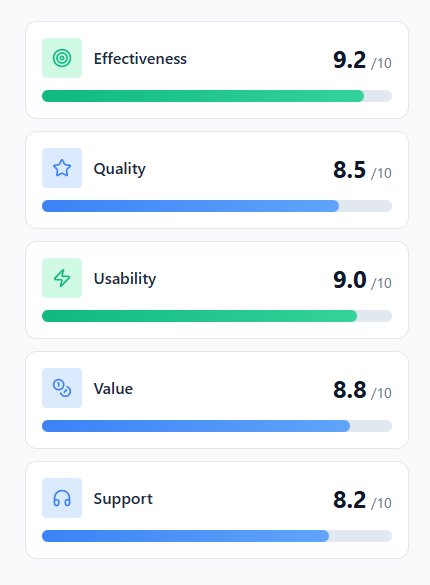

Reviewr for WordPress: A Clear Decision
It depends. Reviewr is a solid choice for WordPress users who want a simple, built-in solution for collecting product reviews without relying on external services. However, it’s not ideal for businesses that need advanced AI moderation, multi-platform aggregation, or deep CRM integrations.
- Seamless WordPress integration and a user-friendly setup for basic review functionality.
- May fall short if you need advanced features offered by dedicated SaaS platforms.
- Perfect for small to mid-sized WordPress e-commerce sites that want to build social proof directly on product pages.
Reviewr Product Reviews on WordPress: A Step-by-Step Implementation Guide
Implementing a robust product review system on your WordPress site is crucial for building customer trust and driving sales. Reviewr offers a dedicated solution, promising seamless integration and straightforward management. This guide provides a comprehensive, step-by-step approach to setting up and optimizing Reviewr, addressing common concerns about complexity and effectiveness.
Many users face execution anxiety when integrating new plugins, fearing compatibility issues or a steep learning curve. This article aims to demystify the process, ensuring you can confidently deploy Reviewr to enhance your product pages and leverage valuable user-generated content. Understanding the core functionalities and best practices will prevent common setup mistakes.
Understanding Reviewr for WordPress: What Does It Offer?
Reviewr is a specialized WordPress plugin designed to facilitate the collection, display, and management of product reviews directly within your website environment. It integrates with WooCommerce and other e-commerce solutions, providing a native way to gather feedback. Its primary goal is to enhance social proof and improve product credibility through authentic customer testimonials.
The plugin aims to simplify the entire review lifecycle, from soliciting feedback to showcasing it prominently on your product pages. This direct integration means you retain full control over your data and presentation, avoiding reliance on third-party review platforms that might impose their branding or limitations. It’s a powerful tool for businesses focused on building an internal review ecosystem.
- Native WordPress Integration: Operates entirely within your WordPress dashboard, offering a familiar user experience.
- WooCommerce Compatibility: Designed to work seamlessly with the most popular e-commerce plugin for product-specific reviews.
- Customizable Review Forms: Allows you to tailor the fields and appearance of your review submission forms.
- Review Moderation: Provides tools to approve, edit, or reject submitted reviews before they go live.
- Schema Markup Support: Helps search engines understand your review content, potentially boosting SEO visibility.
Installation and Activation: Getting Reviewr Ready on Your Site.
The first step to leveraging Reviewr’s capabilities is a proper installation and activation on your WordPress website. This process is similar to installing any other plugin, but attention to detail ensures a smooth start. A common mistake is overlooking server requirements or conflicts with existing plugins, which can lead to unexpected behavior or errors during setup.
Ensure your WordPress installation is up-to-date and create a backup before proceeding. This safeguards your site against any unforeseen issues and allows for a quick rollback if necessary. Following the standard plugin installation procedure will get Reviewr’s core files onto your server, preparing it for activation and initial configuration.
- Download the Plugin: Obtain the Reviewr plugin file, typically a .zip archive, from its official source or your purchase platform.
- Upload to WordPress: Navigate to ‘Plugins’ > ‘Add New’ in your WordPress dashboard, then click ‘Upload Plugin’ and select the downloaded .zip file.
- Install and Activate: Click ‘Install Now’ and once uploaded, click ‘Activate Plugin’ to enable Reviewr’s functionalities on your site.
- Verify Installation: Look for a new ‘Reviewr’ menu item in your WordPress admin sidebar, confirming successful installation.
Insight
Before activating Reviewr, temporarily disable any caching plugins. Caching can sometimes interfere with the initial setup and configuration changes, making it seem like your settings aren’t saving. Re-enable caching once the core setup is complete.
Initial Configuration: Setting Up Reviewr’s Core Functionality.
Once activated, Reviewr requires some initial configuration to align with your site’s specific needs and branding. These settings control the overall behavior of the review system, from who can submit reviews to how they are displayed. Taking the time to properly configure these options is vital for a consistent user experience and effective review collection.
The configuration panel typically includes options for general settings, email notifications, and integration preferences. Pay close attention to permissions, ensuring that only legitimate users can submit reviews, which helps maintain the authenticity of feedback. Adjusting these settings correctly will lay the groundwork for a functional and secure review system.
- General Settings: Define global parameters like review submission permissions (e.g., logged-in users only, verified buyers).
- Email Notifications: Configure automated emails for new review submissions, approvals, or requests for reviews.
- Display Options: Set default styles for review display, such as star ratings, reviewer names, and review dates.
- Integration Preferences: Link Reviewr with your e-commerce platform (e.g., WooCommerce) to associate reviews with specific products.
- Spam Protection: Implement measures like reCAPTCHA or honeypot fields to mitigate unwanted submissions.
Crafting Your First Review Form: Collecting User Feedback Effectively.
The review form is the gateway for customers to share their experiences. A well-designed form encourages submissions by being intuitive and asking relevant questions. Reviewr allows you to customize these forms, ensuring they capture the specific feedback you need while maintaining a user-friendly interface. The goal is to minimize friction and maximize the quantity and quality of reviews.
Consider what information is most valuable for your business and potential customers. Beyond a star rating and a text field, you might want to include custom fields for specific product attributes or aspects of the customer service experience. Thoughtful form design directly impacts your ability to gather actionable insights from reviews.
- Access Form Builder: Navigate to the ‘Reviewr’ menu and find the ‘Forms’ or ‘Form Builder’ section.
- Create New Form: Start by adding a new form and giving it a descriptive name for internal reference.
- Add Fields: Drag and drop various field types like star ratings, text areas, name, email, and custom fields.
- Configure Field Settings: Set fields as required or optional, add placeholders, and define character limits for text fields.
- Design and Styling: Adjust the form’s appearance to match your website’s theme and branding.
- Save and Publish: Save your form and ensure it’s set to ‘published’ to be available for use.
Myth
More fields on a review form always lead to more detailed reviews.
Reality
While more fields can offer detail, an overly long or complex form often deters users, leading to fewer submissions. Prioritize essential fields and consider optional additions for those willing to provide more in-depth feedback. Simplicity often yields higher completion rates.
Displaying Reviews: Integrating Feedback into Your Product Pages.
Collecting reviews is only half the battle; effectively displaying them is crucial for their impact. Reviewr provides various methods to integrate reviews directly onto your product pages, typically through shortcodes, widgets, or direct theme integration. The placement and presentation of reviews significantly influence their visibility and perceived trustworthiness by potential buyers.
Ensure that reviews are easily discoverable but don’t disrupt the primary product information. A common strategy is to place a summary near the top of the product page (e.g., average rating) and the full list of reviews further down. This approach allows quick scanning for overall sentiment while providing depth for those who want to read individual testimonials, enhancing conversion rates.
- Shortcode Implementation: Use specific Reviewr shortcodes to embed review lists or submission forms directly into product descriptions or custom page templates.
- Widget Integration: Utilize Reviewr widgets to display recent reviews, top-rated products, or review summaries in sidebars or footers.
- Theme Integration: For deeper integration, modify your theme files to automatically display Reviewr content on all product pages, often leveraging hooks provided by WooCommerce.
- Review Summary Display: Configure how the aggregate star rating and review count appear, usually near the product title.
- Individual Review Layout: Customize the look and feel of each review, including reviewer name, date, rating, and review text.
Moderation and Management: Handling User Submissions Like a Pro.
Effective review management is critical for maintaining credibility and addressing customer feedback promptly. Reviewr offers tools to moderate submitted reviews, allowing you to approve, edit, or reject them based on your guidelines. This process ensures that only genuine, relevant, and appropriate content appears on your site, protecting your brand reputation.
Beyond simple approval, consider how you will respond to both positive and negative feedback. Engaging with reviewers, especially those with constructive criticism, demonstrates excellent customer service and builds trust. A proactive approach to moderation and response is a cornerstone of a successful user-generated content strategy.
- Access Review Dashboard: Navigate to the ‘Reviewr’ section in your WordPress admin to view all submitted reviews.
- Review Pending Submissions: Filter for ‘pending’ reviews to focus on those awaiting moderation.
- Approve or Reject: Read each review carefully and decide whether to approve it for publication or reject it if it violates your terms.
- Edit Reviews (if necessary): Make minor edits for grammar, spelling, or to remove personal information, but avoid altering the core message.
- Respond to Reviews: Utilize Reviewr’s features (if available) or your e-commerce platform’s comment system to publicly respond to reviews.
- Archive or Delete: Remove spam or irrelevant reviews permanently after rejection.
Case Study: The Unmoderated Review Trap
The Trap A small online boutique neglected to moderate its product reviews, leading to a competitor posting fake negative reviews and spam. This significantly dropped their product ratings and customer trust, impacting sales for weeks before the issue was identified.
The Win After implementing a strict moderation policy with Reviewr, requiring manual approval for all new reviews and setting up email alerts for submissions, the boutique quickly removed the malicious content. They then focused on encouraging genuine customer reviews, rebuilding their reputation and seeing a 15% increase in conversion rates within a month.
Advanced Features: Enhancing Reviewr for SEO and Engagement.
To truly maximize the impact of your product reviews, delve into Reviewr’s advanced features. These functionalities often extend beyond basic collection and display, offering tools for SEO enhancement, automated review requests, and richer content types. Leveraging these features can significantly boost your site’s visibility and customer engagement.
Implementing structured data (Schema Markup) is particularly important for search engines, as it allows your star ratings to appear directly in search results, making your listings more attractive. Automated review requests, on the other hand, streamline the process of gathering feedback, ensuring a consistent flow of new content. These advanced capabilities are key to a comprehensive review marketing strategy.
- Schema Markup Integration: Enable Reviewr’s built-in schema markup to display rich snippets (star ratings) in search engine results pages.
- Automated Review Requests: Set up email sequences to automatically ask customers for reviews after a purchase or delivery.
- Photo/Video Reviews: Allow customers to upload images or videos with their reviews, adding a richer layer of social proof.
- Review Filtering and Sorting: Provide options for users to filter reviews by star rating or sort them by date, helpfulness, etc.
- Review Analytics: Monitor key metrics like review volume, average rating, and submission rates to track performance.
Common Issues and Troubleshooting: Solving Reviewr Roadblocks.
Even with careful setup, you might encounter occasional issues with any WordPress plugin, including Reviewr. Understanding common problems and their solutions can save significant time and frustration. Most issues stem from conflicts with other plugins, theme incompatibilities, or incorrect configuration settings.
Before escalating to support, always perform basic troubleshooting steps. Checking your server error logs can often provide immediate clues about the root cause. Remember that a systematic approach to problem-solving is far more effective than random adjustments, ensuring you address the underlying issue rather than just masking symptoms. This proactive approach minimizes downtime and user frustration.
- Reviews Not Appearing: Check if reviews are approved in the dashboard, ensure shortcodes/widgets are correctly placed, and clear any caching plugins.
- Form Submission Errors: Verify form field settings, check for JavaScript conflicts in your browser console, and test for plugin conflicts by deactivating others.
- Star Ratings Not Displaying: Confirm that the display options are enabled in Reviewr settings and that your theme supports the necessary CSS/HTML for star icons.
- Email Notifications Not Sending: Check your WordPress email settings, verify sender address, and test with a dedicated SMTP plugin if issues persist.
- Plugin Conflicts: Deactivate all other plugins and reactivate them one by one to identify the conflicting plugin.
- Theme Compatibility: Switch to a default WordPress theme (e.g., Twenty Twenty-Four) to see if the issue resolves, indicating a theme conflict.
Beyond the Basics: Integrating Reviewr with Other Plugins.
While Reviewr is a standalone solution, its effectiveness can often be amplified by integrating it with other WordPress plugins. This might include enhancing email marketing efforts, improving site performance, or integrating with analytics tools. Strategic integrations can create a more cohesive and powerful ecosystem for your e-commerce site.
When considering integrations, prioritize plugins that directly support your review strategy or improve the overall user experience. For instance, combining Reviewr with an advanced analytics plugin can provide deeper insights into how reviews influence purchasing decisions. Always test integrations in a staging environment first to prevent any disruptions to your live site, ensuring system stability.
- Email Marketing Plugins: Integrate with tools like Mailchimp or ActiveCampaign to send targeted review request emails or follow-ups.
- SEO Plugins: Ensure compatibility with Yoast SEO or Rank Math to prevent schema markup conflicts and optimize review pages.
- Security Plugins: Work alongside security solutions like Wordfence or Sucuri to protect your review forms from spam and malicious submissions.
- Caching Plugins: Configure caching plugins (e.g., WP Rocket, LiteSpeed Cache) to properly cache review content without causing display issues.
- Analytics Plugins: Connect with Google Analytics or Matomo to track user engagement with review sections and measure their impact on conversions.
Insight
When integrating Reviewr with an email marketing service for automated review requests, segment your audience. Send different request emails to first-time buyers versus repeat customers, or tailor messages based on product categories for higher engagement rates.
Is Reviewr the Right Fit? Evaluating Alternatives and Use Cases.
Deciding whether Reviewr is the optimal product review system for your WordPress site involves weighing its features against your specific business needs and comparing it to other available solutions. While Reviewr offers strong native integration, some businesses might require more advanced functionalities or prefer a cloud-based service.
Consider your budget, technical expertise, and the scale of your operations. For small to medium-sized businesses primarily operating on WordPress, Reviewr often provides excellent value. However, larger enterprises with complex review moderation needs or multi-platform sales might benefit from more robust, albeit often more expensive, alternatives. The key is to align the tool with your long-term growth strategy.
- Budget Constraints: Reviewr is typically a one-time purchase or subscription, often more cost-effective than recurring SaaS fees for similar features.
- Technical Expertise: Its WordPress-native interface makes it accessible for users familiar with the platform, requiring less specialized knowledge than some external APIs.
- Feature Set Required: If you need advanced AI moderation, review syndication across multiple marketplaces, or deep CRM integration, Reviewr might require custom development or a different solution.
- Data Ownership: Reviewr keeps your review data within your WordPress database, offering full control and ownership, which is a significant advantage for some businesses.
- Scalability: While scalable for most WordPress sites, extremely high-volume review sites might need to consider database optimization strategies.
Alternative Review Systems for WordPress
Contextlabel When Reviewr might not be the perfect fit, these alternatives offer different strengths.
- YITH WooCommerce Reviews – Specifically for WooCommerce, offering more advanced review features like review attachments and review categories.
- Customer Reviews for WooCommerce – Focuses on verified buyer reviews, automated reminders, and Google Shopping integration.
- Trustpilot (via plugin) – A popular external review platform known for its wide reach and trust signals, but involves recurring fees and external data hosting.
Entscheidungshilfe Choose based on your need for WooCommerce-specific enhancements, budget for external services, and preference for data ownership. If you need extensive features beyond basic review collection, or if you operate across multiple platforms, an alternative might be more suitable. If your budget is very limited and you only need basic star ratings, even a simple custom solution might suffice over any plugin.
Reviewr WordPress Implementation Checklist
- Install and Activate Reviewr: Upload the plugin and ensure it’s active on your WordPress site.
- Configure Core Settings: Define global review permissions, email notifications, and display defaults.
- Design Review Forms: Create at least one user-friendly form with essential fields for collecting feedback.
- Integrate Display on Product Pages: Use shortcodes or theme integration to showcase reviews prominently.
- Set Up Moderation Workflow: Establish a process for approving, editing, and responding to new review submissions.
- Enable Schema Markup: Activate structured data for reviews to enhance search engine visibility.
- Test End-to-End Functionality: Submit a test review, moderate it, and verify its display on a product page.
- Plan for Review Requests: Decide on a strategy for soliciting reviews, whether manual or automated.
- Monitor Review Performance: Regularly check review volume and average ratings to gauge effectiveness.
Can Reviewr integrate with non-WooCommerce products?
Reviewr is primarily designed for deep integration with WooCommerce for product-specific reviews. While it might offer general review functionalities via shortcodes for custom post types, its full power and ease of use are best realized with WooCommerce products. For non-WooCommerce products, you might need custom development or a more generic review plugin.
Is Reviewr suitable for collecting service reviews, not just product reviews?
While Reviewr’s core focus is product reviews, its customizable forms can technically be adapted to collect service reviews. You would need to create custom forms and potentially use shortcodes on service pages or custom post types. However, dedicated service review plugins might offer more tailored features for that specific use case.
How does Reviewr handle spam reviews?
Reviewr typically includes built-in spam protection features, such as reCAPTCHA integration or honeypot fields, which help deter automated spam submissions. Additionally, its robust moderation system allows administrators to manually approve or reject reviews, providing a crucial layer of defense against unwanted content. Regular monitoring of pending reviews is also essential.
Does Reviewr impact website performance?
Like any plugin, Reviewr adds code and database queries to your WordPress site. Its impact on performance is generally minimal for most sites, especially if properly configured and combined with good hosting and caching practices. Excessive custom fields or a very large number of unoptimized reviews could potentially affect load times, but this is rare under typical usage. Regular database optimization is recommended.
Can I migrate existing reviews from another system to Reviewr?
Migrating existing reviews to Reviewr often depends on the format of your current review data and Reviewr’s import capabilities. Some plugins offer direct import tools, while others might require a custom CSV import or database manipulation. It’s best to check Reviewr’s documentation or contact their support for specific migration instructions, as this can be a complex process.