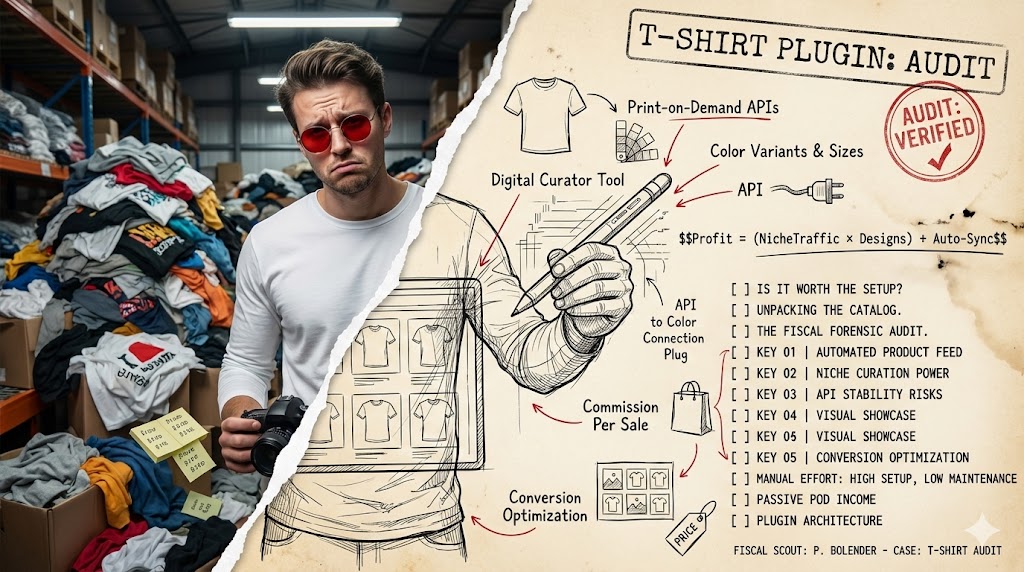
Navigating T-Shirt Affiliate Plugins for WordPress
DEPENDS. A dedicated T-shirt affiliate plugin is highly beneficial for niche marketers seeking streamlined product display and link management, but it requires initial setup effort and ongoing content creation.
- Simplifies product catalog integration and affiliate link management significantly.
- Can introduce a learning curve and potential compatibility issues with other plugins.
- Ideal for content creators building niche T-shirt review sites or curated collections.
What is a Tee Shirt Affiliate WordPress Plugin?
A T-shirt affiliate WordPress plugin is a specialized tool designed to integrate product feeds from various print-on-demand or e-commerce platforms directly into a WordPress website. These plugins automate the process of displaying T-shirt designs, managing affiliate links, and often include features for customization and performance tracking. They bridge the gap between affiliate networks and your content, making it easier to showcase products without manual entry.
The core function is to streamline the creation of an affiliate store or product showcase, allowing website owners to focus on content and promotion rather than tedious data entry. This automation is crucial for scaling operations and maintaining up-to-date product information from multiple vendors. Without such a plugin, managing a large inventory of affiliate T-shirts would be incredibly time-consuming and prone to errors.
- Automates product data import from affiliate programs.
- Manages and updates affiliate links automatically.
- Provides customizable display options for T-shirt designs.
- Reduces manual effort in maintaining product catalogs.
- Enhances user experience with integrated shopping functionalities.
Advantages of T-Shirt Affiliate Plugins
- Streamlined Product Management: Automates importing and updating thousands of T-shirt designs from various platforms.
- Enhanced User Experience: Creates professional-looking product galleries and search functions directly on your site.
- Time and Cost Efficiency: Reduces manual labor significantly, freeing up resources for marketing and content creation.
Limitations and Trade-offs
- Potential Compatibility Issues: May conflict with certain themes or other WordPress plugins, requiring troubleshooting.
- Learning Curve for Setup: Initial configuration can be complex, especially for users unfamiliar with API integrations.
- Reliance on Third-Party APIs: Performance and data accuracy depend heavily on the stability of external affiliate platforms.
Why Use a Dedicated Plugin for T-Shirt Affiliates?
Using a dedicated plugin offers significant advantages over manual methods or generic affiliate tools, particularly for the niche of T-shirt sales. These plugins are built with the specific requirements of visual product display and diverse design catalogs in mind. They often include features like direct image fetching, size/color variant handling, and deep linking capabilities that are essential for effectively promoting apparel. The primary benefit is the efficiency gain in managing a dynamic inventory.
A common hesitation for new affiliates is the technical complexity of integrating product feeds. Dedicated plugins simplify this by providing user-friendly interfaces for connecting to platforms like Amazon, Redbubble, or Teespring. This reduces the barrier to entry and allows even non-technical users to build sophisticated affiliate stores. The ability to quickly update product information and prices across your site is a critical operational advantage.
- Automates fetching product images and descriptions.
- Supports multiple affiliate networks simultaneously.
- Offers specific apparel-focused display templates.
- Ensures accurate pricing and availability updates.
- Minimizes broken links and outdated product information.
Key Features to Look for in a T-Shirt Affiliate Plugin
Selecting the right T-shirt affiliate plugin involves evaluating several core features that directly impact usability and profitability. Foremost among these is robust API integration with your chosen affiliate platforms, ensuring seamless data flow and reliable product updates. Without strong integration, the plugin’s utility is severely limited, leading to manual workarounds and potential data inaccuracies. Consider plugins that support a wide range of popular print-on-demand services.
Another crucial aspect is the plugin’s ability to create visually appealing product showcases. Look for features like customizable grids, carousels, and individual product pages that allow for high-quality image display and clear calls to action. The user experience on your site directly influences conversion rates, making design flexibility a non-negotiable feature. Performance optimization, such as lazy loading images, is also vital to maintain fast page speeds.
- Multi-platform API support: Integrates with major T-shirt platforms.
- Customizable display templates: Offers flexible design options for product listings.
- Automatic product synchronization: Keeps prices, stock, and details current.
- Affiliate link cloaking: Protects your links and improves click-through rates.
- Filtering and search functionality: Allows users to easily find specific designs.
- Performance optimization: Ensures fast loading times for image-heavy pages.
Insider tip: Prioritize API Stability
Before committing to a plugin, research its history of API updates and compatibility. A plugin that frequently breaks or lags behind platform changes will cause significant operational headaches and potential revenue loss.
Step-by-Step: Installing and Activating Your Plugin
The installation and activation process for a T-shirt affiliate plugin typically follows standard WordPress procedures, though specific steps might vary slightly by plugin. The first step involves downloading the plugin file, either from the WordPress plugin directory or directly from the developer’s website. Ensure you have a stable internet connection and sufficient server resources before beginning. A common mistake is overlooking server requirements, which can lead to installation failures.
Once downloaded, navigate to your WordPress dashboard, go to ‘Plugins’ > ‘Add New’, and then click ‘Upload Plugin’. Choose the downloaded .zip file and click ‘Install Now’. After installation, you must click ‘Activate Plugin’ to enable its functionality. This critical step often gets missed, leaving the plugin installed but inactive. Following activation, a new menu item or section will usually appear in your WordPress admin area for configuration.
- Download the plugin .zip file from a trusted source.
- Log into your WordPress admin dashboard.
- Go to ‘Plugins’ > ‘Add New’ > ‘Upload Plugin’.
- Select the downloaded .zip file and click ‘Install Now’.
- Click ‘Activate Plugin’ to enable its features.
Plugin Compatibility Insights
Approximately 30-40% of WordPress users report experiencing plugin conflicts at some point, often due to outdated versions or incompatible codebases. Regular updates and testing in a staging environment can significantly reduce this risk.
Configuring Product Feeds and Affiliate Links
Configuring product feeds is the heart of any T-shirt affiliate plugin, as it dictates what products are displayed and how their data is managed. This usually involves entering API keys or feed URLs provided by your chosen affiliate networks. Each platform will have its own method for generating these credentials, so consult their documentation carefully. The goal is to establish a reliable data sync that keeps your product listings current.
Once the feed is connected, you’ll typically define parameters for importing products, such as categories, keywords, or specific collections. Many plugins allow you to filter products to only display relevant items, preventing your site from becoming cluttered with irrelevant designs. Setting up affiliate links involves ensuring that every product displayed correctly redirects to your unique affiliate URL on the vendor’s site. This is paramount for earning commissions and tracking sales accurately.
- Obtain API keys or feed URLs from your affiliate platforms.
- Enter credentials into the plugin’s settings.
- Define product import filters (e.g., category, brand, keywords).
- Map product data fields (e.g., title, description, image, price).
- Configure affiliate link structure and cloaking options.
Designing Your T-Shirt Showcase Pages
The visual presentation of your T-shirt designs is paramount for attracting clicks and driving conversions. Effective showcase pages go beyond simply listing products; they create an engaging shopping experience. Utilize the plugin’s display options to create appealing layouts, such as grid views for browsing multiple designs or carousel sliders for featured items. High-quality product images are non-negotiable for apparel sales, so ensure your plugin handles them well.
Consider the user journey when designing these pages. How will visitors navigate from a category page to an individual product, and then to the affiliate vendor? Implement clear calls to action, such as ‘View Design’ or ‘Shop Now,’ that stand out without being intrusive. Many plugins offer shortcodes or blocks that integrate seamlessly with page builders, providing flexibility in design without requiring extensive coding knowledge. Focus on creating a clean, intuitive, and visually rich environment.
- Choose appropriate layout templates (grids, lists, carousels).
- Optimize product images for quality and loading speed.
- Implement clear and compelling calls to action.
- Utilize filtering and sorting options for user convenience.
- Ensure mobile responsiveness for all display elements.
Boosting Engagement with Curated Collections
The trap: A T-shirt affiliate site listed thousands of designs indiscriminately, overwhelming visitors and leading to high bounce rates.
The win: By using their plugin’s filtering features, the site owner created highly curated collections like ‘Vintage Gaming Tees’ or ‘Eco-Friendly Apparel’. This targeted approach reduced choice paralysis, increased time on site by 40%, and boosted conversion rates by 15% within three months.
Optimizing for Conversions and User Experience
Conversion rate optimization (CRO) is crucial for maximizing earnings from your T-shirt affiliate site. Beyond attractive design, focus on elements that guide users towards making a purchase decision. This includes clear product descriptions that highlight unique selling points, customer reviews (if available through the plugin or integrated manually), and prominent calls to action. A seamless path from discovery to click-through is fundamental for success.
User experience (UX) plays a direct role in CRO. Ensure your site loads quickly, is easy to navigate, and is fully responsive across all devices. Mobile users, in particular, expect a smooth experience. Implement features like quick view options, wishlists, or comparison tools if your plugin supports them, as these can significantly enhance engagement. Regularly test your site’s usability to identify and rectify any friction points that might deter visitors.
- Write compelling product descriptions focusing on benefits.
- Ensure calls to action are visible and persuasive.
- Optimize page loading speed, especially for image galleries.
- Implement mobile-first design principles for responsiveness.
- Consider adding social proof elements like ratings or testimonials.
Myth: More Products Always Means More Sales
Many believe that listing every available T-shirt design will automatically lead to higher affiliate commissions.
Reality: Quality and Curation Drive Conversions
An overwhelming number of choices can lead to ‘analysis paralysis,’ where visitors struggle to make a decision and leave. Curated, high-quality selections tailored to specific niches or themes often perform significantly better than vast, undifferentiated catalogs, as they provide a clearer value proposition and reduce cognitive load.
Tracking Performance and Analyzing Sales Data
Understanding how your T-shirt affiliate efforts are performing is essential for making informed decisions and optimizing your strategy. Most affiliate plugins offer some level of built-in tracking, showing clicks on your affiliate links. However, for a comprehensive view, integrate your WordPress site with external analytics tools like Google Analytics. This allows you to monitor traffic sources, user behavior on product pages, and ultimately, conversion funnels.
Analyze key metrics such as click-through rates (CTR) on your product listings, bounce rates on showcase pages, and the performance of different categories or design themes. Identify which T-shirts or niches are generating the most interest and sales, and then double down on those areas. Conversely, prune underperforming products to keep your site lean and focused. Regular data analysis is not just about reporting; it’s about continuous improvement and strategic adaptation.
- Monitor click-through rates (CTR) on affiliate links.
- Track page views and time on site for product pages.
- Analyze conversion rates from your site to the affiliate vendor.
- Identify top-performing T-shirt designs and categories.
- Use data to inform content strategy and product curation.
Insider tip: Leverage UTM Parameters
Beyond basic plugin tracking, use UTM parameters on your affiliate links to gain granular insights in Google Analytics. This allows you to see which specific pages, buttons, or even text links are driving the most clicks and conversions, providing invaluable optimization data.
Common Challenges and Troubleshooting Tips
Even with the best T-shirt affiliate plugins, users can encounter various challenges, from broken product feeds to display issues. One common problem is API key expiration or invalidation, which can halt product synchronization. Always double-check your credentials if products stop updating. Another frequent issue is plugin conflicts with other installed WordPress plugins or your theme, leading to unexpected visual glitches or functionality breakdowns.
When troubleshooting, the first step is always to deactivate other plugins one by one to isolate the source of the conflict. If the issue persists, switch to a default WordPress theme (like Twenty Twenty-Four) temporarily to rule out theme-related problems. For feed-related issues, verify that the affiliate platform’s API is operational and that your server’s firewall isn’t blocking outgoing requests. Keeping your WordPress core, theme, and all plugins updated is a simple yet effective preventative measure against many common problems.
- Verify API keys and feed URLs regularly.
- Test for plugin conflicts by deactivating other plugins.
- Check for theme conflicts by switching to a default theme.
- Ensure your server meets the plugin’s minimum requirements.
- Consult the plugin’s documentation and support forums for specific errors.
Scaling Your T-Shirt Affiliate Business
Once your T-shirt affiliate site is running smoothly, the next step is to strategize for growth. Scaling involves expanding your product offerings, reaching new audiences, and optimizing your existing content. Consider diversifying your affiliate partnerships to include more print-on-demand platforms, offering a wider range of designs and styles. This reduces reliance on a single vendor and provides more options for your audience, enhancing your market reach.
Content expansion is another key scaling lever. Create more niche-specific blog posts, review articles, or buying guides that naturally integrate your T-shirt affiliate products. Explore new marketing channels beyond organic search, such as social media promotion, email marketing, or even paid advertising campaigns. Continuously analyze your data to identify successful strategies and replicate them, while also experimenting with new approaches to maintain momentum and sustainable growth.
- Diversify affiliate partnerships and product sources.
- Expand content creation into new niches or themes.
- Explore new marketing channels (social media, email).
- Automate routine tasks to free up time for strategic work.
- Reinvest a portion of earnings into site improvements and marketing.
Alternatives to Dedicated Plugins
While dedicated T-shirt affiliate plugins offer significant advantages, they are not the only option for promoting apparel. For those with very small catalogs or specific requirements, several alternatives exist. One common approach is to use a generic affiliate link management plugin, which can cloak and track links but lacks the product display and synchronization features of specialized tools. This requires manual creation of product pages and image uploads.
Another alternative is to leverage a full-fledged e-commerce solution like WooCommerce, combined with an affiliate product import add-on. This provides maximum flexibility and control over your store, but it comes with a much steeper learning curve and higher maintenance overhead. For simple cases, direct linking from blog posts or custom HTML embeds might suffice, though this offers minimal automation and tracking. The choice depends heavily on the scale and complexity of your intended affiliate operation.
- Generic Affiliate Link Managers: Good for basic link cloaking and tracking, but no product display automation.
- WooCommerce with Affiliate Add-ons: Offers full e-commerce control but is more complex and resource-intensive.
- Manual HTML/Link Embedding: Simplest for very few products, but lacks automation and scalability.
- Custom Development: Highest control, but expensive and requires technical expertise.
- Theme-Based Solutions: Some themes include basic affiliate features, but often limited in scope.
Future Trends in T-Shirt Affiliate Marketing
The landscape of T-shirt affiliate marketing is constantly evolving, driven by technological advancements and shifting consumer preferences. One significant trend is the increasing demand for hyper-personalization and niche targeting. Affiliates who can curate highly specific collections for micro-audiences, perhaps even integrating AI-powered recommendation engines, will likely see greater success. Generic, broad catalogs are becoming less effective as consumers seek unique and relevant products.
Another emerging trend is the integration of augmented reality (AR) features, allowing customers to virtually ‘try on’ T-shirts before purchasing. While this is currently more prevalent on direct e-commerce sites, affiliate plugins may start to offer integrations with AR tools, enhancing the shopping experience. Furthermore, the emphasis on sustainability and ethical sourcing continues to grow, meaning affiliates promoting eco-friendly or fair-trade T-shirt brands will resonate more strongly with conscious consumers. Staying abreast of these trends is key for long-term relevance and profitability.
- Increased focus on hyper-niche product curation.
- Integration of AI for personalized recommendations.
- Potential for AR ‘try-on’ features in affiliate displays.
- Growing importance of sustainable and ethical product sourcing.
- Shift towards interactive and immersive shopping experiences.
Your T-Shirt Affiliate Launch Checklist
- Select Your Niche: Within 3 days, finalize a specific T-shirt niche (e.g., vintage gaming, pet lovers, minimalist designs) to guide product selection.
- Choose Your Plugin: Within 5 days, research and commit to a T-shirt affiliate WordPress plugin that supports your chosen platforms and features.
- Install and Configure: Within 7 days, install the plugin, connect your affiliate APIs, and set up initial product feeds.
- Design Showcase Pages: Within 10 days, create at least three visually appealing product showcase pages using the plugin’s templates.
- Publish Initial Content: Within 14 days, publish 5-7 blog posts or articles that naturally integrate your T-shirt affiliate products.
- Set Up Analytics: Within 14 days, integrate Google Analytics and ensure affiliate link tracking is correctly configured.
- Promote First Batch: Within 21 days, initiate promotion of your first set of T-shirt designs across at least two marketing channels.
What is the best T-shirt affiliate plugin for WordPress?
The ‘best’ plugin depends on your specific needs, including your target affiliate platforms (e.g., Amazon, Redbubble), desired features for product display, and budget. Popular options often include features for Amazon Associates or generic product feed imports, but always check for direct integration with your preferred T-shirt vendors.
Can I use a T-shirt affiliate plugin with any WordPress theme?
Most T-shirt affiliate plugins are designed to be compatible with standard WordPress themes. However, conflicts can arise, especially with highly customized or older themes. It is always recommended to test the plugin in a staging environment or with a default WordPress theme first to ensure full compatibility and proper display.
Do these plugins handle inventory and pricing updates automatically?
Yes, a primary benefit of dedicated T-shirt affiliate plugins is their ability to automatically synchronize product data, including inventory status and pricing, directly from the affiliate platform’s API. This ensures your website displays accurate and up-to-date information, minimizing manual effort and preventing customer frustration.
How do T-shirt affiliate plugins track sales?
T-shirt affiliate plugins primarily track clicks on your unique affiliate links. When a user clicks through to the vendor’s site and makes a purchase, the sale is tracked by the affiliate network using cookies associated with your link. The plugin itself typically reports click data, while actual sales and commissions are managed and reported by the affiliate program.
Is it difficult to set up a T-shirt affiliate plugin?
The difficulty of setup varies by plugin and your technical proficiency. Basic installation is straightforward, similar to any WordPress plugin. However, configuring product feeds, API keys, and customizing display options can involve a learning curve. Most reputable plugins offer detailed documentation and support to guide you through the process.