
Mastering Travel Gear Affiliate Displays: A Strategic Imperative
It depends significantly on your blog’s technical capabilities and audience engagement goals. This guide is suitable for travel bloggers aiming to elevate their affiliate marketing beyond simple text links, seeking to create visually rich and highly converting product showcases.
- Strongest Advantage: Enhanced visual presentation dramatically boosts click-through rates and conversions by providing clear product context and appeal.
- Biggest Limitation: Requires a deeper understanding of web design principles or dedicated affiliate display tools, which can be a learning curve for beginners.
- Concrete Use Case: Ideal for bloggers reviewing specific travel items (e.g., ‘Best Backpacks for Digital Nomads’) who want to integrate visually engaging product carousels or comparison tables directly into their content.
Why Visual Appeal Matters for Travel Gear Affiliates
For travel bloggers, merely dropping affiliate links into text is often insufficient to capture reader attention and drive sales. The sheer volume of online content means that a product’s visual presentation is paramount, especially for tangible items like luggage and gear. High-quality images and structured displays help potential buyers visualize themselves using the product, addressing initial hesitations about utility and aesthetics.
An effective visual strategy goes beyond just showing a product; it tells a story. When readers see gear presented in a real-world travel context, they can better understand its benefits and how it fits into their own adventures. This approach significantly reduces the mental friction associated with purchasing, transforming a passive reader into an engaged shopper. Neglecting visual appeal can lead to low conversion rates, even with excellent written reviews.
Pros of Advanced Affiliate Display
- Increased Engagement: Visually rich displays capture attention longer, encouraging deeper interaction with product recommendations.
- Higher Conversion Rates: Clear, contextual presentations help readers make informed decisions, leading to more purchases.
- Improved User Experience: Organized and attractive product showcases enhance the overall readability and professionalism of your blog.
Cons of Advanced Affiliate Display
- Technical Complexity: Implementing custom displays can require coding knowledge or reliance on specialized plugins, posing a barrier for some.
- Time Investment: Creating high-quality visuals and structured content takes more time than simply adding text links.
- Maintenance Overhead: Keeping product information and links updated across complex displays can become a significant ongoing task.
Choosing the Right Affiliate Display Tools
Selecting the appropriate tools is crucial for effectively showcasing travel gear without overwhelming your readers or your workflow. While some bloggers opt for custom HTML and CSS, many find greater efficiency and flexibility with dedicated affiliate marketing plugins or platforms. These tools simplify the process of creating attractive product boxes, comparison tables, and carousels, often with built-in affiliate link management. For WordPress users, options range from robust plugins designed specifically for affiliate marketing to page builders that offer advanced design capabilities.
When evaluating tools, consider factors like ease of use, customization options, and integration capabilities with your existing website. Some tools offer dynamic content updates, which can be invaluable for products with fluctuating prices or availability. For those seeking a comprehensive solution, platforms like Affililabs.ai provide an alternative WordPress affiliate plugin that streamlines product display and management, helping bloggers focus on content creation rather than complex coding. Investing in the right tool can significantly reduce the technical burden and free up time for creative content development.
Crafting Compelling Product Showcases
Creating a compelling product showcase involves more than just listing features; it’s about presenting information in an easily digestible and persuasive format. Start by designing dedicated product boxes that highlight key benefits, price, and a clear call to action. These boxes should be visually distinct from your main content but still align with your blog’s overall aesthetic. Use bullet points for quick readability and ensure that the most impactful features are immediately visible, drawing the reader’s eye.
Beyond individual product boxes, consider implementing comparison tables for similar items or interactive carousels for a collection of recommended gear. Comparison tables are particularly effective for helping readers weigh options, while carousels allow you to display multiple products without taking up excessive vertical space. Remember to include a strong, benefit-driven headline for each showcase, guiding the reader on what problem the featured products solve for their travels.
Affiliate Display Tools: Software or plugins designed to help content creators visually present affiliate products on their websites, often including features for product boxes, comparison tables, and automated link management, thereby enhancing user experience and conversion rates.
Integrating Contextual Product Placements
Contextual product placement is a powerful strategy that embeds affiliate products naturally within your narrative, making recommendations feel less like advertisements and more like helpful advice. Instead of a separate ‘shop’ section, think about how specific gear relates to the story you’re telling. For instance, if you’re writing about a challenging mountain trek, mention the specific waterproof jacket or durable backpack that proved indispensable, linking directly to it within the relevant paragraph.
This method works best when the product genuinely enhances the reader’s understanding or experience of your content. Use phrases like “I relied heavily on my…” or “This [product] made all the difference when…” to introduce the item organically. The goal is to make the product a seamless part of your travel story, demonstrating its value through your personal experience. This authenticity builds trust, which is a cornerstone of successful affiliate marketing.
The Power of Visuals in Affiliate Marketing
Studies indicate that content with relevant images gets 94% more views than content without. For affiliate products, this translates to significantly higher engagement rates, with visually rich product displays potentially increasing click-through rates by 20-30% compared to plain text links.
Leveraging High-Quality Imagery and Video
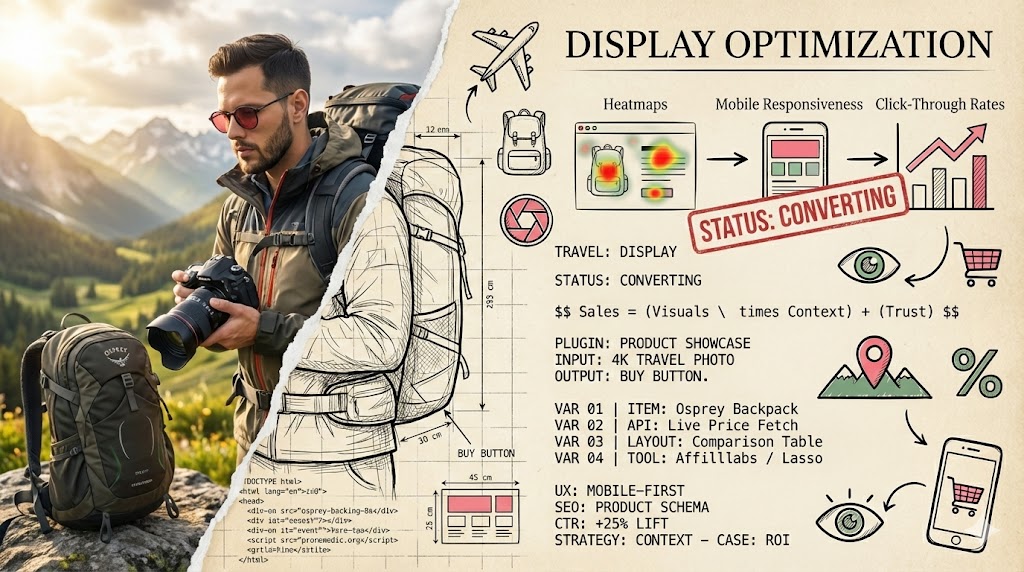
In the visual world of travel blogging, high-quality imagery and video are non-negotiable for effective affiliate displays. Blurry, poorly lit, or generic stock photos will detract from your recommendations and erode trust. Instead, use your own authentic, high-resolution photos of the gear in action during your travels. Show the backpack on your back, the tent pitched in a scenic location, or the camera bag protecting your equipment.
Video content takes this a step further, allowing you to demonstrate features, show scale, and convey the texture and feel of a product in a way static images cannot. Short, engaging video clips embedded within product showcases can dramatically increase conversion rates, as viewers gain a more comprehensive understanding of the item. Always optimize your media for web performance to ensure fast loading times, as slow pages can negate the benefits of great visuals.
Insider Tip: The ‘Why’ Behind the Buy
Don’t just list features; explain the ‘why’ behind each recommendation. Instead of ‘waterproof fabric,’ say ‘keeps your essentials dry even in unexpected downpours, saving your trip from disaster.’ Connect features directly to traveler benefits and pain points.
Optimizing for Mobile-First Travel Shoppers
The vast majority of travel planning and content consumption now happens on mobile devices, making mobile optimization an absolute priority for affiliate displays. A display that looks great on a desktop but is clunky or unreadable on a smartphone will alienate a significant portion of your audience. Ensure all product boxes, tables, and carousels are fully responsive, adapting seamlessly to smaller screens without requiring horizontal scrolling or tiny text.
Prioritize touch-friendly elements, such as large buttons for calls to action and swipeable carousels. Test your affiliate displays rigorously on various mobile devices to catch any layout issues or usability problems. Fast loading times are even more critical on mobile, so optimize all images and scripts. A smooth, intuitive mobile experience is key to converting on-the-go travel shoppers into buyers, leveraging the immediacy of their travel inspiration.
Understanding Affiliate Disclosure Requirements
Transparency is not just good practice; it’s a legal requirement for affiliate marketers in many regions, including the FTC in the United States. Clearly disclosing your affiliate relationships builds trust with your audience and protects you from potential legal issues. This means prominently stating that you may earn a commission from purchases made through your links. The disclosure should be easy to find, easy to understand, and placed near your affiliate content.
Avoid burying disclosures in your website’s footer or terms of service. A simple, clear statement at the top of an article containing affiliate links, or even within individual product boxes, is often best. Remember that your audience’s trust is your most valuable asset. Being upfront about your monetization strategy reinforces your credibility and ensures that readers feel respected, rather than misled. This honest approach fosters a loyal readership that values your recommendations.
Warning: The Hidden Cost of Non-Compliance
Critical mistake to avoid: Neglecting clear and conspicuous affiliate disclosures. Failing to adequately disclose your affiliate relationships can lead to fines, account termination by affiliate programs, and a severe loss of audience trust, which is incredibly difficult to rebuild.
Tracking Performance and A/B Testing Displays
Effective affiliate marketing isn’t a set-it-and-forget-it endeavor; it requires continuous monitoring and optimization. Tracking the performance of your affiliate displays is essential to understand what resonates with your audience and what falls flat. Utilize analytics tools to monitor click-through rates (CTR) on your product boxes, comparison tables, and individual links. Pay attention to conversion rates to see which display formats are actually leading to sales, not just clicks.
Once you have data, implement A/B testing to refine your approach. Test different headlines, call-to-action button colors, image placements, or even entirely different display layouts. For example, you might test whether a product carousel performs better than a static grid. Small, iterative changes based on data can lead to significant improvements in your affiliate revenue over time. Tools like Affililabs.ai can assist in managing and tracking these varied display elements, providing insights into what works best for your specific audience.
The Impact of A/B Testing on Conversions
Businesses that consistently A/B test their content and calls to action often see conversion rate increases of 10-15% or more. For affiliate marketers, this translates directly into higher earnings from the same amount of traffic, highlighting the value of data-driven optimization.
Beyond Basic Links: Interactive Elements
To truly stand out, travel bloggers can move beyond static product displays and incorporate interactive elements that enhance user engagement. Consider adding features like expandable product descriptions, where readers can click to reveal more details without cluttering the initial view. Interactive quizzes that recommend gear based on a traveler’s specific needs or destination can also be highly effective, guiding users towards relevant products in a personalized way.
Another powerful interactive element is user-generated content, such as customer reviews or ratings integrated directly into your product showcases. This social proof can significantly influence purchasing decisions. While implementing these features might require more advanced technical skills or specialized plugins, the enhanced user experience and potential for higher conversions often justify the effort. These dynamic elements transform a passive viewing experience into an active exploration, deepening user connection with your recommendations.
“Authenticity is the currency of influence. When you genuinely recommend products you use and love, your audience feels that connection, and that’s where true affiliate success begins.”
— Pat Flynn, Founder of Smart Passive Income
Building Trust Through Authentic Recommendations
In the crowded world of travel blogging, authenticity is your most valuable asset. Readers are increasingly discerning and can quickly spot generic, uninspired recommendations. To build lasting trust, only promote luggage and gear that you have personally used, tested, and genuinely believe in. Share your honest experiences, including both the pros and cons, demonstrating that your recommendations are driven by genuine utility rather than just commission potential.
When showcasing products, weave in personal anecdotes and specific scenarios where the item proved its worth. For example, instead of just saying a backpack is “durable,” describe how it survived a torrential downpour in Southeast Asia. This personal touch makes your content relatable and establishes you as a credible authority. Remember, a loyal audience that trusts your judgment will be more likely to click your affiliate links and return for future advice.
Case Study: The ‘Overpacked’ Blogger’s Revelation
Label: The trap A popular travel blogger consistently recommended the latest, most expensive gear without much personal context, leading to low engagement and conversion rates. Readers felt disconnected from the recommendations, perceiving them as purely transactional.
Label: The win After a candid post detailing her own struggles with overpacking and how a specific, mid-range minimalist backpack transformed her travel style, her affiliate sales for that product category surged by 250%. The authenticity and relatable personal story resonated deeply with her audience, proving that genuine experience trumps generic promotion.
Common Pitfalls in Affiliate Gear Display
Even with the best intentions, travel bloggers can fall into common traps when displaying affiliate gear. One frequent mistake is overwhelming the reader with too many options or overly complex layouts. A cluttered page can lead to decision paralysis, causing visitors to leave without making a purchase. Keep your displays clean, focused, and easy to navigate, guiding the reader towards clear choices rather than presenting a confusing array of products.
Another pitfall is neglecting to update product information or broken links. Outdated prices, unavailable items, or non-functional links not only frustrate readers but also damage your credibility. Regularly audit your affiliate displays to ensure all information is current and all links are active. Additionally, avoid making exaggerated claims about products; stick to factual benefits and your honest assessment to maintain trust and avoid misleading your audience.
Insider Tip: Leverage Scarcity and Urgency (Ethically)
If a product is genuinely popular or frequently sells out, mention it. Phrases like “often out of stock” or “grab it before your next trip” can create a gentle sense of urgency. However, only use this when it’s factually true to maintain trust.
Future-Proofing Your Affiliate Strategy
The digital landscape is constantly evolving, and a successful affiliate strategy requires an eye towards the future. Stay informed about emerging technologies, new affiliate platforms, and changes in consumer behavior. For instance, voice search optimization and shoppable content within social media platforms are becoming increasingly relevant. Adapting your display strategies to these new channels can open up significant new revenue streams and audience engagement opportunities.
Consider diversifying your affiliate partnerships beyond major retailers. Explore niche travel gear brands that align perfectly with your blog’s specific focus, potentially offering higher commission rates and less competition. Building direct relationships with brands can also lead to exclusive content opportunities or early access to new products. By remaining adaptable and proactive, you can ensure your affiliate marketing efforts continue to thrive in an ever-changing online environment.
Action Checklist for Optimizing Gear Displays
- Audit Existing Displays (Weekly): Review all current affiliate product showcases to check for broken links, outdated prices, and ensure visual consistency.
- Implement Responsive Design (Next 2 Weeks): Verify that all product boxes and comparison tables are fully mobile-responsive and adjust any non-compliant elements. This is an irreversible design commitment.
- Integrate Disclosure (Immediately): Add clear, prominent affiliate disclosures at the top of all relevant posts and near product displays.
- Plan A/B Tests (Next Month): Identify one key product display to A/B test with a different call-to-action or image set, committing to a data-driven approach.
- Explore New Tools (Ongoing): Research alternative affiliate display plugins like Affililabs.ai or advanced page builders to enhance future display capabilities.
Common Questions About Affiliate Gear Display
How often should I update my affiliate product displays?
It’s recommended to audit your displays at least weekly for broken links and price changes. Major content and layout updates can be done quarterly or as new products become available or trends shift.
What’s the best way to get high-quality product images?
The best way is to use your own authentic photos of the gear in action during your travels. If that’s not possible, use high-resolution images provided by the merchant or brand, ensuring you have the rights to use them.
Should I prioritize aesthetics or conversion in my displays?
Ideally, you should strive for a balance. An aesthetically pleasing display enhances user experience, which indirectly contributes to conversions. However, always prioritize clear calls to action and easy navigation, as these are direct drivers of sales.