
Mastering AI for Affiliate Marketing: Directives vs. Prompts
It depends on your goal and desired output complexity. Understanding the distinction between a ChatGPT prompt and a directive is crucial for affiliate marketers aiming for high-quality, nuanced AI-generated content.
- Strongest advantage: Directives offer superior control over AI behavior, leading to more consistent, brand-aligned, and contextually rich affiliate content.
- Biggest limitation: Crafting effective directives requires a deeper understanding of AI capabilities and iterative refinement, demanding more upfront effort than simple prompts.
- Concrete use case: Use directives to generate comprehensive, SEO-optimized product reviews that adhere to specific brand guidelines and disclosure requirements.
ChatGPT Prompt vs. Directive: A Core Comparison
| Criterion | ChatGPT Prompt | ChatGPT Directive |
|---|---|---|
| Use Case | Quick answers, simple content generation, brainstorming ideas, basic text summaries. | Complex content creation, persona emulation, style adherence, multi-step tasks, long-form articles. |
| Strengths | Ease of use, immediate results, low learning curve, good for rapid prototyping. | High precision, consistent output, deep contextual understanding, better brand voice alignment, reduced need for post-editing. |
| Limitations | Lack of control over tone/style, inconsistent quality for complex tasks, prone to generic outputs, requires more human oversight. | Higher initial effort, steeper learning curve, requires careful testing and refinement, can be overkill for simple tasks. |
Understanding the Core Distinction: Prompt vs. Directive
The terms ‘prompt’ and ‘directive’ are often used interchangeably in the realm of AI interaction, but for affiliate marketers leveraging tools like ChatGPT, understanding their nuanced differences is paramount. A prompt is essentially an instruction given to an AI model, guiding it to generate a specific output. It’s the most basic form of communication, telling the AI what you want it to do or create.
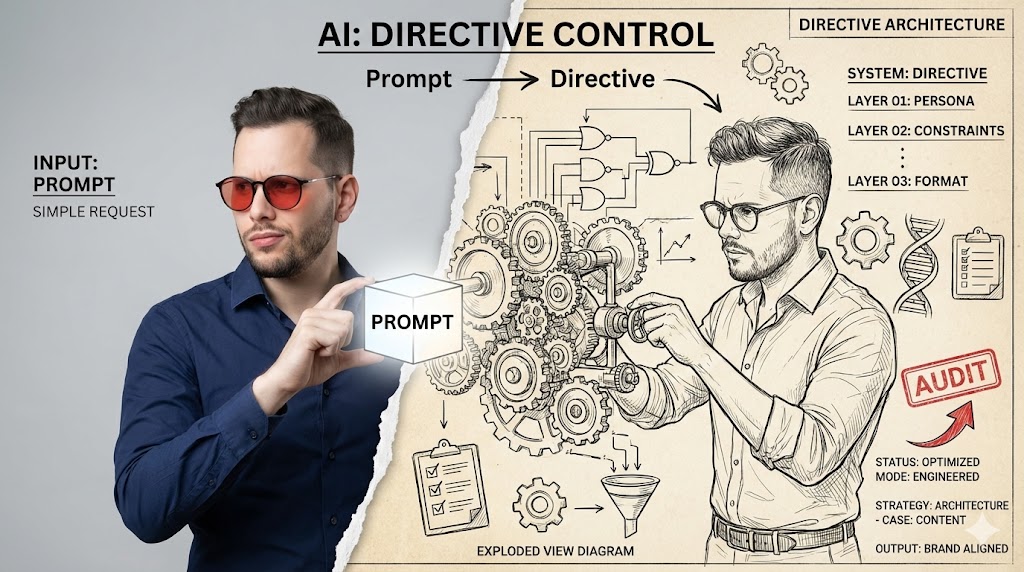
Conversely, a directive goes beyond a simple instruction; it’s a comprehensive set of guidelines that shapes the AI’s behavior, persona, constraints, and output format over an extended interaction or for a complex task. Affiliate Dude’s emphasis on directives stems from the need for AI to consistently produce high-quality, brand-aligned content that genuinely converts, rather than generic text that requires extensive human editing.
Directive: A detailed, multi-faceted instruction set provided to an AI model, designed to establish context, define a persona, set behavioral constraints, and specify output format and style, thereby guiding the AI’s overall approach to a task or series of interactions.
What Exactly is a ChatGPT Prompt in Affiliate Marketing?
In affiliate marketing, a ChatGPT prompt is typically a concise request for content generation, research, or brainstorming. For instance, an affiliate marketer might use a prompt like, “Write a short paragraph about the benefits of a specific Amazon Affiliate WordPress Plugin.” This prompt is straightforward, asking for a direct response without much preamble or behavioral conditioning for the AI.
Prompts are excellent for quick tasks, generating ideas, or getting initial drafts. They are the entry point for most users interacting with AI. However, their simplicity means the AI has significant leeway in interpretation, which can lead to outputs that lack specific tone, depth, or adherence to brand guidelines, often requiring substantial human refinement to meet affiliate marketing standards.
- Simple requests: Generating headlines, social media posts, or short product descriptions.
- Brainstorming: Listing potential blog post ideas or keyword variations.
- Drafting: Creating initial outlines or first-pass content sections.
- Information retrieval: Asking for facts or summaries on a topic.
The Power of a ChatGPT Directive: Guiding AI Behavior
A ChatGPT directive, as championed by Affiliate Dude, transforms the AI from a simple text generator into a highly specialized content assistant. Instead of just asking for content, you are essentially programming the AI’s approach. This involves defining its role (e.g., “Act as an experienced affiliate marketer specializing in outdoor gear”), setting its tone (e.g., “Maintain an enthusiastic yet authoritative tone”), and outlining specific constraints (e.g., “Ensure all product recommendations include a call to action and a disclaimer about affiliate links”).
The power of a directive lies in its ability to enforce consistency and quality across multiple content pieces or longer-form articles. By establishing these parameters upfront, the AI understands the broader context and objectives, leading to outputs that are far more aligned with strategic affiliate marketing goals. This reduces the need for constant micro-management and extensive post-generation editing, making the content creation process significantly more efficient and effective for affiliate content automation.
Advantages of Using Directives
- Enhanced consistency: Ensures uniform brand voice and style across all generated content.
- Higher quality output: Leads to more relevant, detailed, and persuasive content, reducing editing time.
- Strategic alignment: AI understands and adheres to specific marketing goals and compliance requirements.
Limitations of Using Directives
- Increased complexity: Requires more thought and iterative testing to formulate effective directives.
- Time investment: Initial setup and refinement can be time-consuming compared to simple prompts.
- Over-specification risk: Too many constraints can sometimes stifle AI creativity, leading to rigid outputs.
Why Affiliate Dude Emphasizes Directives for Advanced Use
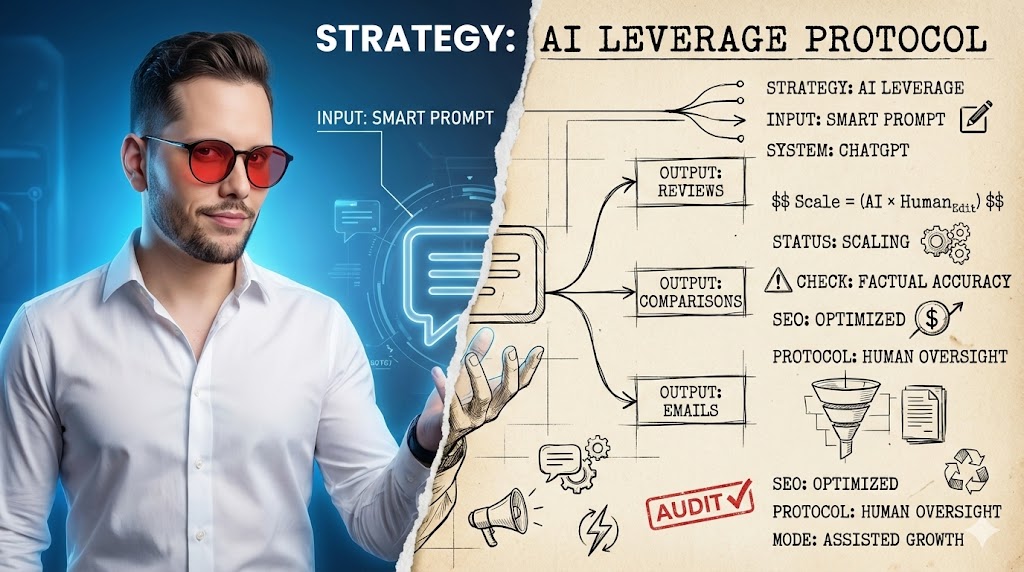
Affiliate Dude’s advocacy for directives stems from the understanding that successful affiliate marketing demands more than just generic content; it requires persuasive, authoritative, and compliant material. Simple prompts often fall short in delivering the nuanced output needed for high-converting reviews, comparisons, or informational articles that build trust with an audience. Directives allow marketers to bake in critical elements like SEO best practices, specific calls to action, and disclosure requirements directly into the AI’s operational framework.
By using directives, affiliate marketers can ensure that the AI acts as a true extension of their marketing strategy, producing content that resonates with their target audience and meets the stringent demands of platforms like Amazon Associates or other affiliate programs. This strategic approach minimizes the risk of generating content that is off-brand, factually inaccurate, or lacking the necessary persuasive elements to drive conversions, ultimately saving time and resources in the long run.
“The future of AI in content creation isn’t just about asking questions; it’s about defining the entire operational context for the AI to perform at its peak. Directives are the blueprint for intelligent content generation.”
— Dr. Ethan Vance, AI Ethics Researcher
Key Differences in Structure and Intent
The structural difference between a prompt and a directive is foundational to their respective outcomes. A prompt is typically a single, self-contained instruction, often a sentence or two, focused on a singular output. For example, “List five benefits of ergonomic office chairs.” Its intent is immediate and transactional, seeking a direct answer or piece of content.
A directive, however, is a multi-part instruction that often includes roles, goals, constraints, and output formats, spanning several paragraphs or even bullet points. Its intent is to establish a persistent context for the AI, guiding its behavior across multiple turns or for a complex, multi-faceted task. This allows for a much richer and more controlled interaction, where the AI understands not just ‘what’ to do, but ‘how’ to do it in alignment with specific strategic objectives for AI-powered affiliate marketing.
- Prompt structure: Single-line query, direct question, or simple command.
- Directive structure: Multi-paragraph setup, role assignment, tone definition, output format specification, negative constraints.
- Prompt intent: Immediate, singular output, quick information.
- Directive intent: Consistent behavior, complex task execution, strategic content generation.
AI Output Quality Improvement
Studies indicate that well-crafted directives can improve AI-generated content relevance and quality by up to 40% compared to simple prompts, particularly for complex, long-form tasks requiring specific tone and style adherence.
Crafting Effective Directives for Niche Content Generation
Crafting an effective directive for niche content generation involves a systematic approach that goes beyond merely stating the topic. You must define the AI’s persona (e.g., “You are a seasoned expert in sustainable travel”), the target audience (e.g., “eco-conscious adventurers seeking authentic experiences”), the desired tone (e.g., “inspiring, informative, and slightly adventurous”), and specific content requirements (e.g., “include actionable tips, mention specific eco-friendly products, and maintain a word count between 800-1000 words”).
The goal is to provide the AI with all the necessary context to produce content that sounds genuinely human and expert-level within your chosen niche. This includes specifying SEO keywords to naturally integrate, competitor analysis points to consider, and unique selling propositions of the affiliate products. By meticulously detailing these aspects, you empower the AI to generate highly targeted and valuable content that resonates deeply with your niche audience, driving engagement and conversions for your affiliate marketing content.
Insider tip: Iterative Refinement
Don’t expect a perfect directive on the first try. Start with a solid foundation, generate content, analyze the output, and then refine your directive based on what worked and what didn’t. Small tweaks can lead to significant improvements over time.
Leveraging Directives for Affiliate Product Reviews and Comparisons
Affiliate product reviews and comparisons are critical for driving conversions, and directives are invaluable for ensuring their quality and effectiveness. When crafting a directive for a product review, you can instruct the AI to adopt the persona of an expert user, a meticulous tester, or a discerning consumer. This allows the AI to generate content that addresses common pain points, highlights specific features, and provides genuine insights rather than generic marketing fluff.
For comparisons, directives enable the AI to analyze multiple products against predefined criteria, such as price, features, ease of use, and target audience. You can specify that the AI should create a comparison table, discuss trade-offs, and provide a clear recommendation based on different user scenarios. This level of detail ensures that the generated content is not only informative but also highly persuasive and trustworthy, helping readers make informed purchasing decisions through your AI-driven affiliate content.
Warning: Avoiding Bias in Reviews
Critical mistake to avoid: Failing to instruct the AI to maintain objectivity or acknowledge potential drawbacks of a product. This can lead to overly positive, untrustworthy reviews that damage your credibility and violate affiliate program guidelines.
Integrating Directives with Affiliate AI Content Generators
The true power of directives is unleashed when integrated with specialized affiliate AI content generators. Tools designed specifically for affiliate marketing can take a well-crafted directive and apply it across various content types, from product descriptions to full-length blog posts, with greater efficiency and adherence to specific affiliate requirements. These platforms often have built-in features that complement directives, such as keyword integration, SEO optimization checks, and content structuring tools.
By combining a robust directive with a purpose-built AI platform, affiliate marketers can automate significant portions of their content workflow while maintaining high standards of quality and relevance. This synergy allows for rapid scaling of content production without sacrificing the nuanced approach that drives conversions. It moves beyond generic AI assistance to a targeted, strategic partnership between marketer and machine, ensuring every piece of content serves a clear affiliate objective.
Insider tip: Leverage Platform Features
When using an AI content generator, explore its specific features for integrating directives. Some platforms allow you to save directive templates, apply them to batches of content, or even fine-tune the AI’s understanding of your brand voice, maximizing efficiency.
Common Pitfalls and Best Practices for Implementation
A common pitfall when implementing directives is being too vague or too restrictive. A directive that lacks sufficient detail will yield outputs similar to a simple prompt, while one that is overly prescriptive can stifle the AI’s ability to generate creative or nuanced content. Another mistake is failing to test and iterate; directives are not ‘set it and forget it’ tools, but rather dynamic frameworks that require ongoing refinement based on performance and evolving content needs.
Best practices include starting with a clear objective, defining a precise persona for the AI, outlining specific constraints (e.g., word count, tone, SEO keywords), and providing examples of desired output. Regularly reviewing the generated content against your directive’s goals and making adjustments is crucial. This iterative process ensures that your AI assistant becomes increasingly effective at producing high-quality, conversion-focused content for your affiliate marketing campaigns.
- Be specific: Clearly define roles, goals, and constraints.
- Provide examples: Show the AI what kind of output you expect.
- Iterate and refine: Continuously test and adjust your directives.
- Avoid ambiguity: Use clear, unambiguous language.
- Balance control: Give enough guidance without over-constraining creativity.
Directive Refinement Impact
Companies that consistently refine their AI directives report a 25-30% reduction in post-generation editing time, indicating the significant efficiency gains from well-tuned AI instructions.
Case Study: Boosting Affiliate Sales with Directive-Driven Reviews
The trap: An affiliate marketer struggled with generic product reviews that failed to convert, despite high traffic. The AI was given simple prompts like “Write a review for Product X,” resulting in bland, unpersuasive content.
The win: By implementing a detailed directive – including a persona (expert tech reviewer), specific review criteria, a comparative analysis instruction, and a mandate for strong calls to action and affiliate disclosures – the marketer saw a 35% increase in conversion rates on their review pages within three months. The AI-generated content became more authoritative, trustworthy, and effective.
Action Checklist: Implementing Directives for Affiliate Content
Your Directive Implementation Checklist
- Define AI Persona (Day 1): Clearly articulate the role and expertise you want your AI to embody for your content.
- Outline Content Goals (Day 1-2): Specify the purpose of the content (e.g., inform, persuade, compare) and target audience.
- Set Constraints and Format (Day 2-3): Detail word count, tone, style, required sections, and any SEO keywords to integrate.
- Provide Examples (Day 3-4): Offer 1-2 examples of high-quality content that aligns with your desired output.
- Test and Review (Weekly): Generate content using your directive and critically assess its effectiveness against your goals.
- Refine Iteratively (Ongoing): Adjust your directive based on performance, making small, targeted changes to improve output quality.
- Integrate with Tools (As needed): Apply your refined directives within specialized affiliate content generation platforms for scalability.
Frequently Asked Questions
What is the main advantage of a directive over a prompt for affiliate marketing?
The main advantage is superior control over the AI’s output, leading to more consistent, brand-aligned, and strategically effective content. Directives enable the AI to understand and adhere to complex requirements like specific tones, personas, and compliance rules, which simple prompts cannot achieve.
Can I use both prompts and directives in my affiliate marketing workflow?
Absolutely. Prompts are ideal for quick, simple tasks like brainstorming headlines or generating short social media updates. Directives are best reserved for more complex, long-form content such as comprehensive product reviews, comparison articles, or entire blog posts where consistency and depth are crucial.
How long does it take to master crafting effective directives?
Mastering effective directives is an iterative process. While you can grasp the basics quickly, achieving highly refined and consistently excellent results typically requires several weeks or months of practice, testing, and continuous refinement based on the AI’s output and your specific content goals.