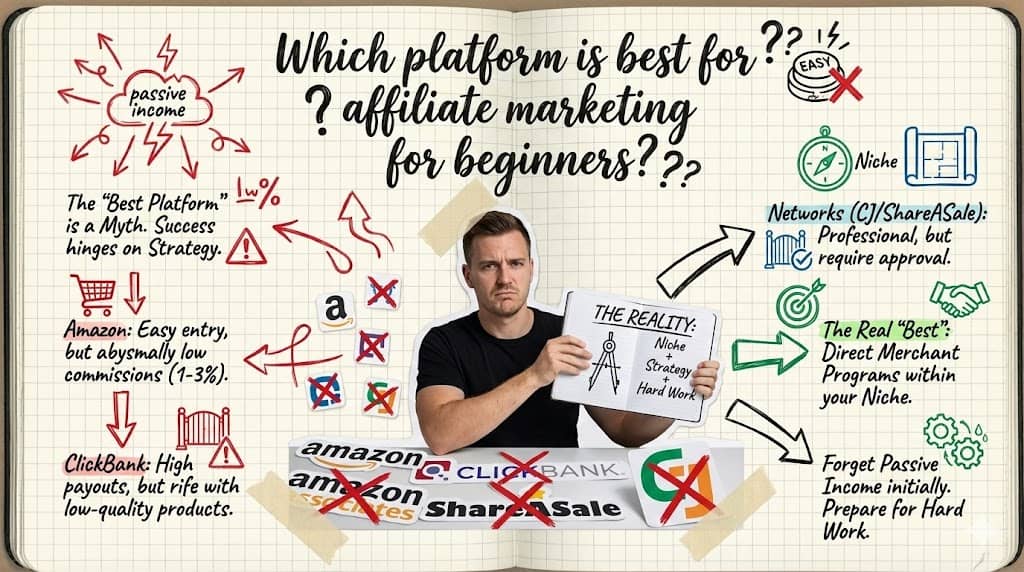
The Hard Truth About: Best Affiliate Marketing Platforms for Beginners
There is no single “best” platform for affiliate marketing beginners. The notion is a marketing fantasy. Success hinges not on the platform itself, but on understanding your niche, the product’s value, and the audience’s needs. Many platforms are accessible, but few offer genuine beginner-friendly success without significant effort and a clear strategy. Focus on understanding the underlying mechanics, not chasing a mythical easy button.
- “Beginner-friendly” often means low barrier to entry, not guaranteed success or high commissions.
- Niche selection and audience understanding are far more critical than the platform choice.
- Direct merchant programs or smaller, specialized networks can offer better terms than oversaturated giants.
- Expect to invest heavily in content creation and traffic generation, regardless of the platform.
The internet is awash with gurus peddling the myth of the “best” affiliate marketing platform for beginners. They promise easy money, passive income, and a path to riches if only you sign up for their recommended network. This is a lie. The truth is, affiliate marketing is a business, and like any business, it demands strategy, effort, and a deep understanding of market dynamics. There’s no magical platform that will hand you success on a silver platter just because you’re new to the game.
Your focus should not be on finding the easiest platform, but on identifying platforms that align with a viable niche, offer products you can genuinely endorse, and provide a reasonable commission structure. Anything less is a waste of your time and effort.
The Illusion of “Beginner-Friendly” Platforms
When someone touts a platform as “beginner-friendly,” what do they actually mean? Often, it translates to a low barrier to entry. This might mean easy sign-up, a wide array of products, or simple reporting tools. What it rarely means is a guaranteed path to profit. A platform can be simple to navigate, but if its products are junk, its commissions are microscopic, or its competition is cutthroat, your “beginner-friendly” experience will quickly turn into a beginner’s nightmare.
The real challenge for beginners isn’t navigating a dashboard; it’s understanding market demand, crafting compelling content, and driving qualified traffic. No platform can do that for you.
Niche Over Network: The Uncomfortable Truth
Before you even glance at a platform, you need a niche. A real niche, not a vague interest. This is where most beginners fail. They pick a broad category like “health” or “finance” and expect to compete with established authorities. You won’t. You need to drill down. “Keto diet for busy moms” is a niche. “Budgeting software for freelance graphic designers” is a niche. Your niche dictates the products you’ll promote, and thus, the platforms you’ll consider.
Without a defined niche, you’re just throwing darts in the dark. A platform might have millions of products, but if none of them resonate with a specific, underserved audience you can reach, they’re useless to you.
“Many beginners get caught up in the allure of large networks with thousands of products, overlooking the critical step of niche validation. A smaller, more specialized network aligned with a profitable micro-niche will always outperform a generalist approach on a massive platform for a newcomer.”
The Contenders: A Pragmatic Look at Common Platforms
Let’s strip away the hype and look at some common platforms, not through the lens of “easy,” but through the lens of “viable for a strategic beginner.”
Amazon Associates: The Double-Edged Sword
Everyone knows Amazon. This makes Amazon Associates seem like the obvious choice for beginners. It’s easy to sign up, and you can promote virtually anything. That’s its appeal, and its downfall.
👍 The Real Advantages
- Massive Product Selection: You can find products for almost any niche.
- High Conversion Rates: People trust Amazon and are accustomed to buying there.
- Cookie Window Advantage: You earn commissions on anything a customer buys within 24 hours of clicking your link, not just the product you promoted.
👎 The Brutal Downsides
- Abysmally Low Commissions: Many categories pay 1-3%. You need massive volume to make meaningful income.
- Short Cookie Duration: Only 24 hours. If they don’t buy quickly, you get nothing.
- Account Termination Risk: Amazon is notorious for strict terms of service and can terminate accounts without much warning if rules are violated.
- High Competition: Everyone promotes Amazon. Standing out is a battle.
For a beginner, Amazon Associates can be a starting point to understand the mechanics, but don’t expect it to be a goldmine. It’s a volume game, and generating that volume requires significant traffic, which is hard for a beginner to achieve.
ClickBank: The Digital Product Wild West
ClickBank specializes in digital products, primarily e-books, courses, and software. It’s known for high commission rates, often 50-75%, because there’s no physical product to ship. This sounds appealing, but it comes with significant caveats.
👍 The Real Advantages
- High Commission Rates: Often 50-75% per sale, which can mean substantial payouts.
- Recurring Commissions: Some products offer recurring payments for subscriptions, building passive income.
- Instant Access: Easy sign-up and immediate access to a marketplace of products.
👎 The Brutal Downsides
- Quality Control Issues: Many products are low-quality, overhyped, or outright scams. Promoting them damages your credibility.
- High Refund Rates: Due to poor product quality, refund rates can be high, eating into your commissions.
- Aggressive Sales Pages: Many vendor sales pages use aggressive, often misleading, marketing tactics that can alienate your audience.
- Intense Competition: Many affiliates promote the same few popular products.
ClickBank can be profitable if you meticulously vet products and focus on those with genuine value. However, for a beginner, discerning quality from garbage is a significant challenge. You risk your reputation promoting something that doesn’t deliver.
ShareASale & CJ Affiliate (Commission Junction): The Professional Gatekeepers
These networks host thousands of individual merchant programs. They offer a vast array of physical and digital products, often from reputable brands. However, they are not as “open” as Amazon or ClickBank.
👍 The Real Advantages
- Reputable Brands: Access to well-known companies and quality products.
- Higher Commissions: Generally better rates than Amazon, often 5-20% or flat fees.
- Longer Cookie Durations: Many programs offer 30-90 day cookie windows.
- Dedicated Affiliate Managers: Some programs offer support and resources.
👎 The Brutal Downsides
- Application Process: You need to apply to individual merchant programs, and many reject beginners without established websites or traffic.
- Steeper Learning Curve: More complex dashboards and reporting.
- Minimum Payouts: Can be higher than other networks, delaying your first payment.
For a beginner, these platforms represent a step up in professionalism. You’ll need a legitimate website or content platform to get accepted by most merchants. This isn’t a place for casual link-dropping; it’s for those serious about building a content-driven affiliate business.
Direct Merchant Programs: The Untapped Goldmine
Many companies run their own affiliate programs directly, bypassing the large networks. These are often overlooked by beginners but can be incredibly lucrative.
These programs are often found by simply searching for “[Product Name] affiliate program.” They typically offer better terms because the merchant isn’t paying a cut to a third-party network. The downside is you manage each program separately, but the benefits often outweigh this inconvenience.
The Myth of Passive Income for Beginners
Any guru who tells you affiliate marketing is passive income from the start is selling you a dream. It requires consistent effort: researching products, creating valuable content (reviews, comparisons, tutorials), building an audience, and optimizing your conversion funnels. This is work. Hard work. Only after a substantial foundation is built does it begin to generate income that feels passive.
The Crucial Role of Content and Traffic
No matter which platform you choose, your success hinges on two things: valuable content and targeted traffic. Without these, your affiliate links are just dead pixels on a screen.
Content is Not Just Text
Content can be blog posts, YouTube videos, podcasts, social media posts, email newsletters, or even niche forums. The key is that it must provide value to your audience. It must solve a problem, answer a question, or entertain. Simply slapping an affiliate link onto a generic product description won’t cut it.
For beginners, focus on platforms where you can easily create and distribute content. A blog (WordPress is a solid choice) or a YouTube channel are common starting points. These allow you to build authority and trust, which are essential for conversions.
Traffic is Not Just Clicks
You don’t just need clicks; you need qualified clicks. People who are actively looking for solutions that your promoted products provide. This means understanding SEO for organic traffic, mastering paid advertising (which can be risky for beginners), or building a loyal social media following.
For a beginner, organic traffic through SEO is often the most sustainable long-term strategy, though it takes time. Paid traffic can accelerate results but requires a budget and a deep understanding of ad platforms to avoid burning cash.
The Real “Best” Platform for a Beginner: It’s About Alignment
The “best” platform isn’t about ease of use; it’s about alignment with your niche, your content strategy, and your long-term goals. If you’re passionate about reviewing tech gadgets, Amazon might be a starting point, but you’ll quickly need to diversify to higher-paying direct programs or networks like ShareASale for specific brands. If you’re in the self-help or digital education space, ClickBank might offer high commissions, but you must be ruthless in vetting products.
Ultimately, a beginner’s success comes from:
- Deep Niche Selection: Find a problem to solve for a specific audience.
- Product Vetting: Only promote products you genuinely believe in and would use yourself.
- Value-Driven Content: Create content that educates, entertains, or solves problems for your audience.
- Traffic Generation: Master one or two methods of bringing qualified visitors to your content.
- Patience and Persistence: This is a long game, not a get-rich-quick scheme.
The platform is merely a conduit. Your strategy and execution are what truly matter.
📋 Your Execution Plan
- ✓Define Your Micro-Niche: Stop being vague. Identify a specific problem for a specific group of people.
- ✓Research Products Within That Niche: Look for solutions, not just popular items. Consider direct merchant programs first.
- ✓Vet Products Ruthlessly: Buy them, test them, read reviews. If it’s junk, don’t promote it, regardless of commission.
- ✓Choose a Content Platform: Start a blog, a YouTube channel, or a focused social media presence. Master one.
- ✓Create High-Value Content Consistently: Solve problems, provide insights, build trust.
- ✓Learn One Traffic Generation Strategy: Focus on SEO, or a specific paid ad platform, or organic social growth. Don’t scatter your efforts.
- ✓Track Everything: Understand what’s working and what isn’t. Data, not gut feelings, drives success.
No-Nonsense FAQs
Do I need a website to start affiliate marketing?
While some platforms allow social media or email promotion, having your own website (even a simple blog) significantly increases your credibility and acceptance into better programs. It’s not strictly mandatory for all networks, but it’s a critical asset for long-term success and control over your content.
How long does it take for a beginner to make money with affiliate marketing?
Forget the hype. For most beginners, it takes 6-12 months of consistent, focused effort to see any significant income. Expect to invest heavily in learning, content creation, and traffic generation before seeing substantial returns. This is a marathon, not a sprint.
Should I focus on high-ticket or low-ticket products as a beginner?
This depends on your niche and traffic strategy. High-ticket items (e.g., expensive software, courses) offer larger commissions per sale but require more trust and a longer sales cycle. Low-ticket items (e.g., Amazon products) are easier to sell but require massive volume. For beginners, a mix, or focusing on mid-range products with solid value, can be a good starting point.
Is paid advertising a good strategy for beginners in affiliate marketing?
Generally, no. Paid advertising requires a significant budget, advanced targeting skills, and a deep understanding of conversion metrics to be profitable. Beginners are highly likely to lose money without proper experience. Focus on organic traffic generation first, then consider paid ads once you have a proven funnel and budget.
What’s the biggest mistake beginners make?
Chasing shiny objects and quick money. Beginners often jump from niche to niche, platform to platform, without giving any strategy enough time to mature. They also prioritize commission rates over product quality, damaging their credibility. Consistency, patience, and a focus on providing genuine value are paramount.