
Navigating Product Ownership and Distribution: A Strategic Verdict
It depends. Choosing the optimal business model among whitelabeling, private labeling, affiliate marketing, and reselling is highly dependent on your resources, risk tolerance, and desired level of control over product development and branding.
- Strongest Advantage: These models offer diverse entry points into commerce, allowing businesses to leverage existing products or audiences without extensive capital investment in R&D.
- Biggest Limitation: The trade-off between control and ease of entry often means sacrificing unique product differentiation or facing intense competition.
- Concrete Use Case: A startup with limited capital but strong marketing skills might thrive with affiliate marketing, while an established brand seeking rapid product expansion could benefit from whitelabeling.
Whitelabel vs. Private Label: Understanding the Core Distinctions
| Criterion | Whitelabel | Private Label |
|---|---|---|
| Product Ownership | Generic product, sold by multiple retailers under their own brand. | Product manufactured exclusively for one retailer, often to their specifications. |
| Brand Control | You brand an existing, unbranded product. Limited input on product features. | Full control over branding, packaging, and often product formulation/features. |
| Customization | Minimal; primarily packaging and superficial branding. | Significant; ability to request specific ingredients, designs, or functionalities. |
| Initial Investment | Generally lower, due to existing product lines and economies of scale. | Higher, often involving minimum order quantities and R&D contributions. |
Understanding Whitelabeling: Your Brand, Their Product
Whitelabeling involves taking a generic product or service manufactured by one company and rebranding it as your own. This model allows businesses to expand their product offerings rapidly without the significant investment in research, development, and manufacturing infrastructure. The core appeal lies in its efficiency and cost-effectiveness, enabling brands to focus on marketing and distribution rather than product creation.
Many software solutions, consumer goods, and even financial services operate on a whitelabel basis. The original manufacturer benefits from increased production volume, while the reseller gains a new product line under their established brand identity. This symbiotic relationship drives market efficiency and provides consumers with a wider array of branded choices, even if the underlying product is identical.
- Speed to Market: Launch new products quickly as development is already complete.
- Reduced R&D Costs: Avoid the substantial expenses associated with product innovation and testing.
- Brand Expansion: Easily add diverse products or services to your existing portfolio.
- Lower Risk: Leverage proven products, minimizing the risk of market failure due to untested offerings.
Pros of Leveraging Established Business Models
- Accelerated Market Entry: Utilize existing products, services, or distribution networks to launch faster.
- Reduced Financial Risk: Lower upfront investment compared to building a product or brand from scratch.
- Focus on Core Competencies: Concentrate resources on marketing, sales, or customer service rather than R&D.
Cons of Navigating Diverse Business Models
- Limited Product Differentiation: Difficulty in creating truly unique offerings, especially with whitelabeling.
- Dependence on Third Parties: Reliance on manufacturers or platforms for product quality and availability.
- Intense Competition: Many businesses may pursue similar models, leading to crowded markets and price wars.
The Appeal of Private Labeling: Full Control, Unique Identity
Private labeling takes the concept of rebranding a step further by offering a higher degree of control and customization. In this model, a retailer or brand contracts a manufacturer to produce goods exclusively for them, often according to specific design, ingredient, or feature requirements. This allows for the creation of truly unique products that are distinct from competitors’ offerings, fostering stronger brand loyalty and market positioning.
The investment in private labeling is typically greater than whitelabeling due to the custom nature of the product and often higher minimum order quantities. However, the benefits include complete control over the product’s quality, features, and branding, enabling a business to build a proprietary asset. This model is prevalent in industries like fashion, food, cosmetics, and electronics, where brand identity and product uniqueness are critical for success.
- Unique Product Offerings: Develop products with exclusive features or formulations.
- Enhanced Brand Loyalty: Build a strong connection with customers through proprietary goods.
- Higher Profit Margins: Greater control over manufacturing costs and pricing strategies.
- Intellectual Property: Potential to own patents or trademarks for your unique product designs.
Private Label Growth Trend
Industry reports commonly indicate that private label products often grow faster than national brands in many retail categories, capturing a significant and increasing share of the consumer market, sometimes accounting for over 20% of total sales in grocery and household goods.
Diving into Affiliate Marketing: Performance-Based Partnerships
Affiliate marketing is a performance-based marketing strategy where businesses reward affiliates for each customer brought about by the affiliate’s own marketing efforts. This model shifts the risk from the advertiser to the affiliate, as payment is typically contingent upon a specific action, such as a sale, lead, or click. It’s an attractive option for individuals or companies with strong content creation or audience engagement capabilities, as it requires no product development or inventory management.
Affiliates promote products or services through various channels, including blogs, social media, email lists, and review sites, earning a commission on successful conversions. The key to success in affiliate marketing lies in building trust with an audience and recommending products that genuinely add value. For those looking to streamline their affiliate operations, an Amazon Affiliate Plugin or a comprehensive Affiliate WordPress Plugin can significantly enhance tracking and management, automating many of the complex tasks involved in link generation and performance monitoring.
- Low Barrier to Entry: No need to create products, manage inventory, or handle customer service.
- Flexible Work: Operate from anywhere with an internet connection.
- Scalable Income: Potential to earn significant passive income by promoting multiple products.
- Performance-Based: Only pay for results, making it a cost-effective advertising channel for businesses.
Insider tip
When starting with affiliate marketing, focus on a niche you are genuinely passionate about. Authenticity builds trust, which is the most valuable currency in earning commissions and sustaining long-term audience engagement.
Reselling Products: Buying Low, Selling High
Reselling is perhaps the most straightforward business model among the four, involving the purchase of goods from manufacturers, wholesalers, or other retailers, and then selling them to consumers at a higher price. This model is characterized by direct ownership of inventory and the responsibility for sales, marketing, and customer service. Reselling can range from small-scale operations, like flipping items found at garage sales, to large retail chains that purchase goods in bulk.
The profitability of reselling hinges on identifying products with strong demand and securing them at a favorable cost. It requires keen market awareness, effective inventory management, and robust sales channels. While it offers direct control over pricing and customer experience, it also carries the risk of unsold inventory and the capital tied up in stock. Many businesses start as resellers before venturing into private labeling or even manufacturing their own goods.
- Direct Profit Margins: Control your pricing and profit directly.
- Tangible Inventory: Physical products provide a clear asset.
- Customer Interaction: Direct engagement allows for building relationships and feedback.
- Variety of Sourcing: Access products from diverse suppliers, including liquidation sales and wholesale markets.
Myth
Reselling is just about finding cheap items and marking them up.
Reality
Successful reselling involves sophisticated market research, understanding supply chains, managing inventory efficiently, and building strong customer relationships. It’s far more complex than simple arbitrage; it’s about creating value through accessibility and convenience.
Key Differences: Ownership, Control, and Risk
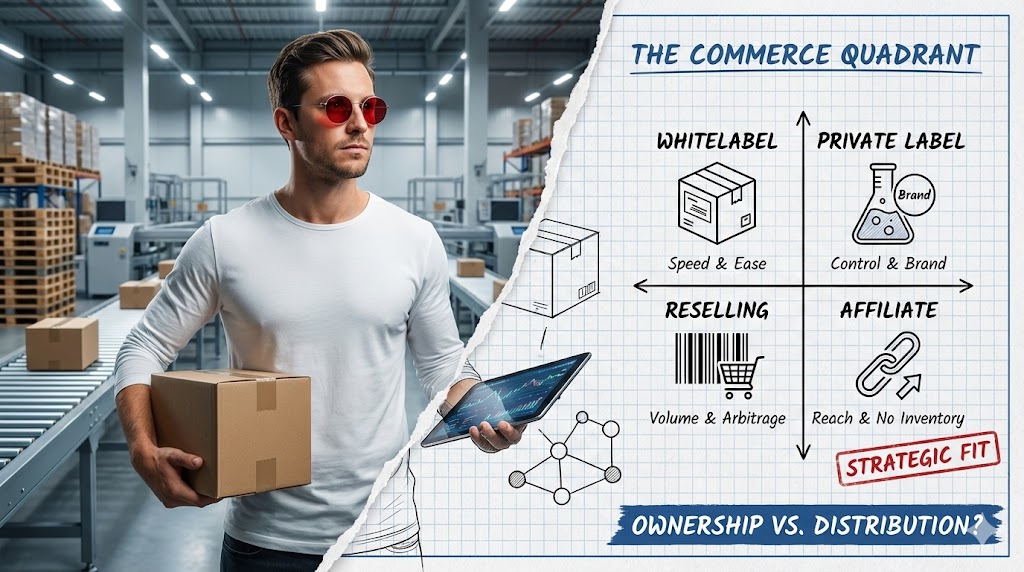
The fundamental distinctions between whitelabeling, private labeling, affiliate marketing, and reselling revolve around three core aspects: product ownership, the degree of control over the product and brand, and the associated financial risks. Understanding these differences is crucial for any entrepreneur deciding which path aligns best with their business goals and resources.
Whitelabeling and private labeling both involve selling products under your brand, but private labeling offers significantly more control over the product’s specifications and uniqueness. Affiliate marketing, on the other hand, involves no product ownership or inventory risk, focusing purely on driving sales for another company’s product. Reselling sits in the middle, requiring inventory ownership but offering direct control over pricing and customer interaction without the need for product development.
- Product Ownership: Whitelabel/Private Label (your brand, not necessarily your IP) vs. Reselling (your inventory, not your IP) vs. Affiliate (no ownership).
- Brand Control: Private Label (high) > Whitelabel (medium) > Reselling (medium, for store) > Affiliate (low, for product).
- Financial Risk: Private Label (high, R&D, MOQ) > Reselling (medium, inventory) > Whitelabel (low, existing product) > Affiliate (very low, no inventory).
- Scalability: All models offer scalability, but the methods differ. Affiliate scales through traffic, reselling through inventory and channels, whitelabel/private label through market penetration.
Case Study: The E-commerce Entrepreneur’s Dilemma
The trap: A new e-commerce entrepreneur, eager to launch quickly, considered whitelabeling a popular supplement. They found a supplier, rebranded the product, and started marketing. However, many competitors were doing the exact same thing with the same base product, leading to fierce price wars and minimal differentiation.
The win: Realizing the trap, the entrepreneur pivoted. Instead of merely whitelabeling, they engaged a manufacturer to create a slightly modified formula with unique ingredients, establishing a private label product. This allowed them to differentiate, build a stronger brand story, and command better margins, ultimately creating a sustainable business with loyal customers.
Choosing the Right Model: Factors to Consider
Selecting the most suitable business model requires a careful evaluation of several critical factors. There is no universally ‘best’ option; instead, the ideal choice depends on your specific circumstances, aspirations, and available resources. A common mistake is to jump into the most popular model without a thorough self-assessment, leading to frustration and wasted effort.
Consider your financial capacity, your tolerance for risk, and the amount of control you desire over the product and brand. Your existing skill set also plays a significant role; a marketing expert might lean towards affiliate marketing, while someone with strong supply chain knowledge might excel at reselling. Aligning the model with your long-term vision is paramount for sustainable growth and satisfaction.
- Capital Investment: How much money are you willing and able to invest upfront?
- Risk Tolerance: Are you comfortable with inventory risk, or do you prefer performance-based models?
- Control Desired: Do you need full control over product features and branding, or are you happy with rebranding?
- Time Horizon: Are you looking for quick market entry or building a long-term, proprietary asset?
- Existing Skills: Leverage your strengths in marketing, sales, product development, or logistics.
Insider tip
Before committing to any model, conduct a small-scale pilot. For reselling, buy a limited quantity; for private label, request samples; for affiliate marketing, test a few campaigns. This minimizes risk and provides real-world data.
Common Pitfalls and How to Avoid Them
Each business model, while offering unique advantages, also comes with its own set of challenges and potential pitfalls. Awareness of these common mistakes can help entrepreneurs navigate the landscape more effectively and build a more resilient business. Ignoring these risks can lead to significant financial losses, reputational damage, or even business failure.
For instance, in whitelabeling, a common pitfall is failing to differentiate your brand sufficiently, leading to intense price competition. Private labeling can suffer from poor manufacturer selection, resulting in quality control issues. Affiliate marketers often struggle with building trust or choosing irrelevant products, while resellers can be burdened by dead stock or inefficient logistics. Proactive planning and due diligence are essential to mitigate these risks.
- Whitelabeling: Lack of differentiation. Avoid by focusing on unique branding, customer service, or niche targeting.
- Private Labeling: Poor manufacturer selection. Mitigate by thorough vetting, clear contracts, and quality control checks.
- Affiliate Marketing: Promoting too many irrelevant products. Focus on a few high-quality, niche-relevant offers.
- Reselling: Overstocking unpopular items. Implement robust inventory management and market trend analysis.
- General: Neglecting legal compliance. Always understand product regulations, intellectual property, and marketing claims.
The Cost of Unsold Inventory
For resellers, unsold inventory can represent a significant financial drain, with carrying costs (storage, insurance, depreciation) typically ranging from 15% to 30% of the inventory’s value annually. This highlights the critical importance of effective inventory management.
Scaling Your Business: Growth Potential in Each Model
Understanding how each business model scales is vital for long-term strategic planning. While all four models offer avenues for growth, the mechanisms and challenges involved differ significantly. A model that is easy to start might become complex to scale, and vice-versa. Strategic foresight in scaling can prevent bottlenecks and ensure sustainable expansion.
Whitelabeling and private labeling scale by increasing production volume, expanding product lines, and reaching new markets. Affiliate marketing scales by diversifying traffic sources, optimizing conversion rates, and expanding the portfolio of promoted products. Reselling scales through efficient sourcing, expanding sales channels (e.g., online, retail), and optimizing logistics. Each path requires a distinct set of operational and marketing strategies to achieve significant growth.
- Whitelabeling: Scale by adding more whitelabel products, expanding into new niches, or increasing distribution channels.
- Private Labeling: Scale by developing new proprietary products, entering new geographic markets, or enhancing brand equity.
- Affiliate Marketing: Scale by growing audience reach, improving content quality, diversifying affiliate programs, or leveraging advanced tools like an Affiliate WordPress Plugin for better management.
- Reselling: Scale by sourcing larger quantities, diversifying product categories, or opening new sales storefronts or online platforms.
Insider tip
When scaling a private label business, focus on building a strong brand narrative and community around your unique products. This fosters customer loyalty that transcends individual product offerings and creates a defensible market position.
Legal and Ethical Considerations for Each Business Model
Operating any business model requires adherence to legal and ethical standards. Neglecting these aspects can lead to severe penalties, loss of reputation, and consumer distrust. While the specific regulations vary by industry and region, certain considerations are universal across whitelabeling, private labeling, affiliate marketing, and reselling.
For whitelabel and private label, ensuring product safety, proper labeling, and intellectual property compliance are paramount. Affiliate marketing demands transparency regarding disclosures of affiliate relationships, while reselling requires compliance with consumer protection laws and, in some cases, specific licensing. Always consult legal professionals to ensure your operations are fully compliant and ethically sound.
- Product Liability: For whitelabel/private label/reselling, understand your liability for product defects.
- Intellectual Property: Ensure you have the right to brand and sell products, avoiding trademark or patent infringement.
- Marketing Claims: All advertising, especially in affiliate marketing, must be truthful and substantiated.
- Disclosures: Affiliate marketers must clearly disclose their relationships with merchants to consumers.
- Consumer Protection: Adhere to regulations regarding returns, warranties, and data privacy across all models.
Insider tip
Maintain meticulous records of all supplier agreements, product specifications, and marketing claims. This documentation is invaluable for legal compliance and can protect your business in case of disputes or regulatory inquiries.
Your Strategic Business Model Action Checklist
- Define Your Resources (Week 1): Honestly assess your available capital, time commitment, and existing skill sets.
- Identify Your Risk Tolerance (Week 1): Determine your comfort level with inventory, market, and product development risks.
- Research Target Markets (Week 2): Pinpoint specific niches with demand that align with your chosen model.
- Vet Potential Suppliers/Partners (Week 3-4): For whitelabel, private label, or reselling, thoroughly research manufacturers and wholesalers. For affiliate, select reputable programs.
- Develop a Minimum Viable Offering (Month 2): Launch a small-scale test with a limited product line or targeted affiliate campaign.
- Establish Legal Framework (Month 2-3): Register your business, understand product liability, and set up necessary disclosures.
- Implement Feedback Loop (Ongoing): Continuously collect customer feedback to refine products, marketing, and operations.
Frequently Asked Questions
What is the main difference between whitelabel and private label?
Whitelabel products are generic, off-the-shelf items rebranded by multiple companies, offering minimal customization. Private label products are custom-made for a specific retailer, allowing for unique specifications and greater differentiation, though often requiring higher investment.
Can I combine these business models?
Yes, many businesses successfully combine models. For example, a brand might private label its core products while also whitelabeling complementary accessories or engaging in affiliate marketing for related services it doesn’t offer directly. This diversification can enhance revenue streams and market reach.
Which model is best for beginners with limited capital?
Affiliate marketing and small-scale reselling typically have the lowest barriers to entry and require minimal upfront capital. Whitelabeling can also be a good starting point if you find a reliable supplier with low minimum order quantities, as it avoids product development costs.
How important is branding in these models?
Branding is crucial across all models, though its application varies. For whitelabel and private label, strong branding differentiates your product from competitors. In reselling, your store’s brand builds trust. In affiliate marketing, your personal brand or website’s brand establishes credibility for your recommendations. A compelling brand narrative is essential for long-term success.