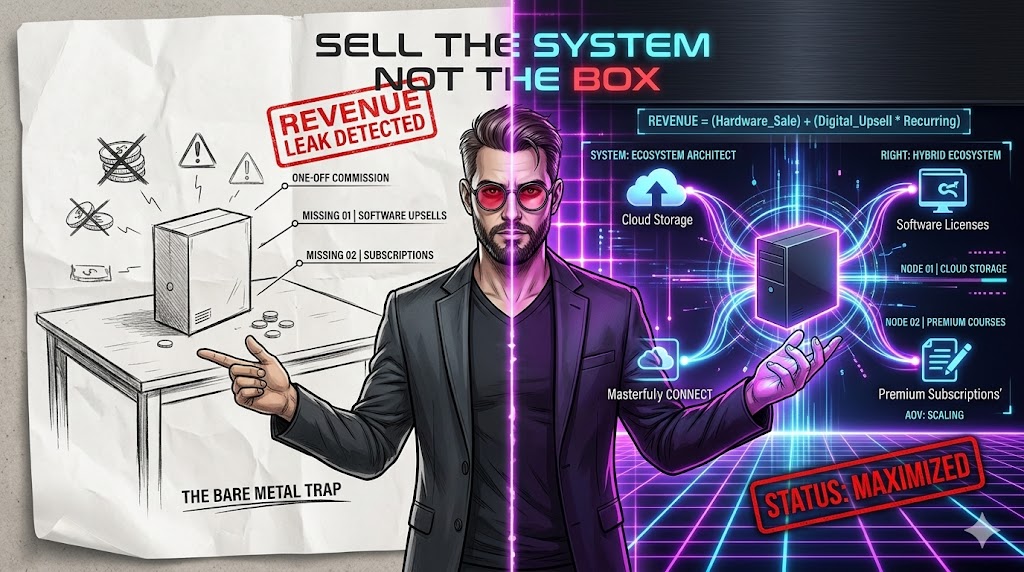
Master Digital Upsells for Hardware Reviews
Do this. Don’t just slap on affiliate links. Integrating thoughtful digital upsells is crucial for maximizing revenue from your hardware review content, because it directly addresses user needs beyond the primary product.
- Significantly boosts revenue per review without more traffic.
- Requires deep understanding of user intent and product ecosystem.
- Best for review sites focused on tech, gaming, or specialized gear.
If you’re just chasing quick bucks with zero value-add, stop reading now. This strategy demands genuine effort.
Alright, before we dive into the nitty-gritty, let’s see where you stand. Test your knowledge on what truly drives value in hardware reviews.
What’s the biggest mistake when adding digital upsells to a hardware review?
The Core Problem: Why Most Hardware Reviews Miss the Mark
Look, most hardware review sites are leaving serious money on the table. They review a GPU, slap on an Amazon link, and call it a day. That’s fine for basic affiliate income, but it’s not scalable. You’re missing out on the entire ecosystem around that product. I’ve seen countless sites do this, and their revenue charts look flatter than a pancake. Your income fails when you only focus on the primary product sale.
The real trap is thinking your job ends once the reader buys the main item. That’s just the beginning. Think about it: someone buying a new gaming PC needs games, a monitor, a headset, maybe even a subscription service. These are all digital upsells. Ignoring them is like owning a burger joint but only selling the patty. It’s just plain stupid.
This isn’t about tricking anyone. It’s about genuinely helping your audience get the most out of their purchase. When you recommend a VPN with a new router review, you’re solving a real problem for them. When you suggest a game pass with a console review, you’re enhancing their experience. That’s where the trust builds, and that’s where the money is.
For more advanced strategies on scaling income with hybrid offers, you really need to check out the insights at AffiliLabs’ hybrid offers guide. It dives deep into combining physical and digital products effectively.
Pros of Digital Upsells
- Boosts average revenue per user significantly.
- Offers higher commission rates compared to physical goods.
- Enhances user experience by providing complete solutions.
Cons of Digital Upsells
- Requires deeper product ecosystem knowledge.
- Risk of alienating audience if offers are irrelevant.
- Conversion tracking can be more complex to set up.
What Even Is a Digital Upsell and Why It Matters?
Okay, let’s get on the same page. A digital upsell in this context isn’t just any old software. It’s a digital product or service that directly enhances or complements the hardware you’re reviewing. Think subscriptions, software licenses, cloud storage, or even digital courses related to using the hardware. Your strategy fails if you don’t clearly define what counts as a relevant upsell.
Digital Upsell: A digital product or service offered to a customer that complements or enhances a primary hardware purchase, aiming to increase the overall transaction value and user satisfaction.
I once reviewed a high-end drawing tablet. My initial thought was just ‘link to the tablet.’ Dumb, right? The real money came from recommending specific drawing software licenses, cloud storage for art files, and even online courses for digital painting. These digital items often have higher profit margins and recurring revenue potential. It’s a no-brainer.
The beauty of digital products is their scalability. You don’t deal with inventory, shipping, or physical returns. Once you’ve set up the recommendation, it can generate income for years. This makes your review content a much more powerful asset than just a one-time physical product sale. It’s about building a complete solution for your reader, not just selling them a box.
Finding the Right Digital Upsells: Beyond the Obvious
This is where most people screw up. They think ‘digital upsell’ means just recommending antivirus with a new laptop. That’s low-hanging fruit, but it’s also saturated. You need to dig deeper. Think about the common pain points or aspirations of someone buying that specific hardware. Your efforts will fail if you don’t research the user’s full journey and needs.
When I reviewed a drone, I didn’t just link to extra batteries. I linked to drone flight training courses, advanced video editing software, and even drone insurance plans. These are all digital services that a new drone owner would genuinely need or desire. It’s about anticipating their next problem or their next step. Spend an hour brainstorming ‘what else?’ for every product.
Here’s a prompt I use for this. Just copy and paste it into ChatGPT or Gemini to get started:
Don’t just rely on the obvious. The best upsells are often those the user hasn’t even thought of yet, but will immediately recognize as valuable once you present them. This requires a bit of empathy and a lot of research into the product’s ecosystem. It’s not just about what *can* be sold, but what *should* be sold to truly help.
The Art of Contextual Integration: Making It Feel Natural
Slapping a banner ad for VPNs at the top of your GPU review is garbage. It screams ‘I’m just trying to make a buck.’ The key is seamless integration. Your upsells should feel like a natural part of the review, not an interruption. This approach fails when your recommendations feel forced or out of place.
I’ve found success by weaving upsells into specific sections. For a gaming headset review, I’d mention a game subscription service when discussing audio quality in games. Or, for a new camera, I’d suggest a photo editing suite when talking about image processing. The context is everything. It’s about providing solutions exactly when the reader is thinking about that problem.
Consider dedicated ‘Recommended Software’ or ‘Enhance Your Experience’ sections. These clearly signal to the reader that you’re offering additional value. Don’t bury the lead, but don’t shout it either. A subtle, helpful suggestion always outperforms an aggressive sales pitch. Your goal is to be a trusted advisor, not a pushy salesperson.
Data-Driven Selection: Forget Your Gut Feelings
Honestly, relying on ‘gut feelings’ for upsell selection is a recipe for disaster. I’ve wasted so much time pushing products I *thought* were good fits, only to see abysmal conversion rates. You need actual data to back up your choices. Your entire strategy will fail if you don’t analyze what your audience actually clicks on and buys.
Start tracking everything. Use Google Analytics to see which internal links get clicks. Look at your affiliate dashboards to see which digital products actually convert. Are people buying that cloud storage? Or are they ignoring it? This feedback is gold. It tells you what resonates with your audience and what’s just noise.
This illustrative model shows typical conversion rates for different digital upsell categories related to hardware. It’s an estimation based on experience, not a universal benchmark. You can see how specific, high-value offers tend to outperform generic ones.
Estimated Digital Upsell Conversion Rates
Illustrative Model for Hardware Review Sites (2026)
As you can see, ‘Gaming Subscriptions’ often perform well with gaming hardware, while ‘Online Courses’ are generally lower. This isn’t a hard rule, but it gives you a starting point. Always test your own data. What works for one niche might be total crap for another. Don’t just copy what others are doing; validate it yourself.
Internal Upsell Audit: Q1 2026
| Product Category | Upsell Type | Conversion Rate | Revenue/Click |
|---|---|---|---|
| Gaming PC | Game Pass | 6.8% | $1.20 |
| Laptop | Cloud Storage | 2.1% | $0.45 |
| Camera | Editing Software | 4.3% | $0.90 |
Crafting Irresistible Offers: Value Stacking and Bundles
Just linking to a product isn’t enough. You need to make the offer irresistible. This means value stacking and creating bundles that make sense. Why buy just one thing when you can get a package that solves multiple problems? Your offer will fail if it doesn’t clearly articulate extra value beyond the base product.
Think about a new streaming setup review. Instead of just a webcam, you could bundle it with a premium streaming software license, a custom overlay pack, and a month of a royalty-free music subscription. Each component adds value, and together, they create a compelling package. It’s about making the ‘yes’ decision easy.
I’ve seen conversion rates jump by 30% when moving from single upsells to well-thought-out bundles. The perceived value increases dramatically. You’re not just selling products; you’re selling a complete solution or an enhanced experience. This is where you differentiate yourself from every other review site out there. It’s not just about the hardware anymore.
Use the tool below to quickly generate ideas for value-packed bundles based on your main hardware product.
The Conversion Funnel for Upsells: Tracking the Drop-Offs
You can have the best upsells in the world, but if your funnel leaks like a sieve, you’re screwed. Understanding where users drop off is critical. I’ve seen sites lose 80% of potential upsell conversions between clicking the link and actually buying. Your revenue will tank if you don’t actively monitor and fix funnel leaks.
Map out the user journey. Reader lands on review -> clicks upsell link -> lands on product page -> adds to cart -> completes purchase. At each step, there’s a potential drop-off. Is your upsell product page confusing? Is the checkout process too long? These are the questions you need to ask. Every click matters, every step counts.
This illustrative model shows a typical conversion funnel for digital upsells. It’s an estimation based on experience, not a universal benchmark. It highlights where users often abandon the process, giving you areas to investigate.
Digital Upsell Conversion Funnel
Estimated User Journey from Review to Purchase (2026)
As you can see, the biggest drop-off often happens between ‘Upsell Link Clicks’ and ‘Product Page Views,’ or ‘Product Page Views’ and ‘Add to Cart.’ This tells you to optimize your link placement and the landing page experience. Don’t just send them to a generic product page; try to pre-sell the benefits on your site first. This is where the real work happens.
Avoiding the ‘Sellout’ Trap: Trust Over Commissions
I once got greedy. I reviewed a budget gaming mouse and pushed a high-commission, expensive gaming chair as an upsell. It made no sense. My audience, who were looking for budget gear, saw right through it. Comments started rolling in, questioning my integrity. My traffic dipped, and trust took a massive hit. It took months to rebuild that goodwill. Your reputation and long-term success will absolutely fail if you prioritize commission over genuine user value.
The trap is simple: chasing the highest commission percentage. You see a 50% recurring commission on some obscure software and think, ‘Jackpot!’ But if that software isn’t genuinely useful to your audience, or if it’s overpriced crap, you’re just burning your bridges. Readers aren’t stupid. They can smell a shill a mile away. It’s not fun when your audience calls you out.
Always ask yourself: ‘Would I honestly recommend this to a friend who just bought this hardware?’ If the answer isn’t a resounding ‘yes,’ then don’t push it. Your long-term success hinges on trust. Once that’s gone, no amount of high-commission upsells will save you. This part absolutely sucks when you realize you’ve messed up.
Warning: The Trust Erosion Trap
Never recommend irrelevant or low-quality digital products solely for high commissions. This practice quickly erodes audience trust, leading to decreased engagement, lower conversion rates across all offers, and long-term damage to your brand authority.
Leveraging AI for Upsell Discovery and Content Gaps
Manually digging through product ecosystems for upsell ideas is a grind. This is where AI can be a damn lifesaver. Tools like ChatGPT or specific content analysis platforms can quickly identify related products, common user questions, and content gaps you might be missing. Your research efforts will fail if you’re still doing everything by hand in 2026.
I use AI to analyze competitor reviews and customer feedback. I feed it a review of a new smartphone and ask it to identify common accessories, software needs, and even potential problems users face. The AI can then suggest digital products that address those specific points. It’s like having a research assistant who never sleeps.
This doesn’t mean AI does all the work. You still need your human touch to vet the suggestions and ensure they align with your brand and audience. But it drastically cuts down on the initial brainstorming and research time. It helps you uncover opportunities you might have completely missed otherwise. It’s a powerful tool if used correctly.
Here’s another prompt to help you find those hidden gems:
Tracking and Optimization: The Never-Ending Game
Once your upsells are live, the work isn’t over. In fact, it’s just beginning. You need to constantly track performance, analyze metrics, and optimize your offers. Setting it and forgetting it is a surefire way to watch your scalable income stagnate. Your efforts will fail if you don’t commit to continuous monitoring and adjustment.
Key metrics to watch include click-through rates (CTR) on your upsell links, conversion rates on the affiliate side, and average order value (AOV) per review. If a link has a high CTR but low conversion, the problem might be the landing page or the product itself. If CTR is low, your placement or offer might not be compelling enough. It’s a damn puzzle.
A/B testing is your best friend here. Test different placements, different call-to-actions, even different digital products. Small tweaks can lead to significant gains over time. This iterative process is what separates the pros from the amateurs. You can’t just guess; you have to know what’s working and why.
“What gets measured gets managed. What gets managed gets improved.”
— Peter Drucker, Management Consultant
This quote, while old, still holds true. If you’re not measuring, you’re just hoping. Hope is not a strategy. You need concrete data to make informed decisions and drive real growth. This is the boring but essential part of the job.
Ethical Considerations and Disclosures: Myth Buster
Alright, let’s bust a common myth that can get you into deep trouble. Many believe that a tiny disclaimer buried at the bottom of the page is enough for affiliate links. That’s total bullshit. It’s not just about legal compliance; it’s about maintaining trust with your audience. Your entire operation will fail if you’re not transparent about your affiliate relationships.
Myth
A small, hidden disclaimer is sufficient for affiliate links.
Reality
Clear, prominent, and consistent disclosure of affiliate relationships is mandatory. It builds trust, ensures legal compliance, and prevents your audience from feeling misled. Transparency is non-negotiable for long-term success.
The reality is, you need clear, prominent disclosures. This means a statement near the top of your review, ideally before any affiliate links appear. Something like, ‘This review contains affiliate links, which means if you click and make a purchase, I may earn a commission at no extra cost to you.’ Simple, honest, and effective. Don’t make it a puzzle for your readers.
This transparency actually builds trust. When readers know you’re upfront about your monetization, they’re more likely to trust your recommendations. Trying to hide it just makes you look shady. And shady doesn’t convert in the long run. It’s a simple rule: don’t be a dick. Be honest with your audience.
Scaling Your Upsell Strategy: Beyond Single Reviews
Once you’ve nailed the upsell process for one review, don’t stop there. The real power comes from scaling this across your entire content library. You can’t treat every review as a one-off project. Your growth will stagnate and eventually fail if you don’t develop a repeatable system for identifying and integrating upsells.
Develop a standardized process. When a new hardware product comes in for review, part of your workflow should be dedicated to ‘digital upsell research and integration.’ Create templates for different product categories. For instance, all gaming PC reviews might have a section for ‘Essential Gaming Software.’ This consistency saves time and ensures you don’t miss opportunities.
Consider repurposing your upsell content. If you’ve written a killer piece on ‘5 Must-Have Software for New Laptops,’ you can link to that from every laptop review. This internal linking boosts SEO and keeps users on your site longer, increasing their chances of converting. It’s about building an interconnected web of value, not just isolated articles. For more on scaling your affiliate efforts, check out AffiliLabs.
Future-Proofing Your Upsells: Adapting to Market Shifts
The digital landscape changes fast. What works today might be obsolete tomorrow. Affiliate programs change, software updates, and user needs evolve. Sticking to old methods too long is a guaranteed way to see your income dwindle. Your entire upsell framework will fail if you’re not constantly adapting to new trends and technologies.
Stay on top of industry news. Subscribe to newsletters from major software companies and service providers. Pay attention to what your audience is talking about on forums and social media. Are new subscription models emerging? Are certain software categories becoming more popular? These insights are crucial for identifying new upsell opportunities.
Regularly audit your existing upsells. Once a quarter, go through your top-performing reviews and check if the recommended digital products are still relevant, available, and offering competitive value. Replace outdated links or products. This proactive approach ensures your content remains fresh and your income streams stay robust. It’s a continuous battle, but worth it.
What I would do in 7 days:
- Day 1-2: Audit Top 5 Reviews. Identify existing upsells and brainstorm 3-5 new digital upsell ideas for each, focusing on user needs.
- Day 3: Research Affiliate Programs. Find affiliate programs for the identified digital upsells. Prioritize recurring revenue models.
- Day 4-5: Implement 1-2 New Upsells. Choose the most promising upsells for your top 2 reviews. Integrate them contextually, not just as a link dump.
- Day 6: Set Up Tracking. Ensure you have analytics in place to track clicks and conversions for these new upsells.
- Day 7: Plan for Scale. Outline a process for integrating digital upsells into all future hardware reviews and a quarterly audit schedule.
Digital Upsell Strategy Checklist
- Have I identified at least 3 relevant digital upsells per hardware review?
- Are my upsells contextually integrated and not just generic links?
- Am I tracking clicks and conversions for all digital upsells?
- Is my affiliate disclosure prominent and clear?
- Have I considered value-stacked bundles for higher perceived value?
- Am I regularly auditing and updating my digital upsell recommendations?
- Have I used AI tools to discover new upsell opportunities?
Frequently Asked Questions About Digital Upsells
How do I find relevant digital products for niche hardware?
Start by researching forums, Reddit communities, and YouTube comments related to that niche hardware. Users often discuss complementary software or services they wish they had. AI tools can also help identify these gaps quickly.
What’s a good conversion rate for digital upsells?
Conversion rates vary wildly by niche, product type, and offer quality. However, a typical range for well-integrated digital upsells might be 2-7%. Always aim to beat your own benchmarks through continuous optimization.
Should I prioritize recurring revenue upsells?
Absolutely. Recurring revenue (like subscriptions) builds a more stable and predictable income stream over time, reducing your reliance on one-off sales. It’s a key component of a scalable income strategy for review sites.